Are Medical Assistant Jobs Safe from Automation_
Are Medical Assistant Jobs Safe from Automation?
The rapid rise of artificial intelligence (AI), robotics, and automation has reshaped nearly every industry—from manufacturing to finance to customer service. Today, many career-seekers wonder whether healthcare roles like medical assisting could be the next to be replaced by technology. It’s a valid concern. After all, automated check-ins, digital charting systems, and AI-powered diagnostic tools are becoming more common in clinics and hospitals. But despite these advancements, one thing remains clear: medical assistants (MAs) still play an essential, irreplaceable role in patient care.
In fact, medical assisting is consistently ranked as one of the least automatable healthcare support roles because of its blend of clinical skill, human interaction, and quick decision-making. While automation will continue to change how MAs work, it is far more likely to enhance their responsibilities—not eliminate them. Below are five key reasons why medical assistant jobs remain safe from automation and will continue to be in high demand for years to come.
Medical Assistants Provide Human-Centered Care That Technology Cannot Replace
Even the most advanced AI struggles to replicate human empathy, emotional intelligence, and interpersonal communication—three qualities central to the work of medical assistants. Patients want to feel seen, heard, and supported, especially when they are vulnerable or anxious about their health. No machine can offer a reassuring smile, comforting presence, or the ability to adapt tone and language to meet a patient’s emotional needs.
MAs are often the first and last people patients interact with, making them key to building trust and maintaining a positive clinic experience. They listen closely, pick up on nonverbal cues, and respond with real understanding—something automation simply cannot do.
Moreover, many patient interactions require immediate judgment and sensitivity. For example, a patient may appear distressed or hesitant to answer certain medical questions. A medical assistant can adjust their approach in real time, provide reassurance, or escalate concerns to a provider. Machines can only follow instructions—they cannot navigate complex emotions or nuanced interpersonal interactions.
As healthcare becomes more technology-driven, the human touch will matter even more. Patients value compassionate, face-to-face support, and that will always require skilled medical assistants.
Clinical Tasks Require Hands-On Skills Beyond Automation’s Reach
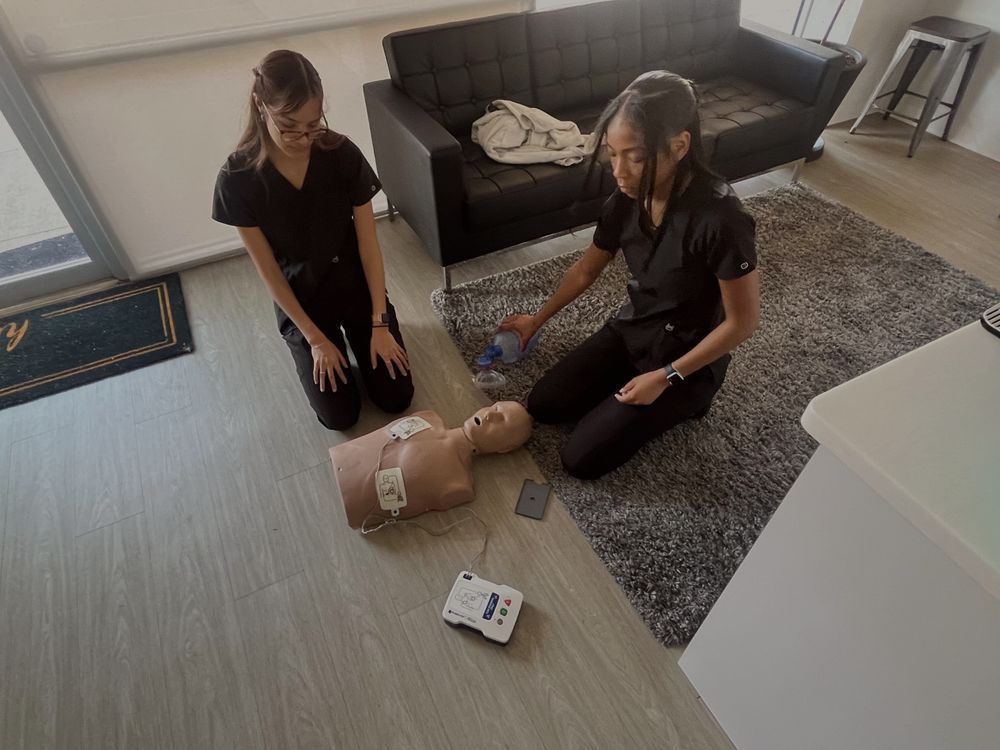
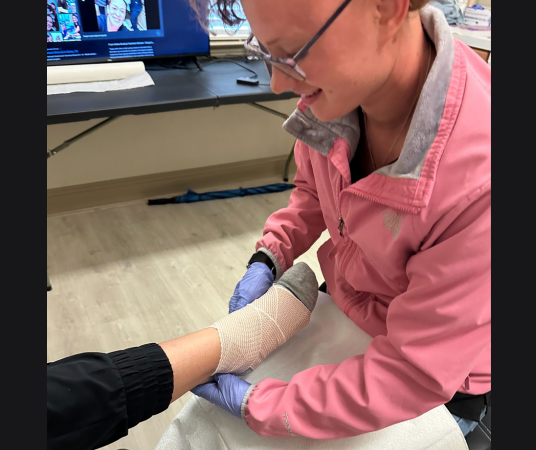
While robots may be able to draw blood in a controlled laboratory environment, real-world healthcare settings are messy, unpredictable, and human-centered. Medical assistants perform a wide range of hands-on clinical tasks that demand precision, adaptability, and situational awareness—qualities that automation has not yet matched.
MAs regularly:
Take vitals
Perform EKGs
Assist with minor procedures
Sterilize instruments
Collect lab specimens
Prepare examination rooms
Administer medications under provider supervision
These tasks require not just physical skill, but the ability to assess patient comfort levels, adjust techniques, and respond when something unexpected occurs. For instance, an MA must know what to do if a patient becomes dizzy during a blood draw or if a child becomes afraid during a routine test. Automation cannot yet handle unpredictable human reactions or the quick clinical judgment required in these moments.
Additionally, many procedures involve direct coordination with doctors and nurses. Medical assistants support providers during examinations, anticipate needs, and ensure safety and accuracy. This seamless teamwork is built on real-time communication and intuition—elements technology cannot replace.
Healthcare will always require hands-on professionals who can perform clinical responsibilities with confidence and compassion. Medical assistants fit that role perfectly.
MAs Bridge the Gap Between Technology and Human Care
As healthcare technology grows more sophisticated, clinics and hospitals need trained professionals who can operate new systems while still putting patients first. Medical assistants are uniquely positioned to fill this hybrid role.
Electronic health records (EHRs), telehealth platforms, AI-supported diagnostic tools, and digital scheduling systems all require human oversight. MAs help ensure that patient data is accurate, workflows remain efficient, and providers have the information they need at their fingertips.
Medical assistants also play a vital role in educating patients about new technologies. Many patients feel intimidated by digital systems like online portals or remote monitoring devices. MAs step in to guide them, explain instructions clearly, and answer questions with patience and empathy.
In this way, MAs act as the “human middle layer” of modern healthcare—connecting advanced technology with real human needs. Even if automation becomes more common, these systems will still rely on skilled professionals who can operate, verify, troubleshoot, and communicate on behalf of the technology.
This makes medical assistants not only safe from automation but also increasingly essential to how healthcare organizations integrate new innovations.
Healthcare Needs More Trained Professionals, Not Fewer
Population growth, aging patients, and the increasing complexity of healthcare have all created massive demand for medical support professionals. Even with technological advancements, the healthcare industry simply does not have enough human workers to meet current—and future—needs.
The U.S. Bureau of Labor Statistics consistently projects much faster-than-average job growth for medical assistants, driven by:
The U.S. Bureau of Labor Statistics consistently projects much faster-than-average job growth for medical assistants, driven by: Physician shortages
Expanded access to care
A growing number of outpatient facilities
An aging population requiring more services
Increased use of team-based care models
Automation may streamline some tasks, but it cannot compensate for the increasing demand for direct patient care. In fact, many healthcare organizations rely on medical assistants to perform more responsibilities than ever before because nurses and physicians are stretched thin.
Rather than replacing MAs, automation often shifts more routine tasks away from providers, allowing medical assistants to step into expanded roles. As clinics adopt new technologies, someone needs to manage patient flow, support providers, and ensure the clinical environment runs smoothly. That someone is almost always the medical assistant.
Hospitals and clinics are not moving toward fewer medical assistants—they’re hiring more and increasing their responsibilities, making the profession incredibly resilient to automation.
The MA Role Continues to Evolve in Ways Technology Cannot Replicate
Healthcare is dynamic, and so is the medical assistant role. As the industry evolves, MAs take on new tasks, learn new technologies, and expand their scope of responsibilities. This adaptability makes the profession one of the most secure in the healthcare system.
Medical assistants increasingly support:
Medical assistants increasingly support: Care coordination
Population health initiatives
Patient education
Preventive care programs
Telehealth facilitation
Health data quality assurance
These responsibilities require communication, critical thinking, and the ability to integrate clinical knowledge with administrative expertise. Technology can support these efforts, but it cannot fully manage them.
Furthermore, modern care models like patient-centered medical homes rely heavily on medical assistants as key members of the care team. These models emphasize collaboration, individualized care plans, and continuous patient engagement—all areas where human decision-making and relational skills are essential.
As long as healthcare continues to evolve, medical assistants will evolve with it—filling new gaps, learning new systems, and supporting providers and patients in ways automation cannot duplicate.
Medical Assisting Is a Future-Proof Career
Technology is transforming healthcare, but instead of eliminating medical assistant roles, it is strengthening and expanding them. The human-centered, hands-on, and highly adaptable nature of the MA profession makes it uniquely resistant to automation. Clinics and hospitals need compassionate professionals who can combine clinical skills with administrative expertise and emotional intelligence—and that’s exactly what medical assistants provide.
If you’re considering a healthcare career with long-term security, meaningful responsibility, and room to grow, medical assisting is one of the most future-proof options available.
If you’re considering a healthcare career with long-term security, meaningful responsibility, and room to grow, medical assisting is one of the most future-proof options available.
Start Your Medical Assistant Career with Confidence
Start Your Medical Assistant Career with Confidence If you’re ready to build a stable, in-demand career in healthcare, Pulse Medical Assistant School can help you get there fast. Our online-first, 16-week medical assistant program combines flexible coursework with intensive, in-person labs that give you the hands-on training and real-world confidence you need to support patients with compassion and skill. You’ll graduate prepared to step into your first MA role and deliver real care to real patients.
Start your journey today—your future in healthcare is waiting.
You're only a few months from the medical assistant career you deserve.