Can You Become a Medical Assistant Through On-the-Job Training_

Can You Become a Medical Assistant Through On-the-Job Training?
Becoming a medical assistant is one of the fastest ways to enter the healthcare field, especially for people who want hands-on work, patient interaction, and a career with real advancement opportunities. As the demand for medical assistants continues to grow nationwide, more people are exploring alternative paths into the profession—including the possibility of learning entirely through on-the-job training. It sounds appealing: no classes, no homework, just learning from experienced professionals as you go. But is it realistic, and more importantly, is it the best approach for your long-term career?
The truth is that while some states allow employers to train medical assistants on-site, the healthcare industry has become increasingly skilled, regulated, and competitive. Modern medical practices rely on a level of clinical and administrative expertise that can be difficult—sometimes impossible—to gain without structured instruction. Even when on-the-job training is possible, most employers prefer candidates who have completed formal medical assistant education or at least accelerated training that ensures consistent competency and patient safety. Understanding these dynamics can save you time, protect your career, and help you make the right choice from the start.
Can You Become a Medical Assistant Through On-the-Job Training?
Yes—in some cases, you can become a medical assistant through on-the-job training. Several states do not require formal certification, licensing, or completion of an accredited medical assistant program to work in the role. Instead, employers may choose to train new hires directly in the clinic, typically under the supervision of physicians or experienced medical assistants.
However, this path has become far less common than it once was. Today’s medical assistants perform a wide range of tasks that require technical accuracy, legal awareness, and clinical proficiency. Employers are increasingly hesitant to invest weeks or months into training someone from scratch—especially when accelerated medical assistant programs can prepare candidates far more quickly and thoroughly.
Many clinics also face staffing shortages, rising patient volumes, and new regulations around documentation, infection control, and lab procedures. They often don’t have the time or resources to teach someone who’s completely new to the field. As a result, most hiring managers prefer applicants who are already trained or certified and can contribute immediately with minimal supervision.
So while on-the-job training is possible, it is rarely the most efficient—and almost never the most reliable—way to start a medical assisting career.
Why On-the-Job Training Alone Isn’t Enough Anymore
Why On-the-Job Training Alone Isn’t Enough Anymore The medical assistant role has expanded dramatically in the past decade. Clinical duties are more advanced. Administrative tasks rely on modern digital systems. Patient care expectations have increased. And practices must meet strict compliance standards in areas like HIPAA, OSHA, CMS, and CLIA.
Without formal education, learning these skills in real time can create major challenges:
Inconsistent Training Quality
Every clinic is different. Some provide detailed, structured training. Others offer only a brief orientation before expecting new hires to handle patient tasks. Without formal instruction, the quality and depth of your training depend entirely on the workplace—not on standardized competency.
Limited Scope of Practice
Some states restrict which tasks non-certified or informally trained medical assistants can perform. This can limit your job duties and reduce your value in the job market.
Difficulties Passing Certification Exams Later
If you eventually want career advancement, higher pay, or the ability to work in hospitals, you’ll likely pursue a recognized credential. Certification exams are based on standardized knowledge—things you may never learn through informal clinic experience alone.
Fewer Job Opportunities
Even states that allow on-the-job training don’t require employers to hire that way. Most employers prefer candidates who already have clinical training, basic medical terminology comprehension, and hands-on lab experience.
Slower Career Growth
Without formal training, you may struggle to move into leadership roles or more specialized positions such as phlebotomy, EKG technician, or clinical team lead.
For all these reasons, most aspiring medical assistants choose to complete at least an accelerated training program before entering the workforce.
For all these reasons, most aspiring medical assistants choose to complete at least an accelerated training program before entering the workforce.
Why Accelerated Medical Assistant Training Is Almost Always the Better Choice
Why Accelerated Medical Assistant Training Is Almost Always the Better Choice Even though some clinics still train medical assistants on the job, accelerated training programs offer significant advantages that make them the smarter and faster route.
You Learn the Critical Skills Before Ever Seeing a Patient
In an accelerated program, you receive structured education in key areas:
Clinical procedures
Vital signs
Phlebotomy
EKGs
Medical terminology
Anatomy and physiology
Sterile technique
First aid and CPR
Electronic health records (EHRs)
Billing and coding basics
Injections and medication administration (where state law allows)
Rather than learning these skills by trial and error in a high-pressure environment, you practice them under supervision until you’re confident.
Employers Prefer Graduates of Training Programs
Most clinics simply don’t have the time to teach everything a new medical assistant needs to know. When you arrive with training completed, you’re more likely to:
Get hired faster
Start at a higher pay rate
Be trusted with more advanced tasks
Pick up systems and workflows quickly
Well-trained medical assistants reduce onboarding time and lower liability risks—two things employers care about deeply.
Accelerated Programs Take Only a Few Months
Years ago, becoming a medical assistant required a one-year diploma or two-year degree. Today, high-quality accelerated programs allow students to complete training in just four months. That means:
Faster entry into the workforce
Lower upfront cost
More flexible scheduling
Easier transition into healthcare from any background
You get the speed of on-the-job training—but with far more structure and reliability.
You Become Eligible for Certification
Even though certification is not required in every state, earning a credential offers major benefits:
Higher earning potential
More competitive job applications
Expanded scope of work
Increased career stability
Increased career stability
Better long-term advancement
Accelerated programs prepare you for nationally recognized exams so that you’re ready to take the next step as soon as you complete training.
You Build Confidence Before Entering the Clinic
Medical assisting is hands-on. You’ll be taking blood, recording vitals, assisting with procedures, and supporting patient care. If you learn everything “on the fly,” you may feel overwhelmed or uncertain.
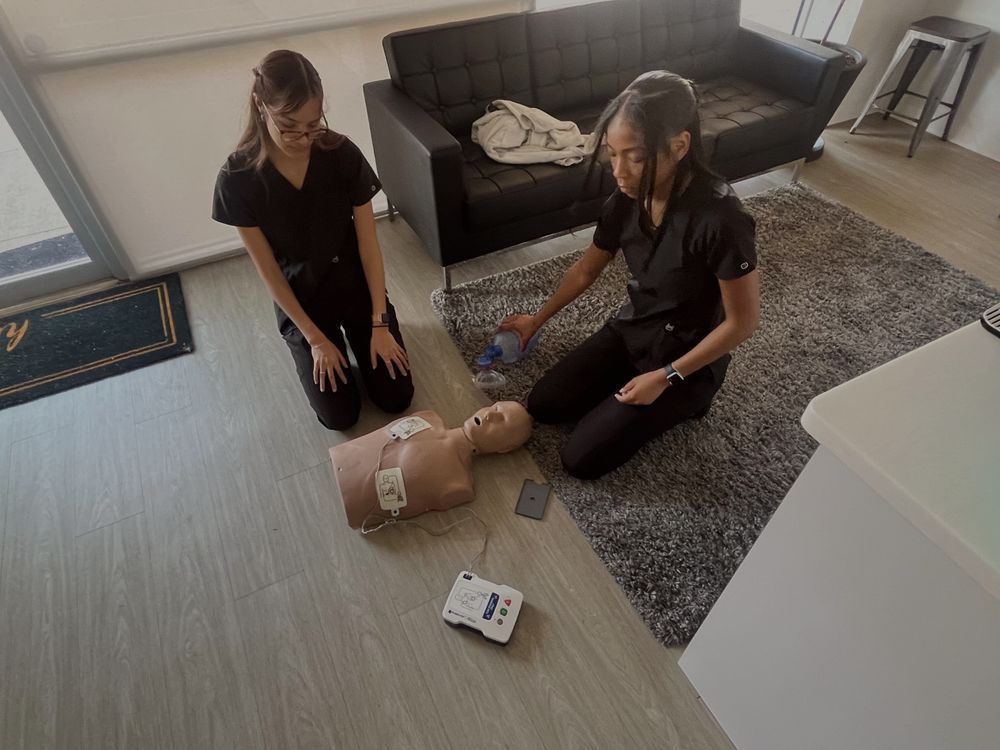
Accelerated programs let you practice in simulated clinical environments, ask questions safely, make mistakes without consequences, and build real comfort with patient procedures. By the time you start your new job, you’re ready—not guessing.
What On-the-Job Training Can Offer—When Combined with Proper Education
What On-the-Job Training Can Offer—When Combined with Proper Education Once you have foundational medical assistant training, on-the-job learning becomes an asset rather than a barrier. Clinics can teach you:
Workflow preferences
EHR templates
Practice-specific procedures
Provider preferences
Patient communication styles
Scheduling and documentation protocols
Specialized tasks unique to that office
This kind of employer-led instruction enhances what you learned in training and gives you the real-world context that accelerates your growth.
In other words: on-the-job training is most valuable when it builds on top of formal education—not when it replaces it.
What Employers Expect Today
What Employers Expect Today
Across the country, employers increasingly look for medical assistant candidates who already understand:
Safety procedures
Sterile and aseptic technique
Bloodborne pathogen precautions
HIPAA and patient privacy
Basic anatomy and terminology
Clinical documentation standards
EHR platforms
Lab procedures
Rooming patients
Measuring and recording vitals
These are not skills you can reliably learn quickly in the middle of a busy clinic. Clinics want medical assistants who can step in quickly—without risking patient safety or slowing down providers.
Accelerated medical assistant training meets these expectations efficiently.
What Happens If You Try to Start Without Training?
What Happens If You Try to Start Without Training? Some people do get hired without prior education, but common challenges include:
Overwhelm
Without a foundation, everything—from basic terminology to equipment operation—feels confusing.
Longer Training Period
Employers may need weeks or months to get you up to speed.
Restricted Duties
You may not be allowed to perform certain tasks legally or safely.
Lower Pay
Entry-level wages tend to be lower for untrained hires.
Fewer Opportunities
Hospitals and specialty clinics rarely hire untrained medical assistants.
Higher Risk of Burnout
Trying to learn complex patient care skills under pressure can lead to frustration and early career dropout.
Trying to learn complex patient care skills under pressure can lead to frustration and early career dropout.
The better alternative is to arrive trained, confident, and ready.
The better alternative is to arrive trained, confident, and ready. So, Can You Become a Medical Assistant Through On-the-Job Training?
Yes—but it’s no longer the recommended or most efficient path.
Modern healthcare is complex, fast-paced, and relies heavily on well-trained medical assistants. While some employers still hire and train on-site, most prefer candidates who have already completed at least an accelerated medical assistant program.
On-the-job training works best as a supplement—even a powerful one—but not as a substitute for structured, skills-based education.
If you want to build a career in healthcare quickly, safely, and confidently, accelerated training is the way to start strong.
If you want to build a career in healthcare quickly, safely, and confidently, accelerated training is the way to start strong.
Begin Your Medical Assistant Career with Confidence
Begin Your Medical Assistant Career with Confidence If you want a faster, safer, more reliable path into the healthcare field, Pulse Medical Assistant School offers the perfect starting point. Pulse is an online-first, 16-week medical assistant program with intensive, in-person labs that give students hands-on experience in real clinical skills. With Pulse, you’ll learn the competencies employers expect, build confidence long before your first day on the job, and graduate ready to help real patients receive real care.
If you want to enter healthcare quickly and build a career you can be proud of, Pulse gives you the training, structure, and support to get there.
You're only a few months from the medical assistant career you deserve.