CMA Program: What Certification Means, What the Exam Covers, and How to Prepare
If you’re researching a CMA program, you’re probably already aware that certification matters in medical assisting. What you may not know is exactly what “CMA” means, how different credentials compare, what the exam covers, and how the program you choose affects your chances of passing and getting hired.
Here’s a clear breakdown — no credential-alphabet confusion, no sales pitch disguised as information.
CMA vs. CCMA: what’s the difference?
“CMA” is often used as a general shorthand for medical assistant certification, but it specifically refers to the Certified Medical Assistant credential issued by the American Association of Medical Assistants (AAMA). To sit for the AAMA CMA exam, you must graduate from a CAAHEP or ABHES-accredited program.
The CCMA — Certified Clinical Medical Assistant — is issued by the National Healthcareer Association (NHA) and is one of the most widely recognized certifications in the field. The CCMA is what Pulse Medical Assistant School prepares students for, and it’s what most employers mean when they ask for a “certified medical assistant.”
Both credentials are legitimate and employer-recognized. The CCMA is often preferred by employers for its clinical emphasis, and the NHA’s CCMA exam is one of the most commonly required certifications in job postings for medical assistants.
When people say they want to complete a CMA program, they almost always mean: I want to become certified as a medical assistant. Whether the resulting credential is a CMA or CCMA matters less than its recognition by the employers you want to work for — and the CCMA is broadly recognized.
What the CCMA exam covers
The CCMA exam from the National Healthcareer Association tests competency across the full scope of a medical assistant’s clinical and administrative responsibilities. Major exam domains include:
Clinical competencies:
- Patient preparation and intake
- Vital signs measurement
- Phlebotomy and specimen collection
- Injections and medication administration
- EKG/electrocardiography
- Point-of-care laboratory testing
- Infection control and sterilization
- Clinical procedures and provider assistance
Administrative competencies:
- Electronic health records (EHR) documentation
- Appointment scheduling and patient flow
- Insurance verification and basic billing
- Medical terminology and coding
- HIPAA compliance and patient privacy
General professional standards:
- Medical law and ethics
- Patient communication
- Workplace safety (OSHA)
- Emergency procedures and response
The exam is computer-based and consists of multiple-choice questions covering all of these areas. Passing it demonstrates that you’ve met a standardized, nationally recognized threshold of competency.
How Pulse Medical Assistant School prepares you for the CCMA
The Pulse Medical Assistant School CMA program is built with the CCMA exam as the end target. Preparation isn’t treated as a final-week review — it’s integrated throughout the 16-week curriculum so that by graduation, you’re not cramming, you’re ready.
What that looks like in practice
Online sessions (live, instructor-led throughout 16 weeks):
- Each clinical and administrative module maps directly to CCMA exam domains
- Instructors connect daily learning to exam content throughout the program
- Regular knowledge checks and practice questions track your progress
- Dedicated CCMA review sessions in the final weeks before the exam
In-person labs (4 full-day sessions):
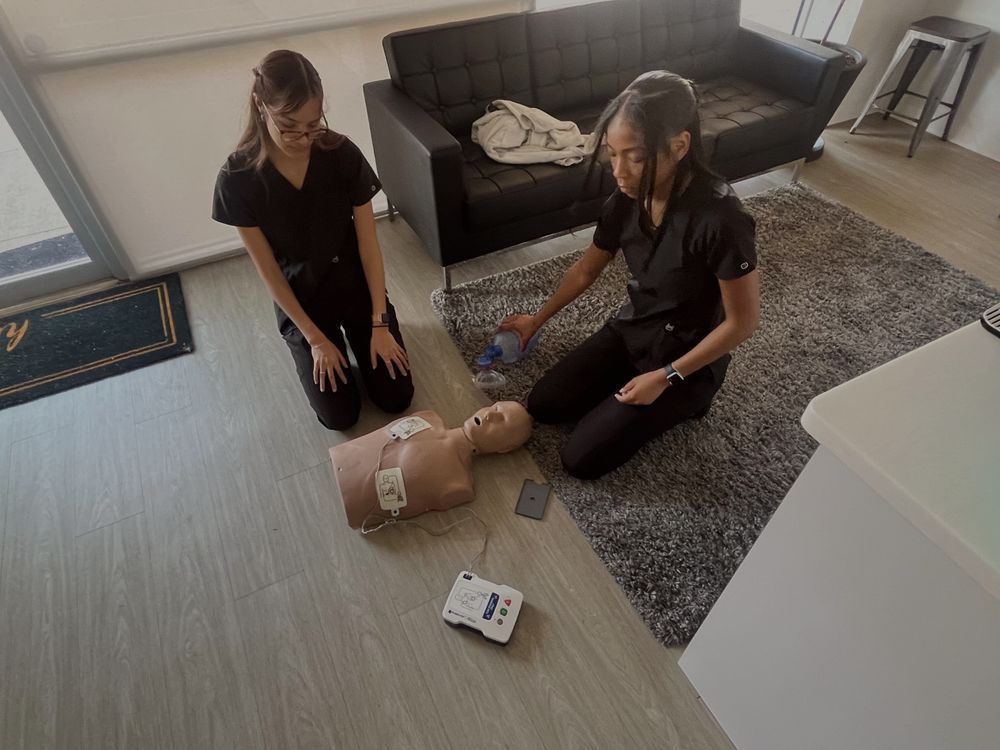
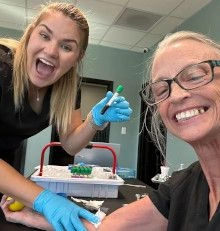
- Hands-on practice of all clinical skills tested in the CCMA
- Phlebotomy, injections, vital signs, EKG, point-of-care testing
- Performed on real equipment in a real medical environment
- Direct instructor feedback until each skill is correct and confident
Externship:
- Supervised clinical hours in a real medical practice
- Applies and consolidates all exam-relevant clinical skills
- Real-world experience that reinforces exam preparation
Why clinical practice matters for a written exam
It might seem counterintuitive: why does hands-on practice matter for a written exam? Because the CCMA tests your understanding of clinical procedures — the rationale, the steps, the safety considerations — not just your ability to perform them mechanically.
Students who have actually drawn blood understand venipuncture in a way that textbook-only students don’t. Students who have run EKGs understand artifact and troubleshooting because they’ve experienced it. The clinical practice doesn’t just prepare you for the job — it deepens the conceptual understanding that the exam tests.
This is why programs that skip in-person clinical practice tend to produce lower exam pass rates.
The cost of the Pulse Medical Assistant School CMA program
The all-inclusive cost is $2,990 — one of the lowest tuition points available for a credentialed medical assistant program. That covers:
- 16 weeks of live online instruction
- All 4 in-person lab days
- Externship placement
- CCMA exam preparation (included in tuition)
- Program materials and supplies
No financial aid accepted. No student loans. No debt at graduation. Payment plans are available for students who want to spread the cost across the program.
For reference: the average community college medical assisting program costs $5,000–$15,000+ depending on location and program length. The Pulse Medical Assistant School CMA program delivers comparable (and in some cases stronger) clinical preparation at a fraction of that cost.
What certified medical assistants earn
The Bureau of Labor Statistics reports a national median salary of approximately $42,000 per year for medical assistants. Certified medical assistants — those holding a CCMA, CMA, or equivalent credential — consistently earn more than their non-certified peers in the same positions and markets.
Entry-level positions for certified MAs typically start in the $35,000–$40,000 range. With experience and specialty skills, $48,000–$55,000 is achievable.
At $2,990 total program cost and an entry-level salary of $36,000+, the program pays for itself in the first few weeks on the job.
Job outlook: 14% growth through 2032
The Bureau of Labor Statistics projects 14% growth in medical assistant jobs through 2032 — nearly double the national average for all occupations. Demand is driven by:
- An aging U.S. population with increasing primary and specialty care needs
- Growth of outpatient and ambulatory care settings
- Broader delegation of clinical tasks from physicians to trained support staff
- Expansion of preventive care and chronic disease management programs
Completing a CMA program now positions you to enter a job market with strong and growing demand.
Who this program is for
- Anyone who wants to become a certified medical assistant efficiently and affordably
- Career changers entering healthcare from another field
- Working adults who need schedule flexibility without sacrificing clinical preparation
- Students who want the CCMA credential without taking on student loan debt
- Beginners with no prior clinical experience
Get started with Pulse Medical Assistant School
- Program curriculum: What the 16 weeks cover
- Cost and payment options: Tuition
- Talk to our enrollment team: Contact us
- Apply: How to apply
You're only a few months from the medical assistant career you deserve.