Do Medical Assistants Need a License_ A Guide
Do Medical Assistants Need a License? A Guide
Entering the medical field is an exciting opportunity, especially for people who want a rewarding career without spending years in school. Medical assisting has become one of the fastest-growing healthcare professions because it strikes the perfect balance between hands-on patient care, administrative responsibility, and clear opportunities for advancement. One of the first questions future medical assistants ask is simple but important: do you actually need a license to work as a medical assistant?
The short answer is usually no, but the complete answer depends on where you work, the type of responsibilities you want, and the employer’s expectations. This guide breaks down what medical assistants need to know about licensing, certification, state requirements, and how to choose the right path toward your first healthcare role.
Do Medical Assistants Need a License?
In most states, medical assistants do not need a professional license to begin working. Unlike registered nurses (RNs) or licensed practical nurses (LPNs), MAs are considered “unlicensed assistive personnel.” This means their work is supervised by a physician, nurse, or other licensed provider, and their responsibilities fall within what each state allows.
Even though a license is not required, employers almost always look for proof of training or certification to ensure a candidate is ready to provide safe, accurate patient care. So while the state may not require it, the healthcare facility likely will.
Certification vs. Licensing: What’s the Difference?
Many people confuse certification with licensing, especially when they’re new to a clinical career. Here’s the difference:
Licensing
Issued by the state government
Legally required to practice certain professions
Sets mandatory education and training requirements
Applies to careers like RNs, LPNs, and radiologic technologists
Certification
Issued by a professional organization, not the state
Demonstrates competence, training, and verified skills
Often required by employers even when not required by law
Applies to medical assistants, phlebotomists, EKG techs, and other allied health professionals
Because medical assisting is not a licensed profession in most states, becoming certified is the best way to show employers you meet industry standards.
Are There Any States That Require a License?
A few states have tighter regulations around medical assisting, but even then, licensing is rarely required. Instead, states may require one of the following:
Successful completion of an accredited training program
Passing an approved certification exam
Demonstrating competency in specific clinical tasks (like injections or EKGs)
Working under direct supervision for certain duties
Working under direct supervision for certain duties States like Washington, Arizona, and Nevada have clearer definitions of what medical assistants can and cannot do, but they still do not issue MA licenses the way they do for nurses.
The bottom line: state laws may define your scope of practice, but you still don’t need a license to be a medical assistant.
The bottom line: state laws may define your scope of practice, but you still don’t need a license to be a medical assistant.
Why Certification Matters — Even When It’s Not Required
Why Certification Matters — Even When It’s Not Required If states don’t require medical assistants to be licensed, why do so many people choose certification?
Here are several major reasons:
Better Job Opportunities
The majority of employers prefer or require certified medical assistants. Hospitals, specialty practices, and high-volume clinics want employees who already understand:
The majority of employers prefer or require certified medical assistants. Hospitals, specialty practices, and high-volume clinics want employees who already understand: Vital signs
Sterile procedures
Patient intake
Lab processes
Electronic health records
Certification shows you’ve already mastered these skills.
Higher Earning Potential
Certified MAs often earn more because employers see them as more qualified. In competitive markets, certification can make a significant difference in your hourly pay or advancement opportunities.
Ability to Perform More Clinical Tasks
Some states only allow certain duties—such as administering injections or assisting with minor procedures—if you’re properly trained. Certification proves that you’ve completed standardized clinical education.
Professional Credibility
Certifications come from respected organizations like the NHA or AAMA. When your résumé lists a nationally recognized credential, employers can trust the quality of your training.
Clear Career Pathways
Starting as a certified MA helps you explore other healthcare roles in the future, such as:
Registered Nurse (RN)
Physician Assistant (PA)
Surgical Technician
Patient Care Technician
Licensed Practical Nurse (LPN)
Certification becomes a stepping-stone to more advanced clinical opportunities.
Understanding Scope of Practice: What Medical Assistants Can and Cannot Do
Understanding Scope of Practice: What Medical Assistants Can and Cannot Do Because medical assistants are unlicensed, the tasks they’re allowed to perform depend on state laws and employer policies. Here are the most common responsibilities MAs can perform:
Common Clinical Tasks
Common Clinical Tasks Taking vital signs
Preparing patients for exams
Preparing patients for exams
Administering injections (in many states)
Performing EKG tests
Collecting lab samples
Conducting CLIA-waived tests
Assisting with minor procedures
Sterilizing instruments
Common Administrative Tasks
Common Administrative Tasks Scheduling appointments
Updating patient charts
Managing electronic health records
Billing and coding support
Communicating with patients
Insurance verification
Tasks Medical Assistants Cannot Perform
There are important boundaries. MAs generally cannot:
Diagnose or treat medical conditions
Provide independent patient care
Administer IV medications (varies by state)
Interpret test results
Perform complex medical procedures
Triage patients independently
Understanding the limits of your role ensures patient safety and keeps you compliant with legal and ethical guidelines.
Understanding the limits of your role ensures patient safety and keeps you compliant with legal and ethical guidelines.
Do Employers Require Certification Even If the State Doesn’t?
Yes—many employers prefer certification because it reduces training time and ensures competence from day one. Hospitals especially want MAs who are already credentialed because their environments move quickly, and onboarding must be smooth.
Even private practices increasingly require:
Completion of an approved training program
Hands-on clinical experience
CPR/BLS certification
Passing a national certification exam
Employers value medical assistants who have proven training—not just on-the-job learning.
How Medical Assistants Get Certified
How Medical Assistants Get Certified Becoming certified is a straightforward process. Here’s what it usually involves:
Complete a Medical Assistant Training Program
Most students complete an accelerated or hybrid program that includes:
Online learning modules
In-person clinical labs
Practical hands-on experience
Career readiness training
Career readiness training These programs prepare you for certification exams and entry-level employment.
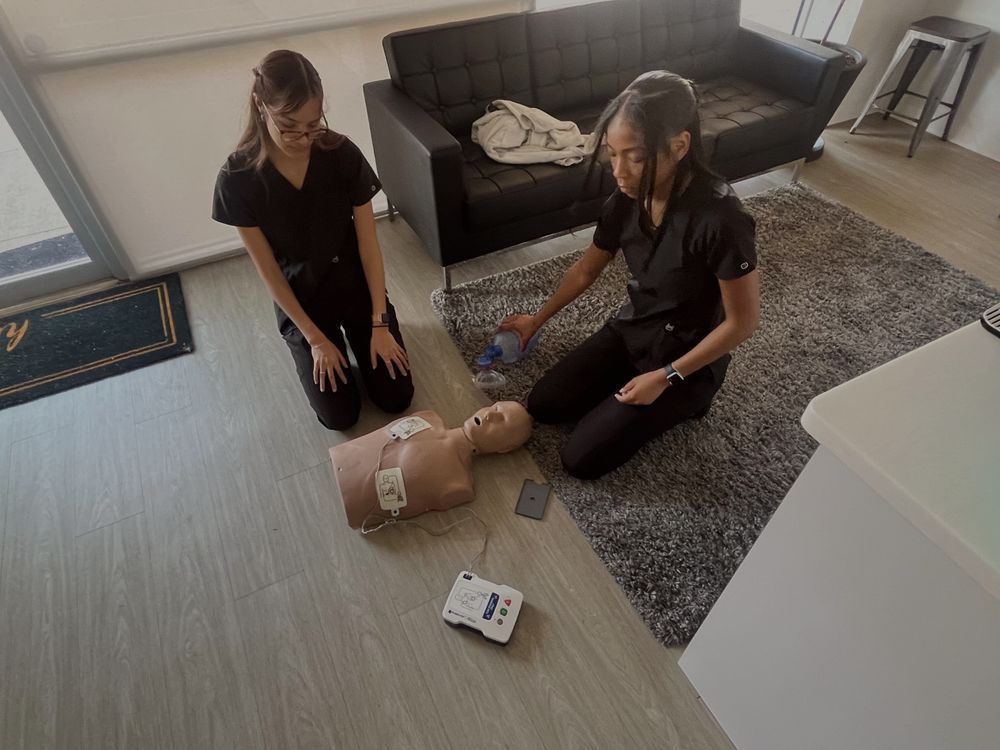
Finish Your Clinical Skills Labs
Hands-on labs teach students how to:
Perform injections
Conduct EKGs
Draw blood
Assist during procedures
Prepare exam rooms
Take accurate vital signs
These labs are essential because real clinical skills can’t be learned online alone.
Sit for the Certification Exam
Depending on your program, you may qualify for one or more of the following exams:
CCMA — Certified Clinical Medical Assistant (NHA)
CMA — Certified Medical Assistant (AAMA)
RMA — Registered Medical Assistant (AMT)
NCMA — Nationally Certified Medical Assistant (NCCT)
Your school will typically guide you through exam registration and preparation.
Start Applying for Jobs
With certification, graduates can begin applying for roles in:
Hospitals
Family medicine practices
Pediatric offices
OB/GYN clinics
Urgent care centers
Specialist practices
Outpatient facilities
Certification shows employers that you’re ready to step into a clinical environment immediately.
What Happens If You’re Not Certified?
What Happens If You’re Not Certified?
You can still get hired in some places without certification, but there are serious limitations:
You can still get hired in some places without certification, but there are serious limitations:
You may earn less
You may have fewer responsibilities
Employers may require additional in-house training
Certain procedures may be off-limits
Career growth may be slower
Career growth may be slower In many cases, uncertified applicants find fewer job opportunities—especially in competitive markets.
Choosing the Right Medical Assistant Program
Choosing the Right Medical Assistant Program If certification is the best pathway to becoming a medical assistant, choosing the right program is the next step. Look for programs that offer:
Accredited Curriculum
A strong education should cover:
Anatomy & physiology
Medical terminology
Clinical procedures
Infection control
Patient communication
EHR systems
Hands-On Labs
Clinical practice is essential for building confidence. You should have ample time to learn and practice skills in a real clinical environment.
Flexible Scheduling
Many students work or support families. Online-first programs with in-person labs offer the perfect balance.
Externship Opportunities
A clinical externship introduces you to real patients, real medical teams, and real clinical workflows.
Certification Preparation
Your program should prepare you to pass a national exam immediately after graduation.
Choosing a high-quality, reputable school makes all the difference in your certification exam performance and job readiness.
Choosing a high-quality, reputable school makes all the difference in your certification exam performance and job readiness.
Licensing Isn’t Required — But Training Is Essential
Licensing Isn’t Required — But Training Is Essential Medical assistants rarely need a state-issued license, but that doesn’t mean training isn’t important. Employers want medical assistants who know how to communicate with patients, understand clinical workflow, and support physicians with confidence. Certification is the fastest, clearest way to demonstrate that you are qualified.
If you’re considering a career in healthcare, becoming a medical assistant gives you a strong foundation and opens the door to advanced career opportunities. With the right training, you can be job-ready in just a few months—no license required.
Start Your Medical Assistant Career with Confidence
Start Your Medical Assistant Career with Confidence If you’re ready to start a healthcare career quickly, Pulse Medical Assistant School offers a proven path forward. Pulse is an online-first, 16-week medical assistant program that blends flexible online coursework with intensive, in-person labs designed to prepare students for real clinical work. Graduates learn the hands-on skills, patient communication techniques, and clinical procedures they need to help real patients receive real care with confidence.
Ready to take the next step toward your new career? Pulse can help you get there.
You're only a few months from the medical assistant career you deserve.