Does Medical Assisting Experience Help With Med School Admissions_
Does Medical Assisting Experience Help With Med School Admissions?
For many aspiring physicians, gaining meaningful clinical experience is one of the most challenging parts of preparing a competitive medical school application. Admissions committees want proof that applicants understand what practicing medicine is really like—beyond biology coursework, textbook knowledge, and shadowing hours. This is where medical assisting experience can make an enormous difference. Working as a medical assistant not only gives future physicians a front-row seat to real healthcare delivery, but it also builds essential skills that medical schools value deeply.
Medical assisting provides hands-on patient care experience in a fast-paced healthcare environment. From taking vitals to preparing patients for examinations, medical assistants interact directly with patients and collaborate with nurses, providers, and administrative teams. For premed students, this role bridges the gap between academic learning and real-world medical practice. It’s one of the most accessible and impactful ways to confirm your interest in medicine, strengthen your application, and enter medical school with confidence. Below, we break down five reasons why medical assisting experience can significantly support med school admissions.
You Gain Direct, Hands-On Patient Care Experience
One of the most important components of a strong medical school application is clinical exposure—especially exposure that involves meaningful interaction with patients. Unlike passive observation roles, medical assisting places you on the front lines of patient care.
Medical assistants routinely take vital signs, document patient histories, measure height and weight, assist with procedures, and communicate with patients throughout their visit. This level of direct involvement demonstrates to admissions committees that you’ve taken an active role in patient care and understand the emotional, interpersonal, and clinical demands of the healthcare environment.
Hands-on experience not only strengthens your application but also helps you develop the bedside manner essential for a future physician. It shows you can build rapport, empathize with patients, and communicate clearly and compassionately—skills that admissions committees consistently rate as crucial for success in medical school and in future clinical practice.
You Develop Technical and Clinical Skills That Translate to Medical School
Working as a medical assistant allows you to develop technical, procedural, and diagnostic skills that align well with the competencies expected of new medical students. These include:
Working as a medical assistant allows you to develop technical, procedural, and diagnostic skills that align well with the competencies expected of new medical students. These include: Taking and interpreting basic vital signs
Performing EKGs
Administering injections (depending on state laws)
Conducting basic lab tests
Preparing patients for exams
Preparing patients for exams
Understanding medical terminology and anatomy
Understanding medical terminology and anatomy These skills give you a strong head start in medical school, where the first year often includes learning vitals, basic procedures, and clinical communication. Having experience in these areas shows you can quickly adapt to clinical training and already possess foundational knowledge.
Medical schools appreciate applicants who demonstrate readiness. By entering with clinical competence, you signal maturity, preparedness, and genuine commitment to medicine. It also makes your transition into labs, simulations, and early patient interactions smoother and less intimidating.
You Learn How Healthcare Teams Operate
Medical assisting also exposes you to the inner workings of healthcare settings, giving you a deeper understanding of team-based care—a key emphasis in modern medicine.
As a medical assistant, you collaborate with:
Physicians
Nurse practitioners and physician assistants
Nurses
Medical office administrators
Lab technicians
Billing and insurance specialists
This exposure helps you learn how communication flows between various professionals, how decisions are made, and how patient information is exchanged. Understanding this dynamic is invaluable for medical students, who spend a significant part of their training adapting to clinical teams.
Team-based care is the backbone of today’s healthcare system. Admissions committees want students who understand healthcare collaboration and can function effectively within it. Medical assisting shows you’ve already lived it—not just studied it.
You Demonstrate Commitment, Work Ethic, and Resilience
Medical assisting is a demanding job. Balancing patient needs, provider requests, and administrative tasks in a busy care environment requires focus, adaptability, and emotional resilience. These qualities are some of the most important predictors of success in medical school.
By working as a medical assistant, you demonstrate:
Commitment: You’ve invested time in learning and working in healthcare.
Work ethic: You can manage fast-paced environments and high patient volumes.
Emotional readiness: You’ve interacted with sick, anxious, or vulnerable patients—and handled it professionally.
Resilience: You’ve worked through long days, competing priorities, and complex clinical realities.
Medical schools look for applicants who have found their “why” for medicine and have evidence to support it. Medical assisting offers story-rich experiences that can shape personal statements, secondary essays, and interviews. These firsthand moments allow you to speak authentically about why you want to be a physician and what you’ve learned through patient care.
You Build Strong Letters of Recommendation From Healthcare Providers
Letters of recommendation can make or break a medical school application. Working as a medical assistant provides the rare opportunity to develop close working relationships with physicians and other providers who can speak directly to your clinical ability and work ethic.
Because medical assistants work side-by-side with providers every day, your supervisors can highlight:
Your patient care skills
Your communication and teamwork
Your reliability and professionalism
Your ability to handle difficult situations
Your growth and potential as a future healthcare provider
These letters carry weight because they are written by the very professionals admissions committees trust. A strong endorsement from a physician you’ve worked with closely is far more compelling than a generic recommendation from a professor you met once a week.
Additionally, many medical assistants go on to shadow their supervising providers, giving them yet another layer of firsthand experience to discuss in applications and interviews.
Medical Assisting Can Give Premed Students a Major Advantage
Medical schools increasingly look for applicants who have demonstrated a genuine commitment to patient care. Medical assisting stands out as one of the most valuable and accessible ways for aspiring physicians to build clinical experience, strengthen their skills, and gain the confidence needed for the journey ahead. From hands-on patient interaction to forming strong relationships with healthcare providers, the role offers lessons and experiences that classroom learning alone cannot provide.
If you’re preparing for medical school—and want to build a strong foundation in patient care—training as a medical assistant is an incredibly effective next step.
Start Your Clinical Journey With Confidence
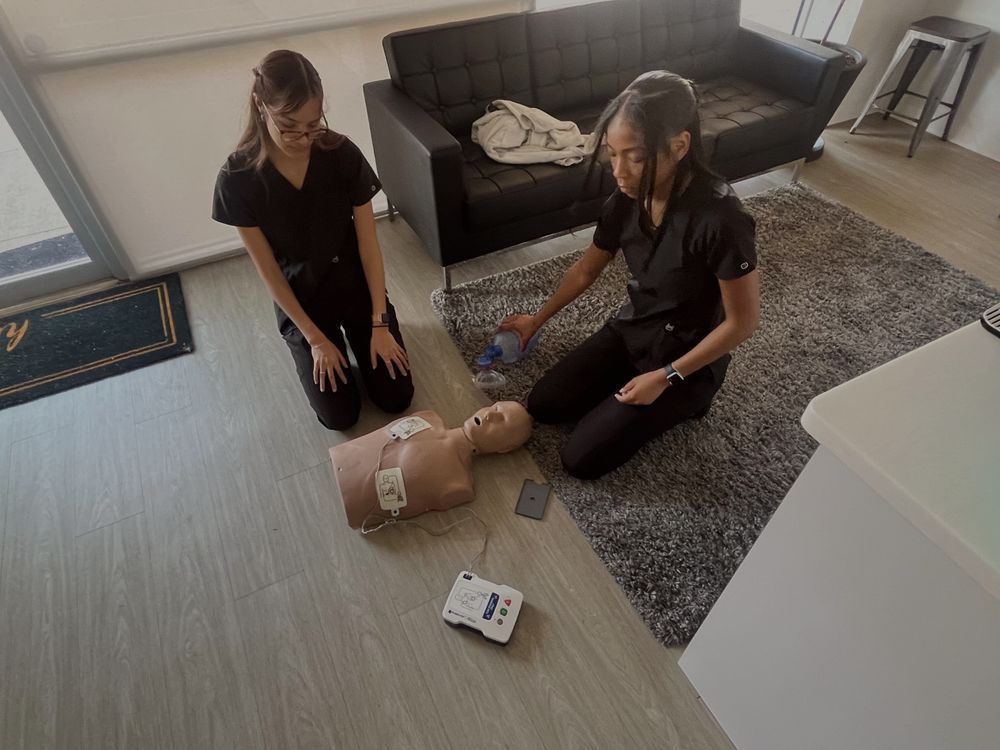
Start Your Clinical Journey With Confidence Pulse Medical Assistant School is an online-first, 16-week medical assistant training program designed to help future healthcare professionals gain real skills through intensive, in-person labs. Students graduate with the confidence to support real patients, work alongside real providers, and take meaningful steps toward a medical career—including medical school. If you’re ready to build experience that strengthens your med school application, Pulse can help you get started.
You're only a few months from the medical assistant career you deserve.