How Long Does It Really Take to Become a Competent Medical Assistant_
How Long Does It Really Take to Become a Competent Medical Assistant?
If you’ve been considering a career in healthcare, you might wonder: How long does it really take to become a skilled, confident Medical Assistant (MA)? Many people imagine years of schooling, complicated prerequisites, or long hours in clinical training. The reality is far more encouraging. With the right program, you can build meaningful skills, gain hands-on clinical experience, and prepare for certification in a matter of months—not years.
Medical assisting is one of the most accessible and high-opportunity pathways into healthcare. As demand continues to rise across hospitals, clinics, and urgent care centers, more students are searching for efficient, high-quality programs that prepare them quickly without sacrificing depth. The truth is that a well-structured, accelerated MA program can make you job-ready in as little as 16 weeks. But how is that possible? And what exactly can you expect to learn in such a short period?
Let’s break down the timeline, the curriculum, the hands-on training, and what “competent” really looks like for a new MA.
Why Becoming a Medical Assistant Doesn’t Have to Take Years
Why Becoming a Medical Assistant Doesn’t Have to Take Years Unlike many healthcare careers that require extensive undergraduate education or multiyear training, medical assisting focuses on core skills that can be mastered efficiently. The role blends clinical and administrative responsibilities, making it ideal for people who want a well-rounded healthcare job with room to grow.
Traditional community college programs can take one to two years, often because students are required to take unrelated general education courses. Bootcamp-style accelerated programs, however, eliminate unnecessary coursework and focus entirely on what matters most: essential clinical procedures, medical knowledge, administrative practices, and hands-on experiences that prepare you for your externship and future employment.
A 16-week format works because it is intentionally designed around:
Focused, career-specific coursework
Online modules that maximize flexibility
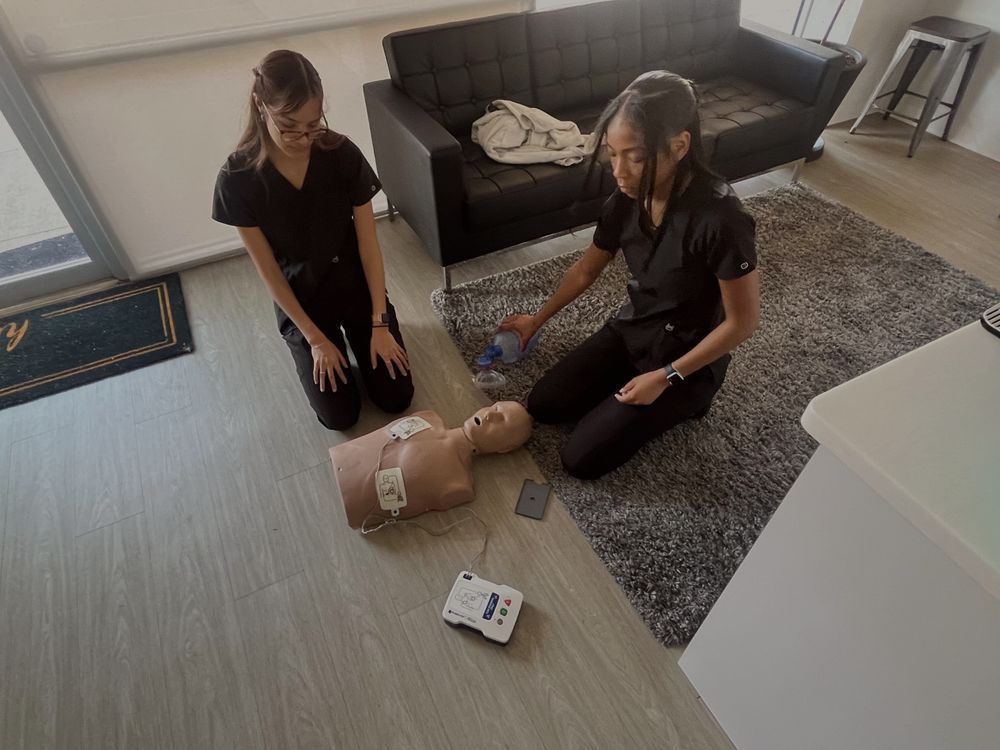
In-person clinical labs that build confidence quickly
Externship experiences that reinforce every skill you learn
This approach allows students to build competence rapidly while still receiving a rich, immersive education.
Breaking Down the 16-Week Timeline
A high-quality 16-week program is structured to blend theory, practice, and real-world patient experience. Here’s what a typical journey looks like from Week 1 to Week 16.
Weeks 1–4: Building Your Medical Knowledge Foundation
Your first month focuses on everything you need to understand before touching instruments or preparing patients. This includes:
Medical terminology You learn the language of healthcare—prefixes, suffixes, root words, and how to interpret medical documentation confidently.
Anatomy and physiology You gain an understanding of the body’s systems, how they function, and how they interact—critical insight for clinical tasks like taking vitals or assisting with exams.
Healthcare systems & roles
You study how clinics and hospitals operate, what different professionals do, and how medical assistants fit into the care team.
Legal and ethical considerations HIPAA, patient confidentiality, informed consent, and professional boundaries are central to competent MA practice.
These first four weeks are all about foundation-building. By the end of them, you’ll be able to understand patient charts, communicate effectively with other clinicians, and prepare for more hands-on technical training.
Weeks 5–8: Developing Essential Clinical Skills
The next stage of your training focuses on the day-to-day responsibilities you’ll perform in a clinical setting. During this phase, you begin working with equipment, practicing procedures, and preparing for patient interaction.
Key skills developed during this period include:
Key skills developed during this period include: Taking and recording vital signs Students learn how to measure blood pressure, pulse, temperature, respiration rate, and oxygen saturation accurately.
Injections and phlebotomy basics Depending on the program and state regulations, you may begin training on intradermal, subcutaneous, or intramuscular injections and blood draws.
Specimen collection and processing You learn how to collect urine, blood, and swab samples and how to label and prepare them for lab testing.
Patient intake and history-taking
Communication becomes essential as students practice gathering medical history and preparing patients for exams.
Clinical room preparation
Sanitizing equipment, setting up exam rooms, stocking supplies, and ensuring safe environments for both patients and providers.
These skills are typically taught through intensive, in-person lab sessions, where students work with classmates, instructors, and simulation tools. Labs allow students to build confidence while receiving immediate feedback.
Weeks 9–12: Introduction to Administrative and Office Skills
Competent medical assistants aren’t only skilled in clinical tasks—they also support the operations of the medical office. Weeks 9–12 focus on administrative responsibilities that keep healthcare organizations running smoothly.
Here’s what students learn:
Electronic Health Records (EHR) systems
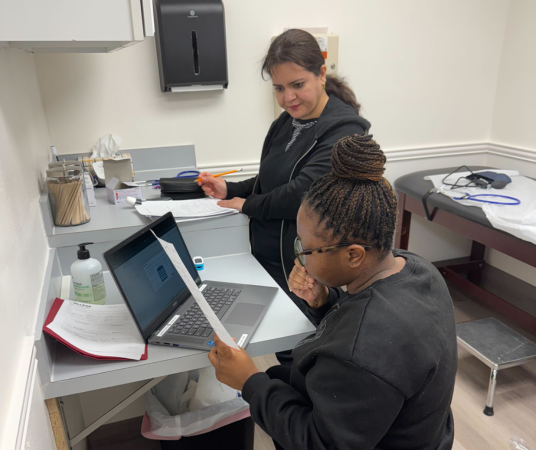
You practice entering patient information, updating charts, ordering labs, and communicating with care teams through digital platforms.
Appointment scheduling and patient check-in You learn how to manage calendars, handle walk-ins, verify insurance, and coordinate patient flow efficiently.
Medical billing fundamentals Coding, claims, insurance terminology, and reimbursement processes become familiar tools in your administrative toolkit.
Phone etiquette and communication
Handling triage calls, communicating instructions, and maintaining professionalism across all interactions.
These skills prepare you to be valuable not just in the exam room but also at the front desk—an area where many MA careers begin.
Weeks 13–16: Externship and Real-World Experience
The final weeks of a 16-week program put everything together in a professional environment. Most programs match students with a local clinic, urgent care center, or specialty office for supervised externship hours.
During this phase, you apply your skills in real-world scenarios such as:
Greeting patients and performing initial assessments
Supporting doctors, nurses, and other medical professionals during procedures
Taking vitals and documenting patient symptoms
Managing EHR data accurately and efficiently
Assisting with injections or diagnostic tests (depending on state law)
Practicing compassionate patient communication
Observing clinical workflow and adjusting to fast-paced environments
Externships are transformative—they convert classroom knowledge into real-world competence and help students feel truly ready for entry-level MA roles.
Why 16 Weeks Is Enough—When the Program Is High Quality
Why 16 Weeks Is Enough—When the Program Is High Quality Some prospective students wonder: Can I really become competent in 16 weeks? The answer is yes—if the program is structured intentionally and offers hands-on practice that mirrors real clinical environments.
A high-quality 16-week MA program includes:
Accelerated Coursework Without Filler
Students don’t spend time on general education requirements. Every module supports real, on-the-job MA responsibilities.
Hands-On Labs
Clinical labs allow students to handle equipment, practice core procedures, and build muscle memory. Learning by doing accelerates competence.
Experienced Instructors
Instructors who have worked in real healthcare environments offer insights, coaching, and feedback that fast-track student growth.
A Meaningful Externship
Externships solidify skills and help students transition confidently into the workforce.
Certification Preparation Integrated Throughout
Quality programs weave exam prep into every module so students feel ready for national certification by graduation.
When all these elements are in place, students can achieve in 16 weeks what might take much longer in a traditional college setting.
What “Competent” Looks Like for a New Medical Assistant
What “Competent” Looks Like for a New Medical Assistant Competence doesn’t mean perfection—it means being ready to perform the essential duties of the job safely, confidently, and professionally. A competent entry-level MA is someone who can:
Communicate Clearly
From patient intake to relaying instructions from doctors, communication is at the heart of the role.
Perform Clinical Tasks Correctly
Vital signs, specimen collection, equipment setup, injections, and basic lab work must be performed accurately.
Use EHR Software Efficiently
Documenting patient information quickly and correctly is essential for workflow and compliance.
Support the Care Team
Doctors and nurses rely heavily on MAs to prepare exam rooms, manage supplies, coordinate patient flow, and assist with procedures.
Demonstrate Professionalism and Compassion
Competence also means understanding patient needs, practicing empathy, and maintaining professionalism—even under pressure.
Adapt to Different Medical Settings
Whether a clinic, specialty office, or urgent care center, competent MAs know how to adjust to the culture, pace, and expectations of the workplace.
The 16-week pathway develops these capabilities through consistent practice and immersive learning.
The 16-week pathway develops these capabilities through consistent practice and immersive learning.
What Students Learn By the End of a 16-Week MA Program
What Students Learn By the End of a 16-Week MA Program By graduation, students typically walk away with a blend of technical, clinical, administrative, and interpersonal skills, including:
Anatomy, physiology, and medical terminology
Patient communication skills
Vital signs measurement
Injections and phlebotomy basics (depending on state law)
Clinical safety and sanitation procedures
Equipment setup and exam room preparation
Medical billing and coding basics
Health insurance processes
Use of EHR systems
Front-desk and patient intake skills
Clinical documentation
Professional ethics and HIPAA compliance
This comprehensive skill set makes graduates highly employable and prepared for long-term career growth.
This comprehensive skill set makes graduates highly employable and prepared for long-term career growth.
A Rewarding Career Starts Sooner Than You Think
A Rewarding Career Starts Sooner Than You Think Becoming a Medical Assistant is one of the most efficient and rewarding paths into healthcare. And with a well-designed, immersive program, you can achieve true competence in just 16 weeks. From foundational medical knowledge to real-world externship experience, students emerge ready to support patient care, assist medical teams, and take on roles that genuinely make a difference in people’s lives.
If you’re eager to start a meaningful healthcare career without waiting years for your first job, the accelerated MA training model may be the perfect fit.
If you’re eager to start a meaningful healthcare career without waiting years for your first job, the accelerated MA training model may be the perfect fit. Pulse Medical Assistant School offers an online-first, 16-week medical assistant program with intensive, in-person labs that build confidence and prepare you for real clinical environments. Their flexible format, expert instructors, and hands-on training give aspiring medical assistants the skills they need to help real patients receive real care—fast.
If you’re ready to become a competent, confident MA in just 16 weeks, Pulse is the best place to begin your journey.
You're only a few months from the medical assistant career you deserve.