How to Start a Medical Assistant Career After High School

How to Start a Medical Assistant Career After High School
Starting a medical assistant career right after high school is one of the fastest and most practical ways to enter the healthcare field. Instead of spending years in college before gaining hands-on experience, many students choose medical assisting because it offers a direct path into patient care, administrative support, and a wide range of clinical environments. With the healthcare industry continuing to grow, medical assistants are in high demand across hospitals, specialty clinics, outpatient centers, and private practices.
For recent graduates, medical assisting provides the perfect blend of patient interaction, technical skill development, and long-term career mobility. Whether your goal is to move into nursing someday, work in specialty medicine, or build a long-term career as a certified medical assistant, your journey can begin immediately after high school. Below, you’ll find the five steps every new graduate should follow to launch a successful medical assistant career—no college degree required.
Understand What a Medical Assistant Does
Before you launch your career, it’s important to understand what medical assistants actually do. The role is unique because it blends both administrative and clinical responsibilities, making MAs indispensable members of the healthcare team. In most healthcare settings, medical assistants are the first friendly face patients meet when they arrive for appointments, and they help ensure that each visit runs smoothly from start to finish.
On the administrative side, medical assistants answer phones, schedule appointments, update patient records, verify insurance information, and help manage the overall workflow of the office. This behind-the-scenes work ensures that providers have accurate information and that patients aren’t left waiting unnecessarily. Strong communication, organization, and customer service skills make a big difference here.
On the clinical side, responsibilities vary based on state law and the specific medical practice. Most medical assistants take vital signs, prepare exam rooms, sterilize instruments, assist providers during procedures, administer injections (if permitted in the state), collect lab samples, and help patients understand provider instructions. This hands-on work gives new MAs valuable experience that can translate into advanced roles in the future. If you enjoy caring for people and staying busy in a fast-paced environment, medical assisting is an excellent career choice.
Complete a Medical Assistant Training Program
While medical assistants can learn some tasks on the job, most employers today strongly prefer—or require—formal training. Completing a medical assistant training program is one of the most important steps you can take after high school because it prepares you for real patient care and sets you up for certification.
High-quality training programs teach essential clinical skills like taking vital signs, preparing patients for exams, administering medications, performing phlebotomy, and conducting basic laboratory tests. They also cover healthcare ethics, medical terminology, anatomy and physiology, electronic health records, and administrative duties. This ensures you’re prepared for every part of the job—not just the clinical tasks.
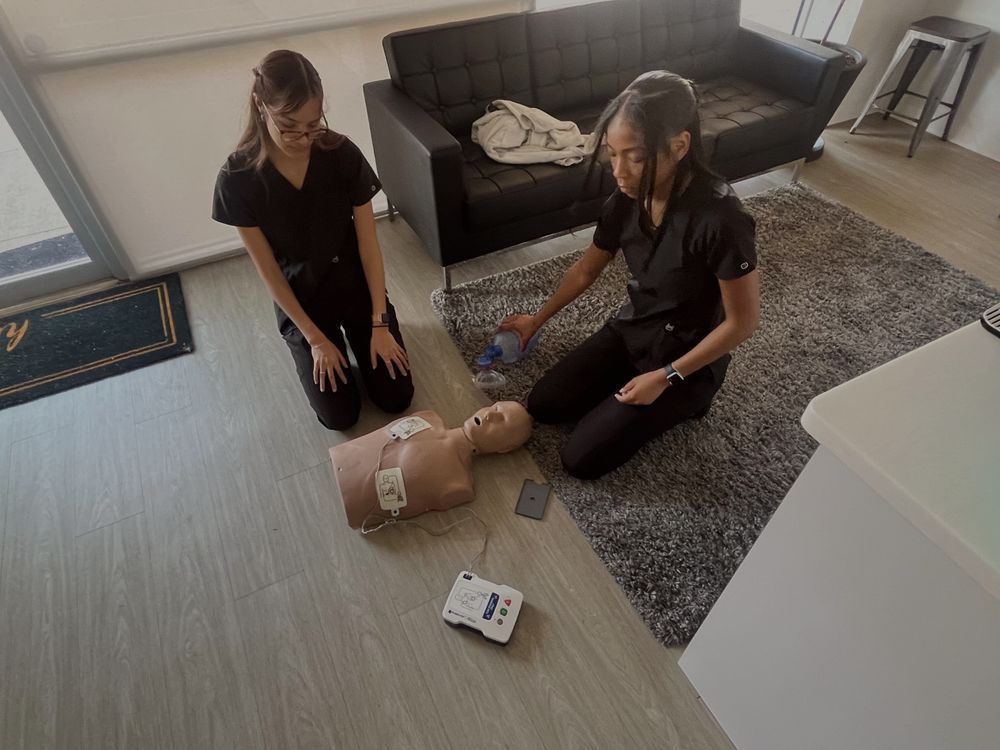
Hands-on training is especially important. Programs with in-person labs let students practice injections, blood draws, wound care, and other skills on simulation equipment before working with real patients. These experiences help new graduates build confidence and develop muscle memory for critical clinical procedures. For students coming straight out of high school, this structured training makes the transition into healthcare much easier.
Another advantage of completing a medical assistant program is speed. Unlike college degrees, which take years to complete, accelerated medical assistant programs can be finished in just a few months, allowing new graduates to enter the workforce quickly. This is ideal for students who want to start earning sooner rather than later.
Earn a Recognized Medical Assistant Certification
Once you complete your training, earning a certification is the next major step. While certification requirements vary by state, having a nationally recognized credential gives you a competitive edge and opens doors to more employment opportunities. Employers see certification as proof that you understand both the clinical and administrative responsibilities of the role.
Some of the most respected medical assistant certifications include:
Certified Clinical Medical Assistant (CCMA)
Registered Medical Assistant (RMA)
Certified Medical Assistant (CMA)
National Certified Medical Assistant (NCMA)
These certifications typically require passing a national exam that covers patient care, clinical procedures, administrative tasks, safety protocols, and medical law and ethics. While the idea of an exam might feel intimidating, strong training programs include exam preparation materials, practice tests, and review courses to help students feel fully prepared.
Certification can also increase your earning potential and help you stand out in competitive job markets. Employers know certified professionals are more likely to be confident, well-trained, and ready to handle the complexities of fast-paced healthcare settings. For recent high school graduates, certification is one of the best ways to demonstrate professionalism early in your career.
Gain Experience Through Externships and Entry-Level Positions
Hands-on experience is essential for new medical assistants, and most training programs include an externship in a local clinic or medical office. Externships allow you to work alongside experienced healthcare professionals, apply your skills in real-world situations, and develop relationships with potential employers. In many cases, externship sites offer job opportunities to students who perform well.
During an externship, students might assist with patient intake, update medical records, prepare exam rooms, take vital signs, and shadow providers during patient visits. This experience helps new graduates feel more comfortable interacting with patients and navigating the daily routines of a medical office. It’s also a valuable way to demonstrate reliability, professionalism, and strong communication skills—qualities employers look for in new hires.
After completing your externship, entry-level positions such as medical assistant, clinical assistant, patient care technician, and front office medical receptionist can help you continue building your experience. Many new graduates begin in smaller clinics or family practices before transitioning into specialty fields such as dermatology, pediatrics, ophthalmology, cardiology, and more. Each setting exposes you to different types of patient care and broadens your career possibilities.
If you’re coming straight out of high school, an externship is one of the best ways to build your resume and show employers that you are ready to contribute from day one.
Continue Growing Your Career With Education and On-the-Job Skills
Launching your medical assistant career after high school is just the beginning. Healthcare is an industry that values continuous learning, and medical assistants have many opportunities to grow professionally. Whether you want to stay in medical assisting long-term or eventually transition into another healthcare role, the experience you gain early in your career can support many future pathways.
On the job, you’ll develop skills in patient communication, clinical procedures, electronic health record systems, medical terminology, and specialty-specific techniques. These skills can qualify you for advanced MA roles, lead MA positions, or opportunities in specialty practices where pay is often higher.
Many medical assistants eventually pursue additional education to become licensed practical nurses (LPNs), registered nurses (RNs), or even physician assistants (PAs). Others move into office management, medical billing, patient coordination, or healthcare administration. Your medical assistant experience gives you a strong foundation for nearly any role in healthcare.
Even if you choose to remain a medical assistant, continuing education—such as earning additional certifications or attending professional development workshops—can help you stay updated on best practices and maintain your competitive edge in the job market.
Your Healthcare Career Can Start Right Now
Your Healthcare Career Can Start Right Now Starting a medical assistant career after high school is a smart choice for students who want to begin working quickly while gaining meaningful clinical experience. With the right training, certification, externship experience, and a commitment to ongoing professional growth, you can build a fulfilling and stable career in a rapidly growing field.
If you’re ready to take the next step, Pulse Medical Assistant School offers an online-first, 16-week medical assistant program designed to prepare new graduates for real-world patient care. With intensive, in-person labs and hands-on training, Pulse gives aspiring medical assistants the confidence to help real patients receive real care. It’s one of the fastest and most effective ways to begin your healthcare journey right after high school.
You're only a few months from the medical assistant career you deserve.