Medical Assistant Online Certification Program: What a Good One Looks Like
A medical assistant online certification program should produce graduates who are clinically competent, certified, and employable. That sounds straightforward, but the gap between programs that deliver on that promise and programs that don’t is significant. Some sell a certificate that hiring managers ignore. Others teach theory but skip the hands-on skills. A few get the balance right.
Here’s how to tell the difference — and what a well-built program actually includes.
What Separates a Good Program From a Bad One
Good programs prepare you for a recognized certification
The credential that matters is the CCMA (Certified Clinical Medical Assistant) from the National Healthcareer Association, or equivalent credentials like the CMA (AAMA) or RMA (AMT). These are standardized, nationally recognized certifications that employers know and trust.
Bad programs issue their own “certificates of completion” that carry no weight outside the school that issued them. Before enrolling anywhere, confirm which certification exam the program prepares you for.
Good programs include hands-on clinical training
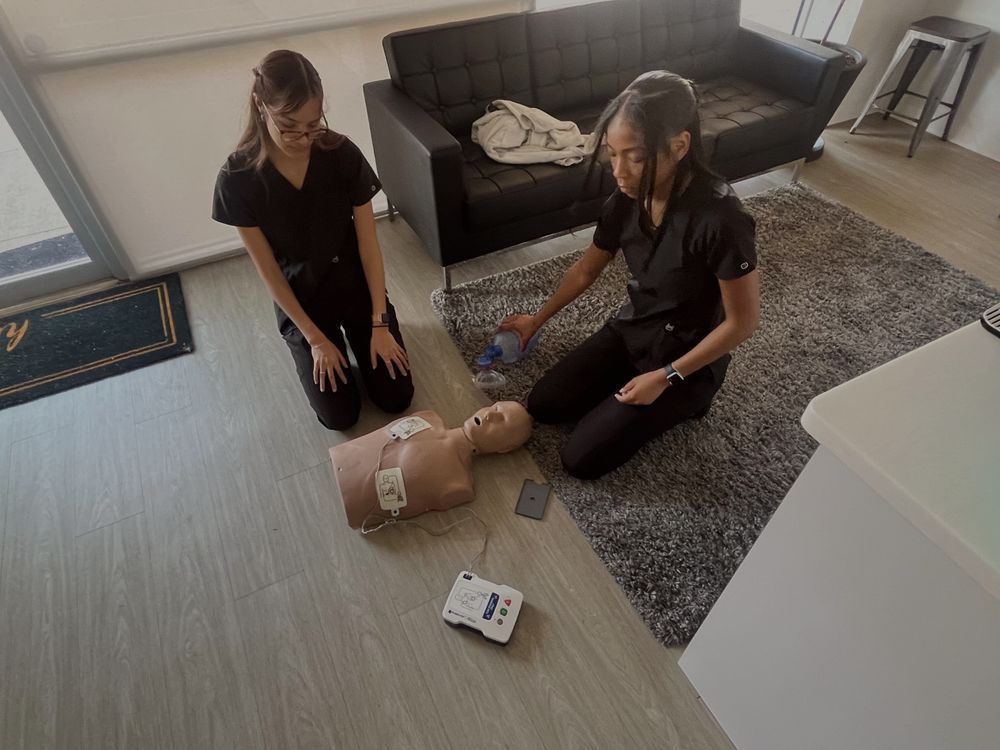
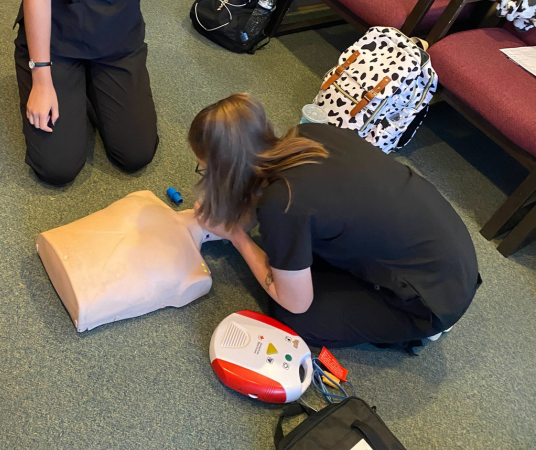
Medical assisting is a physical, hands-on profession. Drawing blood, giving injections, running EKGs, and taking vitals all require practice on real equipment under real supervision. A program that teaches these skills through video alone produces graduates who struggle in clinical settings.
The best online certification programs are actually hybrid — online for knowledge, in-person for clinical skills. Pulse Medical Assistant School uses exactly this model: live online classes for coursework, with intensive in-person lab sessions for clinical practice.
Good programs include an externship
An externship places you in a real medical office for supervised patient care. It’s where training becomes experience — and it’s often where graduates make the connections that lead to their first job. Programs without externships leave a significant gap in your preparation.
Good programs are transparent about cost
You should know the complete cost before signing anything. Programs that obscure pricing, push you toward federal student loans for short-term training, or charge hidden fees for exam registration and supplies are prioritizing their revenue over your outcomes.
Pulse’s tuition is $2,990 with weekly payment plans. Exam fee included. No student loans.
What You’ll Learn in a Quality Online Certification Program
Clinical knowledge (delivered online)
- Medical terminology — the foundation of every clinical conversation
- Anatomy and physiology — how body systems work and why clinical procedures target specific structures
- Pharmacology basics — common medication classes, administration routes, and safety protocols
- Infection control theory — OSHA regulations, sterilization science, and PPE standards
- Healthcare law and ethics — HIPAA, patient rights, scope of practice
- Administrative procedures — scheduling, EHR navigation, insurance verification, billing fundamentals
Clinical skills (practiced in-person)
- Phlebotomy — venipuncture, capillary puncture, specimen collection and handling
- Injections — intramuscular, subcutaneous, intradermal technique with proper needle selection
- EKG operation — 12-lead electrode placement, running the test, identifying artifacts
- Vital signs — blood pressure by auscultation, pulse palpation, temperature, respiratory rate, pulse oximetry
- Sterile technique — gloving, instrument handling, operatory turnover
- Patient intake — medical history review, chief complaint documentation, positioning for examination
Certification exam preparation (integrated throughout)
- Content review aligned with CCMA exam domains
- Practice questions after each module
- Full-length practice exams in the final weeks
- Test-taking strategies for the multiple-choice format
The 16-Week Structure at Pulse Medical Assistant School
| Phase | Weeks | Focus |
|---|---|---|
| Foundation | 1–4 | Medical terminology, anatomy, infection control, patient communication |
| Core clinical | 5–8 | Vitals, phlebotomy, injections, EKGs + in-person labs |
| Advanced + administrative | 9–12 | EHR, billing, scheduling, advanced procedures |
| Certification prep | 13–16 | Comprehensive review, practice exams, career readiness |
The program is delivered through live, instructor-led online sessions — not pre-recorded videos. You interact with instructors and classmates in real time, ask questions, and stay accountable to a structured schedule.
In-person lab sessions are spread across the program timeline, so clinical skills build progressively alongside your online coursework.
Job Market After Certification
The Bureau of Labor Statistics projects 14% growth in medical assistant employment through 2032. The national median salary is approximately $42,000 per year, with certified medical assistants in specialty practices and high-demand markets earning significantly more.
Employers are actively hiring — and certified graduates from programs that include hands-on training and externship experience are consistently the first to receive offers.
Who This Program Works For
- Career changers with no healthcare background — the program assumes zero prior experience
- Working adults — online sessions fit around existing schedules
- Parents and caregivers — no need to be in a classroom 40 hours a week
- Budget-conscious students — $2,990 with payment plans and no loans
- Motivated learners — 16 weeks is fast-paced but structured and manageable
Red Flags to Watch For
Avoid online certification programs that:
- Don’t prepare you for a nationally recognized exam (CCMA, CMA, or RMA)
- Have no in-person clinical component
- Don’t include an externship
- Won’t disclose full tuition before enrollment
- Push student loans for short-term training
- Use “self-paced” as a feature without structured accountability
- Have vague or nonexistent career support after graduation
Ready to Start?
- See the full program: Program details
- Review tuition and payment plans: Tuition
- Talk to our team: Contact
- Apply: How to apply
You're only a few months from the medical assistant career you deserve.