The Medical Assistant Training Program That Fits Your Life: 16 Weeks, Hybrid, Debt-Free
Choosing a medical assistant training program is a practical decision — and it deserves a practical answer. Not every program is worth your time or money. The one you choose should leave you genuinely ready to work on day one, not hoping your employer has patience for on-the-job learning.
Here’s what quality medical assistant training looks like, what the Pulse Medical Assistant School program covers across 16 weeks, and how the hybrid model changes the calculus on cost, flexibility, and clinical preparation.
What a medical assistant training program needs to cover
Medical assisting is a dual-skill job. You’re expected to handle both clinical and administrative work — often in the same shift, sometimes at the same time. A training program that shortchanges either side produces graduates who are half-prepared at best.
Clinical skills
Vital signs and patient intake
- Manual blood pressure (sphygmomanometer and stethoscope technique)
- Pulse rate, respiratory rate, temperature, and oxygen saturation
- Height, weight, and BMI calculation
- Documenting chief complaints and updating patient histories
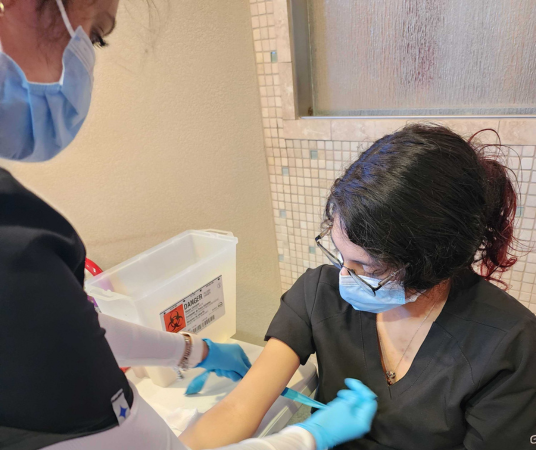
Phlebotomy
- Vein selection, tourniquet technique, and patient positioning
- Venipuncture using vacutainer and butterfly needle systems
- Capillary puncture (fingersticks) for point-of-care testing
- Specimen labeling, handling, and transport protocols
- Managing patient reactions, including vasovagal episodes
Injections
- Subcutaneous: insulin, vaccines, allergy shots
- Intramuscular: flu vaccines, hormone therapy, antibiotics
- Intradermal: TB skin testing
- Aspiration technique, site selection, and rotation documentation
EKG/Electrocardiography
- Placing all 10 electrodes for a 12-lead tracing
- Operating cardiac monitoring equipment
- Identifying and correcting artifact
- Transmitting results for provider review
Point-of-care laboratory testing
- Urinalysis (dipstick and microscopic)
- Blood glucose monitoring
- Rapid strep, influenza, COVID-19, and pregnancy testing
- Quality control procedures and result documentation
Clinical procedures
- Exam room setup and breakdown between patients
- Instrument sterilization and handling
- Assisting providers during exams and minor procedures
- Wound care: cleaning, dressing changes, suture and staple removal
Administrative skills
- EHR documentation — navigating platforms like Epic, eClinicalWorks, and Athena; entering vitals, histories, and treatment notes
- Scheduling — appointment booking, calendar management, urgent request handling
- Insurance — eligibility verification, prior authorization, CPT/ICD-10 coding basics
- Patient communication — phone triage, test result delivery, aftercare instruction
- HIPAA compliance — privacy practices in all communications, records, and disclosures
How Pulse Medical Assistant School structures the 16 weeks
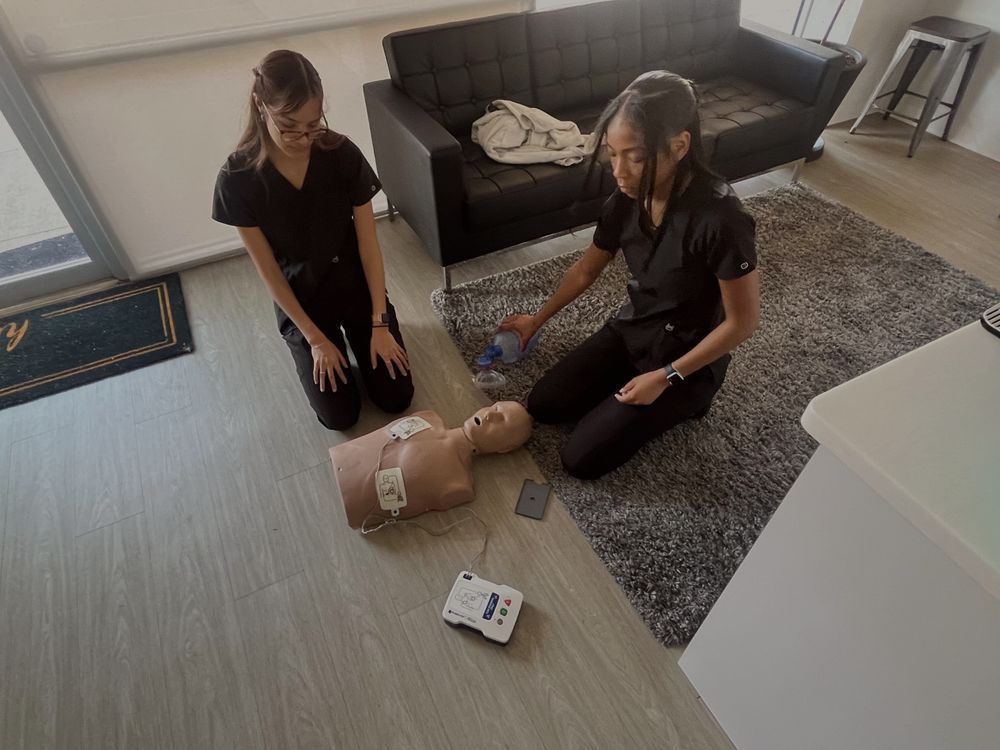
The Pulse Medical Assistant School medical assistant training program runs 16 weeks using a hybrid model: live online sessions for theory and administrative training, and 4 intensive in-person lab days for hands-on clinical skills.
Live online sessions (ongoing throughout 16 weeks)
Instructor-led — not pre-recorded. You attend live, ask questions in real time, and interact directly with your instructor and cohort. Sessions cover:
- Medical terminology, anatomy, and physiology
- Clinical procedure theory and technique walkthroughs
- Administrative training across all functions
- CCMA certification preparation integrated throughout
In-person labs (4 full-day weekend sessions)
Each lab day is structured around a cluster of related clinical skills. You practice on real equipment, receive direct feedback from instructors, and repeat until each skill is performed correctly and confidently.
Skills covered across the four lab days:
- Phlebotomy (venipuncture and capillary techniques)
- Injection administration (all three routes)
- Vital signs measurement (all parameters)
- EKG lead placement and operation
- Point-of-care testing panel
- Clinical procedures and exam room management
Externship
After completing online sessions and all four labs, students complete supervised hours in a real medical setting. The externship is where skills developed in training get tested under real clinical conditions — with real patients, real providers, and real time pressure.
Externship placement is arranged by the program. Students work in physician offices, urgent care clinics, or specialty practices.
CCMA certification: included, not optional
CCMA preparation is woven throughout the Pulse Medical Assistant School medical assistant training program — not treated as a separate add-on or crammed into the final week. By graduation, students are prepared to sit for the National Healthcareer Association’s CCMA exam.
Why this matters:
- Many employers require or strongly prefer certification for hiring
- Certified medical assistants earn more than uncredentialed peers
- The CCMA is nationally recognized and genuinely meaningful to employers
The certification exam prep is included in the $2,990 program tuition. You don’t pay extra.
The cost and debt-free model
The all-inclusive tuition for the Pulse Medical Assistant School program is $2,990. This covers all 16 weeks of online instruction, all 4 in-person lab days, externship placement, CCMA prep, and program materials.
No financial aid is accepted. That means no federal student loans, no debt that follows you after graduation. Students who complete the program graduate completely debt-free. Payment plans are available for students who want to spread the cost across the program.
At $2,990 total, this is one of the lowest-cost paths to a credentialed medical assistant career available. The starting salary for a medical assistant — typically $33,000–$38,000 entry-level — means the program pays for itself in the first few weeks on the job.
Who this training program is designed for
- Career changers who need to retrain for healthcare quickly and affordably
- Working adults who need schedule flexibility and can’t attend daily in-person classes
- Parents and caregivers managing family responsibilities alongside education
- First-generation healthcare workers who want a clear, low-cost path into the field
- Anyone without prior clinical experience — the program starts from the beginning
Job market and salary
The Bureau of Labor Statistics projects 14% growth in medical assistant jobs through 2032 — nearly double the national average. The national median salary is approximately $42,000 per year.
A 16-week medical assistant training program that costs under $3,000 and prepares you for a $36,000–$42,000 career is one of the strongest ROI propositions in workforce training. The math works.
Get started with Pulse Medical Assistant School
- Program details: What the 16 weeks cover
- Tuition and payment options: Cost breakdown
- Ask our team anything: Contact us
- Apply now: How to apply
You're only a few months from the medical assistant career you deserve.