Medical Assistant vs. EMT_ Which Career Fits You Best_

Medical Assistant vs. EMT: Which Career Fits You Best?
If you’re interested in a fast-paced, patient-focused career in healthcare, you may find yourself comparing two popular entry-level paths: medical assistant (MA) and emergency medical technician (EMT). Both roles offer the opportunity to help patients, gain valuable hands-on experience, and begin a long-term healthcare career. Still, the day-to-day work, required skills, training expectations, and career growth prospects are very different.
Choosing between becoming a medical assistant or an EMT means understanding how each role aligns with your personality, strengths, and long-term goals. Whether you prefer a structured clinical environment or thrive in urgent response situations, the right fit depends on what motivates you and how you want to support patients.
This guide walks you through the major differences between MAs and EMTs—salary, duties, training, job outlook, and more—so you can confidently choose the career that best suits your future.
This guide walks you through the major differences between MAs and EMTs—salary, duties, training, job outlook, and more—so you can confidently choose the career that best suits your future.
What Does a Medical Assistant Do?
What Does a Medical Assistant Do? Medical assistants work primarily in outpatient settings such as doctor’s offices, specialty clinics, and urgent care centers. They support both the clinical and administrative sides of patient care, making them essential to smooth, efficient healthcare operations.
Typical Clinical Responsibilities
Clinical tasks often include:
Taking vital signs
Preparing patients for exams
Preparing patients for exams
Assisting physicians with procedures
Administering medications under supervision
Performing EKGs or collecting lab samples
Updating patient medical histories
Because they work directly with patients throughout the day, medical assistants build strong communication skills and long-term relationships with the individuals they serve. Many people enjoy the steady rhythm and predictable structure of clinical work, especially compared to emergency response.
Administrative Responsibilities
In addition to hands-on patient duties, many MAs also:
Schedule appointments
Manage medical records
Coordinate insurance and billing information
Handle phone calls and patient check-ins
This combination of clinical and administrative work offers stability and variety, making the MA role ideal for people who enjoy multitasking and supporting providers behind the scenes.
What Does an EMT Do?
What Does an EMT Do? Emergency medical technicians respond to urgent, sometimes life-threatening situations. Their work is mobile, fast, and physically demanding, and they play a lifesaving role in the chain of emergency care.
Typical EMT Responsibilities
EMTs commonly:
Respond to 911 calls
Assess patient conditions quickly
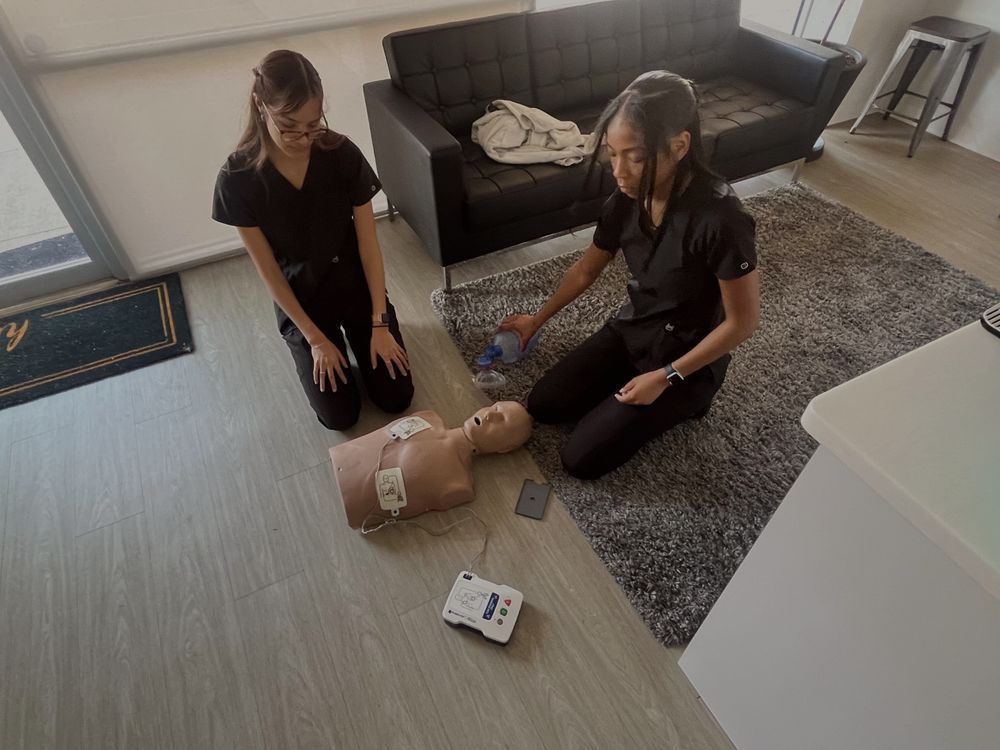
Perform CPR and basic life support
Control bleeding and stabilize injuries
Transport patients safely to hospitals
Communicate with emergency departments during transit
The nature of the role means EMTs need to stay calm under pressure, think critically in chaotic environments, and act quickly with limited information. If you thrive on adrenaline, unpredictability, and problem-solving in urgent situations, EMT work may be appealing.
Work Environment
Unlike medical assistants, EMTs rarely work in one designated location. Their “office” is typically an ambulance or emergency vehicle. Shifts can be long, late, or extended depending on call volume and location. The job is meaningful, but it can also be emotionally and physically intense.
Training Requirements: MA vs. EMT
Training Requirements: MA vs. EMT Both medical assistants and EMTs require formal training, but the type and length of that training differ significantly.
Medical Assistant Training
Most MA training programs take 4–12 months, depending on school structure and accreditation. These programs cover both clinical and administrative skills, including:
Anatomy and physiology
Medical terminology
Phlebotomy and injections
Diagnostic testing
Electronic health records
Office operations and patient communication
Many programs also include externships that allow students to gain real-world experience in a clinical setting. Graduates may pursue certification (such as CCMA or RMA), which can enhance job prospects and earning potential.
EMT Training
EMT training is shorter but more specialized. Most programs can be completed in 3–6 months and focus entirely on emergency response skills such as:
Airway management
Trauma response
Medical emergencies
CPR and basic life support
Patient assessment
After completing training, students must pass the National Registry of Emergency Medical Technicians (NREMT) exam to become certified and eligible for state licensure.
Which Training Path Fits You Best?
Choose MA training if you:
Enjoy structured learning with a mix of administrative and clinical skills
Prefer stable hours and predictable workflows
Want a role that can evolve into specialized medical careers
Choose EMT training if you:
Work well under pressure
Want to be directly involved in emergency response
Prefer quick, focused technical training
Salary and Job Outlook: Which Career Pays More?
Salary and Job Outlook: Which Career Pays More? Both medical assistants and EMTs have strong job outlooks thanks to growth in healthcare demand, population aging, and the expansion of emergency services.
Medical Assistant Salary & Job Outlook
The Bureau of Labor Statistics reports:
The Bureau of Labor Statistics reports: Median annual salary: Around $38,000–$40,000
Projected job growth: 14% over the next decade—much faster than average
Specialty clinics (such as cardiology or dermatology) often pay more, and medical assistants who earn certifications or additional skills can increase their earning potential even further.
EMT Salary & Job Outlook
According to national data:
Median annual salary: Around $37,000
Projected job growth: 5%
However, pay can vary widely based on location, experience, and employer type (private ambulance services, fire departments, or hospital-based EMS teams). Paramedic certification—an advanced level beyond EMT—can significantly increase earnings.
Work-Life Balance: Predictable vs. Unpredictable
One of the biggest separators between these two careers is daily schedule and lifestyle.
Medical Assistant Work-Life Balance
Medical assistants typically enjoy:
Medical assistants typically enjoy: Regular daytime hours
Weekends and holidays off (depending on clinic)
Consistent schedules
Less physically demanding work
This makes the MA path ideal for people who want a healthcare career without night shifts, long periods on the road, or unpredictable emergencies.
This makes the MA path ideal for people who want a healthcare career without night shifts, long periods on the road, or unpredictable emergencies.
EMT Work-Life Balance
EMTs, by contrast, often face:
12–24 hour shifts
Nights, weekends, and holidays
Unpredictable call volume
Physically demanding duties
Emotional stress during trauma-related emergencies
Some people love the excitement, camaraderie, and adrenaline that EMTs experience. Others may find the irregular schedules challenging over time.
Skills Needed for Each Career
Skills Needed for Each Career While both roles require compassion and strong communication skills, the specific skill sets differ.
Skills for Medical Assistants
Skills for Medical Assistants Successful MAs tend to be:
Detail-oriented
Patient and professional
Skilled at multitasking
Comfortable with technology/EHR systems
Strong communicators
Good at building patient relationships
Because MAs interact with the same patients over time, interpersonal skills play a major role.
Skills for EMTs
Skills for EMTs
Strong EMT candidates are typically:
Calm under pressure
Physically strong and able to lift patients
Quick thinkers
Problem-solvers in chaotic environments
Emotionally resilient
Excellent at teamwork and rapid communication
EMTs often encounter emotionally charged situations, so resilience is critical.
Career Growth Opportunities: Where Can Each Path Lead?
Career Growth Opportunities: Where Can Each Path Lead?
The long-term career outlook is another important factor when comparing these two jobs.
The long-term career outlook is another important factor when comparing these two jobs.
Medical Assistant Career Paths
Medical Assistant Career Paths
Medical assistants can advance into:
Medical assistants can advance into:
Clinic management or office administration
Specialty clinical roles (e.g., ophthalmology, cardiology)
Medical coding
Medical billing
Patient care technician roles
Nursing (with additional education)
Because MAs gain broad exposure to both patient care and healthcare operations, the role can be a jumping-off point into many other medical careers.
EMT Career Paths
EMT Career Paths EMTs often advance to:
Paramedic positions
Firefighting or rescue roles
Emergency dispatch
Emergency room technician roles
Disaster response teams
For EMTs who enjoy the intensity of emergency medicine, becoming a paramedic is the most common next step—and typically comes with increased pay and responsibility.
For EMTs who enjoy the intensity of emergency medicine, becoming a paramedic is the most common next step—and typically comes with increased pay and responsibility.
Which Career Is Right for You? Key Questions to Ask
Which Career Is Right for You? Key Questions to Ask If you’re still unsure whether MA or EMT work is the better fit, ask yourself:
Do I prefer stable, routine work or high-pressure emergency situations?
Am I comfortable working long or unpredictable shifts?
Do I want a role with more administrative tasks or purely clinical duties?
Am I prepared for the emotional intensity of emergency response work?
Do I want to build long-term patient relationships or focus on immediate care?
What kind of training format and timeline fits my life right now?
What kind of training format and timeline fits my life right now? There’s no wrong answer—just the one that aligns best with your personality and goals.
Both Careers Offer Meaningful Ways to Help Others
Medical assistants and EMTs both play vital roles in the healthcare system, but they serve patients in very different ways. MAs keep clinics running smoothly, ensuring patients receive organized, compassionate, and consistent care. EMTs respond to the most urgent moments of a patient’s life, delivering lifesaving support when seconds matter.
If you’re looking for a stable, patient-facing role with room for growth in outpatient care, medical assisting may be your best path. If you thrive under pressure and prefer working on the front lines of emergencies, EMT work might be the better fit.
Either way, you’re choosing a career that makes a real impact.
Either way, you’re choosing a career that makes a real impact.
Start Your Medical Assistant Career With Confidence
Start Your Medical Assistant Career With Confidence If medical assisting feels like the right path for you, Pulse Medical Assistant School offers an accessible and supportive way to begin. Pulse is an online-first, 16-week medical assistant program with intensive, in-person labs that give aspiring MAs the hands-on experience and confidence they need to help real patients receive real care. Start building your future in healthcare with training designed for your success.
You're only a few months from the medical assistant career you deserve.