Medical School Application Timeline for Medical Assistants Planning Ahead
Medical School Application Timeline for Medical Assistants Planning Ahead
For many medical assistants, the path to medicine begins with hands-on patient care, daily interactions with providers, and a growing confidence in clinical environments. The role gives aspiring physicians a front-row seat to the realities of healthcare—helping them refine their interests, build experience, and understand what it truly means to care for patients. But once the decision is made to pursue medical school, the next challenge quickly becomes clear: understanding the timeline, the requirements, and the steps needed to become a competitive applicant.
A medical school application isn’t something you throw together quickly. It requires strategy, planning, and consistent progress that starts well before the application opens. For medical assistants, this path can be even more structured because your clinical responsibilities, shift schedules, and certification goals must fit around the demanding preparation process. With the right timeline—and the right training—medical assistants can turn their experience into a powerful advantage.
Understanding the Medical School Application Timeline
Understanding the Medical School Application Timeline Medical school admissions operate on a predictable—but lengthy—cycle. Because most programs use rolling admissions, applying early often means better chances of acceptance. Here is the typical sequence medical assistants should follow when planning ahead.
Two Years Before Applying: Build Academic Strength and Clinical Foundations
Complete Prerequisite Coursework
Most medical schools require foundational science courses such as biology, chemistry, physics, and organic chemistry. If you have not completed these courses as part of your prior education, you will need to enroll in them at a community college or university. This stage usually takes one to two years, depending on your availability and whether you study part-time while working as a medical assistant.
Your experience as a medical assistant helps you connect theory with practice—making science classes more meaningful and easier to digest. But staying organized and planning a semester-by-semester timeline is essential for hitting the next major milestone: MCAT preparation.
Gain Additional Clinical Exposure
Working as a medical assistant gives you a tremendous head start. You already interact with patients, room individuals for appointments, take vital signs, and support providers during procedures. Medical schools value this hands-on exposure, which many applicants don’t have.
During this early planning stage, consider:
Asking to shadow physicians in your workplace
Taking on additional responsibilities when allowed
Observing different specialties to refine your interests
Your medical assisting experience reinforces your commitment to medicine and gives you meaningful stories that will strengthen your personal statement later in the process.
Twelve to Eighteen Months Before Applying: Begin MCAT Preparation
The MCAT is one of the most important components of your application. Most students spend 300–500 hours studying, often over 3–6 months.
The MCAT is one of the most important components of your application. Most students spend 300–500 hours studying, often over 3–6 months.
Create a Study Schedule That Fits Around MA Work
Medical assistants often have rotating schedules, extended shifts, or clinic hours that make studying challenging. Planning early is the best way to stay on track. A structured weekly study plan helps you manage both MCAT preparation and ongoing responsibilities in the clinic.
If you earned your medical assistant training through an accelerated or hybrid program, the online learning experience often helps you manage structured self-study more effectively. Students who succeed in accelerated programs tend to excel at time management—an invaluable skill for MCAT preparation.
Plan Your MCAT Test Date
Ideally, you should take the MCAT no later than April or May of the year you submit your application. This gives you time to receive your score and decide whether a retake is necessary.
Depending on your medical assisting schedule, many applicants choose:
A winter test date (slower clinical season)
A spring test date to stay aligned with the application cycle
Because most medical assistants are already familiar with medical terminology and patient care, many find certain MCAT sections more intuitive.
Twelve Months Before Applying: Begin Letters of Recommendation and Personal Statement Planning
Request Letters of Recommendation Early
As a medical assistant, you have direct contact with multiple providers—physicians, nurse practitioners, physician assistants, and practice managers. These individuals can offer strong, personalized letters that highlight your professionalism, clinical skills, and patient interaction abilities.
Request letters at least 6–9 months in advance from:
A supervising physician
A science professor
A non-science professor or supervisor
Giving references plenty of time ensures a stronger, more thoughtful letter.
Outline and Draft Your Personal Statement
Your work as a medical assistant will be the heart of your story. This is where you explain what you’ve learned from:
Direct patient care
Working in a fast-paced medical environment
Working in a fast-paced medical environment Supporting providers during treatments
Listening to patients’ fears, questions, and concerns
Start writing early. Most applicants go through several drafts before refining a final statement that is both confident and compassionate.
Six Months Before Applying: Complete Application Requirements
Gather Transcripts and Verify Coursework
Request transcripts from all colleges attended, including your medical assistant training program if applicable. Medical schools require complete academic histories, and delays in transcript processing can slow down your application.
Finalize Work and Activities Section
The AMCAS (American Medical College Application Service) includes a detailed section describing your experiences. Medical assistants are uniquely positioned to stand out because you can highlight:
The AMCAS (American Medical College Application Service) includes a detailed section describing your experiences. Medical assistants are uniquely positioned to stand out because you can highlight:
Clinical procedures you supported
Patient education experiences
Electronic health record (EHR) skills
Multidisciplinary teamwork
Communication and empathy in patient interactions
This section demonstrates your readiness for the next level of patient care.
Submit as Early as Possible
Applications typically open in late May or early June. Submitting early maximizes your chances during rolling admissions. Many medical assistants strategically schedule lighter clinic weeks around opening dates to finalize their application.
Three to Six Months After Applying: Prepare for Interviews
If your application is competitive, interviews may begin as early as August.
Use MA Experience During Interviews
Medical assistants interview exceptionally well because they can reference:
Medical assistants interview exceptionally well because they can reference: Real patient scenarios
Moments of compassion
Conflicts resolved in clinic settings
Complex workflows or emergencies they helped manage
Interviewers appreciate candidates who have already demonstrated commitment to healthcare. This lived experience often sets medical assistants apart from traditional students.
Practice Multiple Interview Formats
Medical school interviews may include:
Traditional one-on-one interviews
Multiple Mini Interviews (MMIs)
Group discussions
Situational judgement scenarios
Use your experience to frame answers with confidence, empathy, and professionalism—in other words, the qualities you demonstrate daily as a medical assistant.
After Interviews: Acceptances, Waitlists, and Deferrals
Admission decisions typically roll out between October and March. Medical assistants planning ahead should:
Keep gaining clinical experience
Maintain strong relationships with supervising providers
Stay prepared to provide updates to schools if requested
Continued clinical work reinforces your commitment and strengthens your resume if you reapply or pursue a waitlist spot.
Why Accelerated Medical Assistant Training Is a Better Option for Future Medical Students
Why Accelerated Medical Assistant Training Is a Better Option for Future Medical Students Working as a medical assistant is one of the most strategic ways to prepare for medical school. But the type of training you choose matters—especially if your long-term goal involves applying to medical school. Accelerated medical assistant training offers several advantages.
Faster Entry Into the Clinical Workforce
Traditional programs can take a year or longer. Accelerated medical assistant training lets you start working in just a few months. This means you gain clinical experience earlier—giving you more time to build a competitive medical school application.
Early experience also helps you decide whether medicine is the right path before investing years into prerequisites and MCAT preparation.
Flexible Hybrid Training Works Better With Academic Planning
Accelerated online-first programs give students flexibility, allowing them to work, study, and schedule prerequisites around their daily lives. This is especially valuable when balancing:
MCAT prep
Coursework
Application writing
Clinical shifts
Students in hybrid programs typically perform better academically because they’ve already practiced disciplined, self-paced learning.
Intensive, Hands-On Labs Build Practical Skills Quickly
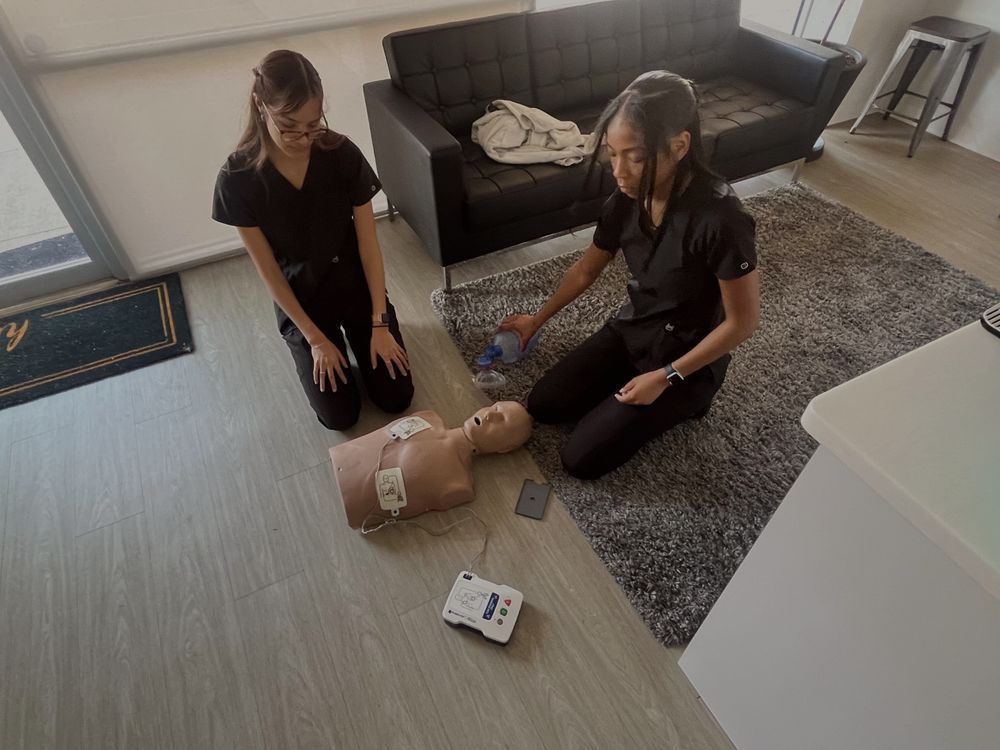
While accelerated programs move fast, high-quality programs include in-person, skills-focused labs that prepare students for real-world clinical experiences. This helps medical assistants build confidence with:
Clinical procedures
Patient communication
Vital signs
EHR systems
Team-based care
These experiences make your application stronger and help you succeed in both interviews and future medical school coursework.
Better Alignment With Medical School Expectations
Medical schools appreciate applicants who demonstrate initiative and commitment—qualities reflected in accelerated training. Completing a fast-paced medical assistant program shows that you:
Perform well in rigorous learning environments
Manage complex responsibilities
Are serious about advancing into healthcare
Thrive under real-world clinical expectations
These traits make your application more compelling.
More Time for Academic Deadlines and Prerequisites
Because accelerated programs take just a fraction of the time, you can start gaining clinical experience while simultaneously completing prerequisites and planning MCAT preparation. This strategic approach allows you to build the strongest possible application in the shortest amount of time.
Preparing for Medical School Starts With the Right Training
Preparing for Medical School Starts With the Right Training Medical assistants who plan ahead have a distinct advantage in building a strong medical school application. By following a structured timeline—beginning up to two years before applying—you can balance prerequisites, MCAT prep, letters of recommendation, personal statements, interviews, and continued clinical experience.
The journey to medical school is demanding, but choosing the right medical assistant training program can make all the difference.
The journey to medical school is demanding, but choosing the right medical assistant training program can make all the difference. If you’re considering medical assisting as your first step toward medical school, Pulse Medical Assistant School offers the ideal foundation. Pulse is an online-first, 16-week medical assistant program with intensive, in-person labs that give aspiring medical assistants the confidence to help real patients receive real care.
Whether you’re preparing for medical school or exploring your future in healthcare, Pulse equips you with the skills, experience, and credibility to take the next step confidently.
You're only a few months from the medical assistant career you deserve.