Online Medical Assistant Course: What You'll Actually Learn in 16 Weeks
Sixteen weeks. That’s how long the online medical assistant course at Pulse Medical Assistant School takes from enrollment to graduation — covering clinical skills, administrative training, and CCMA certification preparation in a structured program designed for people who can’t put their life on hold to go to school.
Here’s a realistic, week-by-week look at what the course actually covers, how the online and in-person components work together, and what you’ll be able to do by the time you finish.
How the Course Is Structured
Pulse’s medical assistant course operates on a hybrid model:
Online sessions make up the majority of your weekly schedule. These are live, instructor-led classes — not pre-recorded videos. You log in, engage with your instructor and classmates in real time, complete assignments, and prepare for the next session. The schedule is designed to fit around work and family responsibilities.
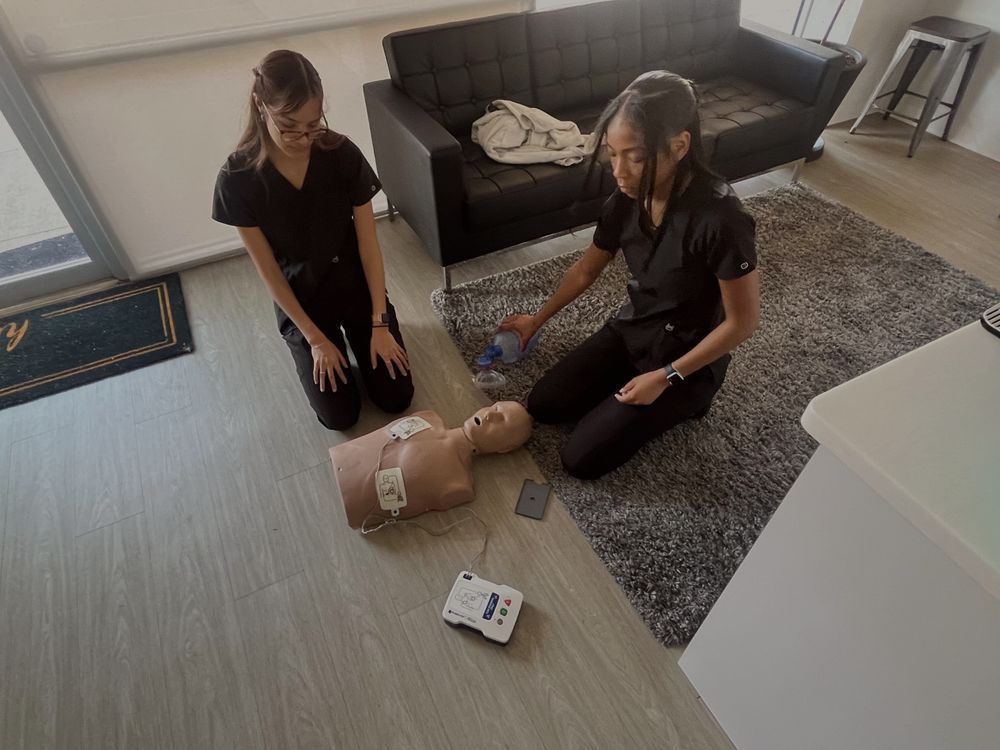
In-person clinical labs happen four times during the 16 weeks. These are intensive, hands-on sessions where you practice the physical skills that can’t be taught through a screen: phlebotomy, injections, EKGs, vitals, and sterilization procedures. You work with real medical equipment under direct instructor supervision.
Externship places you in a real medical office to apply your skills with actual patients under supervision. This is where the course material becomes clinical confidence.
Week-by-Week Breakdown
Weeks 1–4: Medical Foundations
The first month builds the knowledge base that supports everything else:
Medical terminology — the vocabulary of healthcare. Every chart note, lab order, provider instruction, and insurance document uses this language. Learning it early means the rest of the course clicks faster.
Anatomy and physiology — how the body’s major systems work, why diseases affect specific organs, and what clinical tests measure. This isn’t a college-level biology deep dive — it’s the practical anatomy you need to understand clinical procedures.
Infection control — sterilization science, OSHA standards, PPE protocols, and hand hygiene. This module covers exactly what you’ll practice in your first in-person lab and use every day on the job.
Patient communication — intake procedures, managing anxious patients, delivering instructions clearly, and maintaining professional boundaries.
Introduction to vital signs — theory and technique before you practice taking blood pressure, pulse, and temperature in person.
Weeks 5–8: Core Clinical Skills
This is where the course becomes hands-on:
Vital signs — blood pressure (auscultation and digital), pulse, temperature, respiratory rate, and oxygen saturation. You’ll practice taking these accurately and quickly.
Phlebotomy — venipuncture technique, proper tube order of draw, specimen labeling, patient management, and safety protocols. In-person labs during this phase let you practice needle insertion and tube handling with instructor feedback.
Injections — intramuscular, subcutaneous, and intradermal administration. You’ll learn proper needle selection, site identification, and technique for each type.
EKG/ECG — 12-lead electrode placement, running the test, recognizing common artifacts, and transmitting results. In-person practice is critical here because placement precision determines result quality.
Weeks 9–12: Advanced Clinical and Administrative Training
The course expands into deeper clinical procedures and the administrative side of the job:
Advanced clinical procedures — assisting providers during exams, wound care basics, point-of-care testing (urinalysis, blood glucose, rapid strep, rapid flu), and specimen processing.
Electronic health records (EHR) — navigating systems like Epic, eClinicalWorks, and Athena. Entering patient data, documenting provider notes, and managing clinical workflows digitally.
Scheduling and patient flow — managing appointment calendars, coordinating urgent requests, and keeping the office running efficiently.
Insurance and billing — verifying coverage, processing prior authorizations, understanding basic CPT and ICD codes, and handling patient financial communication.
HIPAA compliance — patient privacy in practice, not just in theory. What you can say, to whom, and how to document and communicate without violating federal law.
Weeks 13–16: Certification Prep and Career Readiness
The final month brings everything together:
Comprehensive content review — revisiting every clinical and administrative domain tested on the CCMA exam.
Practice exams — full-length simulations under exam conditions. These identify weak areas and build test-taking stamina.
Career readiness — resume writing, interview preparation, job search strategies, and professional presentation. These sessions give you practical tools for the job search, not generic career advice.
Externship completion — by this point, you’re applying your full skill set in a real clinical environment, working with actual patients, and building the professional references that will support your job search.
What You’ll Be Able to Do After 16 Weeks
By graduation, you’ll have practiced and demonstrated competency in:
- Taking a complete set of vital signs accurately and efficiently
- Drawing blood from patients using proper venipuncture technique
- Administering intramuscular, subcutaneous, and intradermal injections
- Placing electrodes and running a 12-lead EKG
- Performing point-of-care tests (urinalysis, glucose, rapid strep)
- Maintaining sterile technique and OSHA-compliant infection control
- Navigating EHR systems and documenting clinical encounters
- Scheduling patients, verifying insurance, and managing office workflow
- Communicating with patients professionally and empathetically
You’ll also be prepared to sit for the CCMA certification exam, with the exam fee included in your $2,990 tuition.
The Numbers Behind the Career
- Median salary: $42,000/year nationally (BLS)
- Job growth: 14% projected through 2032
- Certification premium: $2,000–$6,000/year more than non-certified medical assistants
- Time to employment: typically 1–4 weeks after graduation for prepared, certified graduates
Ready to Start?
- See the full program: Program details
- Review tuition and payment plans: Tuition
- Talk to our team: Contact
- Apply: How to apply
You're only a few months from the medical assistant career you deserve.