Certified Clinical Medical Assistant: What the CCMA Credential Means and How Pulse Includes It
Becoming a certified clinical medical assistant (CCMA) is one of the fastest ways to stand out in the medical assisting job market. It’s a nationally recognized credential that tells employers you’ve been trained, tested, and verified — not just someone who completed a program and received a participation certificate.
Here’s what the CCMA means, why it makes a real difference in your career, and how Pulse builds the entire certification process into its program.
What is a Certified Clinical Medical Assistant?
The CCMA credential is issued by the National Healthcare Association (NHA), one of the largest healthcare certification organizations in the country. To earn it, you must:
- Complete an approved medical assistant training program (or meet equivalent experience requirements)
- Pass the NHA’s CCMA exam — a standardized, computer-based test
The exam covers the knowledge and skills that medical assistants use daily:
- Patient care — vital signs, patient preparation, medical history intake
- Phlebotomy — venipuncture technique, specimen handling, tube order, safety
- Clinical procedures — injections, EKGs, wound care, medication administration
- Infection control — sterilization, OSHA compliance, PPE protocols
- Administrative skills — scheduling, EHR documentation, insurance basics, HIPAA
Passing the exam earns you the right to use the CCMA credential — a signal to every employer that you meet a recognized standard of competency.
Why the CCMA matters for your career
Employers prefer certified candidates
When a clinic or physician office has two applicants — one with a CCMA and one without — the certified candidate almost always gets the edge. Certification reduces hiring risk and tells the employer you can perform.
Higher starting pay
Many employers offer a pay premium for certified clinical medical assistants. Even a $1–$2/hour difference adds up to $2,000–$4,000+ per year — and the gap often widens with experience.
Faster hiring process
Certified candidates spend less time in interviews proving their skills. The CCMA acts as a third-party verification, which speeds up the entire hiring process.
Nationwide recognition
The NHA’s CCMA is accepted by employers across all 50 states. If you move, change cities, or want to work in a different healthcare setting, your certification travels with you.
Foundation for advancement
Holding a CCMA demonstrates professional commitment. It positions you for lead medical assistant roles, specialty positions, and management opportunities as your career progresses.
How Pulse builds CCMA certification into the program
Most programs treat certification as something you figure out on your own after graduating. Pulse takes a different approach:
Exam prep is integrated throughout
CCMA content isn’t crammed into the last week. It’s woven into the curriculum from week 1 — so every clinical skill you learn, every administrative process you study, and every lab you attend directly reinforces what you’ll be tested on.
The exam fee is included
The NHA exam fee is part of your $2,990 tuition. No surprise bill at the end. No separate registration cost. It’s all included.
Hands-on labs build exam confidence
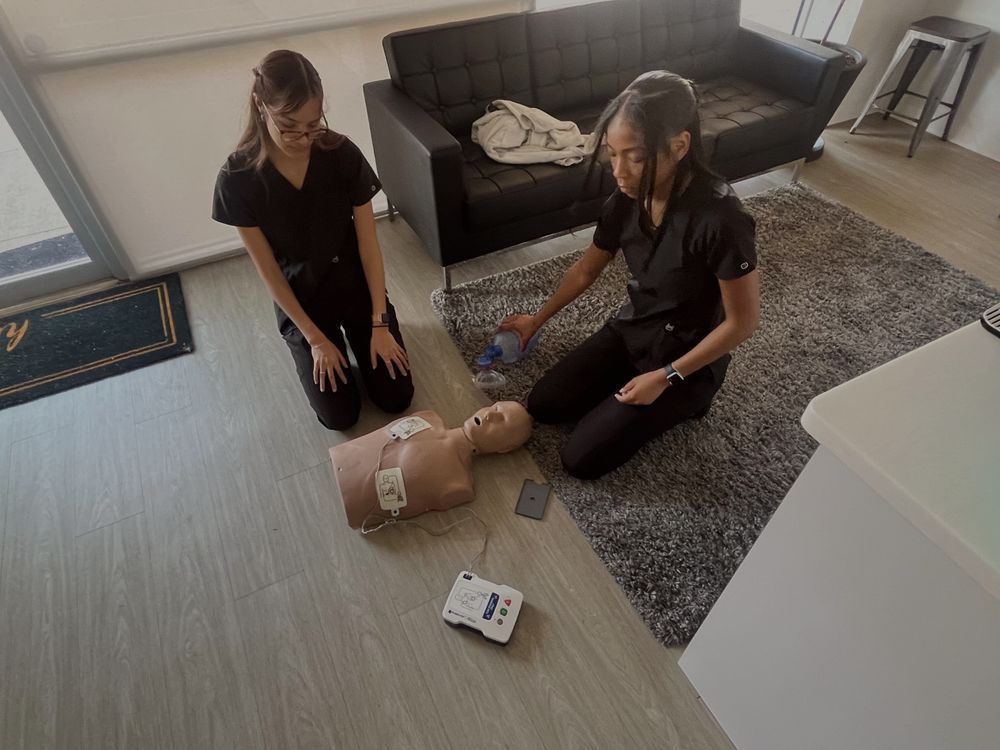
The CCMA doesn’t just test what you know — it tests what you can do. Pulse’s 4 in-person labs ensure you’ve physically practiced the clinical skills the exam assesses: vitals, phlebotomy, injections, EKGs, and sterilization.
You graduate ready to sit for the exam
By week 16, you’ve covered all the content, practiced all the skills, and worked through targeted exam prep. You’re not scrambling to study — you’re reviewing what you already know.
CCMA vs other credentials
| CCMA (NHA) | RMA (AMT) | CMA (AAMA) | |
|---|---|---|---|
| Focus | Clinical medical assisting | Clinical + administrative | Broad clinical + admin |
| Eligibility | Approved training program | Accredited program or experience | CAAHEP-accredited program only |
| Exam format | Computer-based, multiple-choice | Computer-based | Computer-based |
| Recognition | Nationwide | Nationwide | Nationwide |
| Accessibility | High — flexible eligibility | Moderate | More restrictive |
Pulse prepares you specifically for the CCMA — one of the most accessible and widely recognized certifications in the field.
What it costs at Pulse
- Tuition: $2,990 — includes everything (materials, lab access, CCMA exam fee)
- Payment plans: Weekly options available
- Student debt: $0 by design
Ready to get certified?
- See the full program: Program details
- Review tuition: Tuition
- Ask questions: Contact
- Apply: How to apply
You're only a few months from the medical assistant career you deserve.