CMA Jobs Near Me: What the Work Actually Looks Like and How to Land One

Most people who start searching for CMA jobs have a general sense of what the role involves — working in a medical office, helping with patients, doing clinical tasks. What they don’t always know is what the day-to-day actually looks like, what employers specifically screen for, and what separates candidates who get hired quickly from those who sit on the job market for months.
Here’s the real picture — what CMA jobs involve, what’s in demand right now, and how to position yourself for one.
What does a Certified Medical Assistant actually do?
The CMA title covers a broad scope of work. In most clinical settings, a medical assistant handles both clinical and administrative responsibilities — which is exactly what makes the role valuable to employers. You’re not siloed into one function; you move fluidly between the front office and the exam room.
Clinical duties
- Rooming patients: Taking and recording vital signs (blood pressure, pulse, temperature, weight, oxygen saturation), documenting chief complaints, updating medication lists
- Preparing exam rooms: Setting up for procedures, ensuring supplies are stocked and sterile, turning over rooms between patients
- Assisting with procedures: Wound care, suture removal, dressing changes, minor surgical assists
- Phlebotomy: Drawing blood for lab work — one of the most in-demand skills a medical assistant can have
- Injections and immunizations: Administering vaccines and medication injections under provider supervision
- EKG administration: Attaching electrodes, running 12-lead EKGs, printing results for provider review
- Specimen collection and processing: Urine dipstick, rapid strep, point-of-care testing
- Medication management: Preparing medications, documenting administration, tracking refill requests
Administrative duties
- Patient check-in and registration: Verifying insurance, updating demographics, collecting copays
- Scheduling: Booking appointments, managing cancellations, coordinating specialist referrals
- Prior authorizations: Initiating insurance approvals for medications, procedures, and specialist visits
- Medical records: Scanning documents, managing release of records, maintaining chart accuracy
- Phone triage: Screening patient calls, routing urgent concerns to the appropriate provider
The balance between clinical and administrative work varies by practice size and specialty. Large multi-provider practices often have dedicated front-desk staff, which means CMAs spend more time in the clinical space. Solo-provider practices tend to require more administrative flexibility.
What specialty settings look like
CMAs who want to specialize — and earn more — have strong options across several fields:
Primary care / family medicine: The broadest scope of CMA work. High patient volume, varied conditions, a mix of all clinical and administrative duties. Great for new graduates building foundational experience.
Urgent care: Fast-paced, high-variety, demanding on clinical skills (lots of wound care, splinting, injections, rapid tests). Tends to pay above the primary care median.
Cardiology: More procedure-specific — EKGs, stress tests, cardiac monitoring. Strong demand for CMAs with clean EKG technique.
Pediatrics: Working with children requires specific communication skills and patience. Immunization administration is a major daily task.
Dermatology: Procedure-heavy (biopsies, cryotherapy, minor excisions). High demand for CMAs with solid surgical assist skills.
Orthopedics: Cast application, splinting, post-surgical wound care. Higher pay in most markets.
Specialty positions typically pay $48,000–$65,000+/year for certified, experienced CMAs — well above the general entry-level median.
What the CMA job market looks like right now
According to the Bureau of Labor Statistics (BLS, 2026), medical assistant employment is projected to grow 14–15% through 2033 — significantly faster than average for all occupations. This is one of the strongest growth projections in the healthcare sector.
What drives that demand:
- Aging population requiring more routine and preventive care
- Primary care physician shortages increasing reliance on medical assistants for patient throughput
- Expansion of urgent care and outpatient clinic networks
- Ongoing healthcare industry growth post-pandemic
Indeed and Glassdoor salary data (2026) shows:
- Entry-level CMA: $36,000–$42,000/year
- Experienced CMA: $44,000–$52,000/year
- Specialty CMA: $48,000–$65,000+/year
Certified candidates consistently outperform uncertified applicants in both hiring speed and starting salary. The CCMA credential through NHA is the most widely recognized medical assistant certification nationally.
What employers screen for when hiring CMAs
When a medical office posts a CMA position, here’s what they’re actually evaluating:
Certification: CCMA (NHA), CMA (AAMA), or RMA (AMT) — without one, you’re competing for lower-paying uncertified roles. With one, you’re eligible for the full range of CMA positions.
Phlebotomy competency: Blood draws are a daily task in most clinical settings. Candidates who can demonstrate clean technique are significantly more hireable than those who learned it only in a classroom simulation.
EHR experience: Familiarity with electronic health record systems (Epic, Athena, eClinicalWorks, etc.) is a plus. Most EHRs are learned on the job, but knowing the workflow helps.
Clinical readiness: Did you train in a real medical office or a classroom? Employers notice the difference. Candidates with hands-on experience in actual clinical environments tend to onboard faster and require less remediation.
Professionalism and patient communication: Healthcare environments run on trust. Your ability to communicate calmly with patients, follow protocols, and work as part of a clinical team matters as much as your clinical skills.
How Pulse prepares you for CMA jobs
Pulse’s 16-week program was built around the skills that actually get CMAs hired. A few things that stand out:
CCMA exam included: The NHA CCMA exam is bundled into Pulse’s program — you’re not paying extra for certification prep or the exam itself. Graduates sit for the exam after completing the program and enter the job market with credentials in hand.
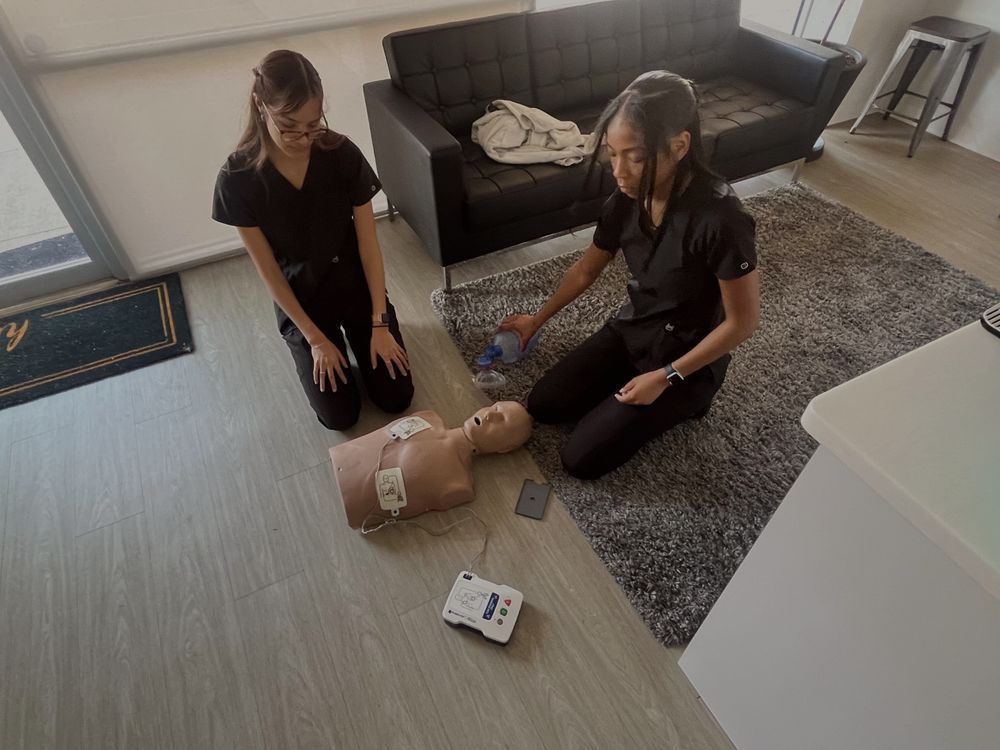
Real medical office training: Pulse’s four intensive in-person lab days take place inside actual working medical practices — not classroom simulations. You’re working in the same environment where you’ll eventually be employed. That hands-on exposure translates directly to interview confidence and faster onboarding.
Externship included: Pulse includes an externship component, giving students supervised real-world clinical experience before graduation. This is the type of experience employers specifically look for.
16 weeks, debt-free: Total program cost is $2,990, with weekly payment plans available ($112.50/week). No financial aid is accepted — the program was deliberately priced and structured so students graduate without debt, which means your first paycheck is yours, not owed to a lender.
What a strong CMA resume looks like
When you apply for your first CMA position, a few things help your application stand out in a competitive pool:
Lead with your certification. Put “CCMA (NHA)” prominently at the top of your resume — in your title or credentials line. Hiring managers scan for this first.
List specific clinical skills. Don’t just say “clinical experience.” List: phlebotomy, venipuncture, EKG administration, vital signs, injection administration (IM, SubQ, intradermal), wound care, point-of-care testing. Specificity signals real training.
Reference your externship site. If you completed your externship at a named practice, include it with a brief description of the clinical environment and your responsibilities. Externship experience is viewed as real work experience by most employers.
Mention EHR familiarity. If you worked with any electronic health record system during training or externship, list it. Even limited exposure to Epic, Athena, or eClinicalWorks is worth noting.
Keep it one page for entry-level. Hiring managers in busy medical offices spend seconds on initial resume review. Clear, scannable formatting with relevant skills front-loaded serves you better than a dense two-page document.
What to expect in the first 90 days
The first few months in a CMA role have a consistent pattern regardless of setting:
Weeks 1–2: Orientation. You’ll spend time learning the practice’s specific systems — their EHR, their scheduling workflow, their sterilization protocols, their provider preferences. Every practice does things slightly differently even when following the same clinical standards.
Weeks 3–6: Supervised practice. You’ll be working with increased independence but with experienced staff nearby. This is where the clinical training from your program pays off — you’re not learning the procedures for the first time, you’re learning this practice’s specific way of doing them.
Weeks 7–12: Independent performance. Most practices expect new MAs to be performing independently by the end of the first 90 days. Speed and accuracy on vitals, blood draws, EKGs, and room management all develop through repetition during this phase.
Graduates who trained in real clinical environments — like Pulse students who complete lab days and externship in actual medical practices — typically reach independent performance faster than those who trained primarily in simulation environments.
Finding CMA jobs near you
Once certified and graduated, the job search process is straightforward for CMAs in most markets:
- Indeed and LinkedIn: Post a profile with your CCMA credential listed prominently. Set job alerts for “medical assistant” and “CMA” in your city.
- Healthcare staffing agencies: Agencies like AMN Healthcare, Maxim, and local staffing firms actively place certified MAs into both permanent and temp-to-hire positions.
- Direct outreach: Many smaller practices don’t post jobs publicly. A direct application to a practice you’d want to work for — especially with a referral from a clinical contact — can open doors that job boards don’t.
- Networking from externship: Students who complete externships often receive job offers from the same practices where they trained. That’s one of the most reliable pathways to first employment.
If you’re ready to start training, the program details page has the full breakdown of what Pulse’s 16-week curriculum covers. And if you want to confirm there’s a location near you, check Pulse’s locations directory.
Salary and employment projection data sourced from the Bureau of Labor Statistics (BLS.gov, 2026), Indeed, and Glassdoor.
You're only a few months from the medical assistant career you deserve.