Is Medical Assistant Certification Worth It? The ROI Breakdown for 2026
Before spending time and money on any training, the question worth asking is simple: does this actually pay off? For medical assistant certification, the answer isn’t just “yes” — it’s backed by measurable data on hiring rates, starting salaries, and career trajectory.
Here’s the honest financial and career case for getting certified.
Certified vs. uncertified: the salary gap
The most direct way to measure whether certification is worth it is to look at what certified medical assistants earn compared to uncertified ones.
According to Indeed and BLS data (2026):
| Entry-level | Experienced | |
|---|---|---|
| Uncertified MA | $30,000–$36,000/year | $36,000–$42,000/year |
| Certified MA (CMA/CCMA) | $36,000–$42,000/year | $44,000–$55,000/year |
The salary gap at entry level is approximately $6,000–$8,000/year. Over five years — assuming modest raises — a certified MA earns roughly $35,000–$50,000 more than an uncertified peer who started at the same time.
That’s a significant return on a credential that costs under $3,000 to obtain through Pulse.
The hiring advantage
Salary is only half the picture. The other half is speed to employment — how quickly you get hired, and how competitive your application looks.
Most medical offices posting MA positions specify certification as a preference or requirement. In competitive markets, uncertified applicants frequently don’t make it past initial screening for higher-paying roles. Certified candidates:
- Apply to a wider pool of positions (including specialty settings that pay above median)
- Get callbacks faster in competitive markets
- Start at higher base salaries (some offices have tiered pay scales tied to certification)
- Have an easier path to advancement into lead MA or office management roles
The CCMA through National Healthcareer Association (NHA) is the most widely accepted certification nationally — recognized by hospital systems, urgent care networks, and independent practices alike.
What certification actually proves to employers
A certification isn’t just a credential on paper. It signals three things to a hiring manager:
1. Clinical competency baseline. Passing a national exam demonstrates that you understand infection control, clinical procedures, pharmacology basics, patient care principles, and administrative functions at a measurable standard. Uncertified MAs have no third-party verification of that knowledge.
2. Commitment. Pursuing certification requires preparation, study, and passing a real exam. It separates candidates who took their training seriously from those who didn’t.
3. Reduced onboarding risk. Practices that hire certified MAs spend less time verifying baseline knowledge. They can onboard faster with more confidence, which matters in busy clinical environments.
The two main certification paths compared
There are a few national MA certifications, but two dominate the market:
CMA (AAMA) — Certified Medical Assistant
- Administered by the American Association of Medical Assistants
- Requires graduation from a CAAHEP or ABHES-accredited program
- Widely recognized, especially in hospital and larger health system settings
- Renewal required every 5 years (60 CEUs)
CCMA (NHA) — Certified Clinical Medical Assistant
- Administered by the National Healthcareer Association
- More flexible eligibility requirements — accreditation of the training program is not required
- Nationally recognized across clinical settings
- Growing recognition among urgent care networks and outpatient practices
- Renewal required every 2 years (14 CEUs or re-examination)
Pulse prepares students specifically for the CCMA through NHA, and the exam is included in the program cost. You’re not paying separately for certification prep or the exam itself.
What it costs to get certified — and what you get back
The cost
Pulse’s all-in program cost is $2,990 — total. That includes:
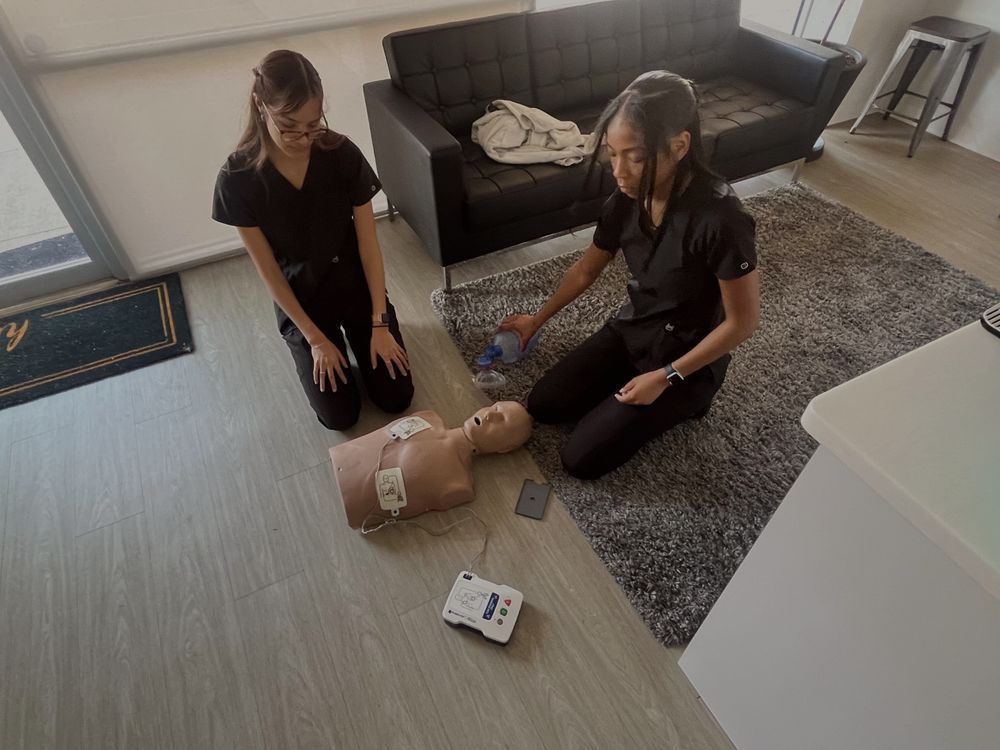
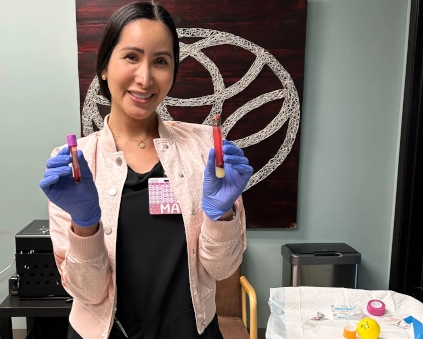
- The full 16-week curriculum (online + in-person labs)
- CCMA exam fee (NHA)
- Take-home learning materials
- Externship
Weekly payment plan: $112.50/week over the 16-week program. No lump-sum payment required.
No financial aid is accepted — the program was priced specifically so students can pay out of pocket without loans. You graduate with certification and a zero balance.
The return
At a starting salary of $38,000/year (conservative estimate for a new CCMA):
- Year 1 return on $2,990 investment: $35,010 net
- Break-even on program cost: approximately 4 weeks of employment
The ROI calculation is not complicated. Four weeks of working as a certified MA pays for the entire program. After that, every paycheck is pure return on that investment.
What happens without certification
It’s worth being clear about the alternative path.
Some people enter medical assisting without formal training — picked up through on-the-job experience, shadowing, or short informal programs. This path can work, but it has a ceiling. Without certification:
- You’re limited to uncertified MA roles (lower pay, fewer options)
- Advancement to lead MA, clinical supervisor, or specialty roles is harder
- You’ll eventually need to certify anyway if you want to move up — which means studying and testing after already working in the field
Front-loading the certification through a structured program like Pulse is almost always more efficient than trying to certify later while working a full-time clinical job.
The long-term career ceiling difference
Certification doesn’t just affect where you start — it affects where you can go.
For uncertified MAs, the career path tends to plateau at the general MA level. You can gain experience and earn modest raises, but advancement into lead MA, clinical coordinator, or office management roles typically requires certification or additional credentials. Many practices won’t promote an uncertified MA into a supervisory position, regardless of how long they’ve been with the organization.
For certified MAs, the path continues. Common advancement trajectories include:
- Lead medical assistant: Supervising a team of MAs, managing clinical workflows, onboarding new staff. Typically pays $48,000–$58,000/year.
- Medical office manager: Overseeing clinical and administrative operations for a practice. Salaries range from $50,000 to $70,000+/year in larger practices.
- Specialty certification: Adding credentials in phlebotomy (CPT), EKG (CET), or ophthalmology (COA) increases earning potential and specialization.
- Healthcare education pathway: CCMA certification is recognized as a stepping stone toward LPN and RN programs. Many nursing school admissions committees view MA experience favorably.
The point: certification isn’t just a one-time credential. It’s the foundation for a career path that has meaningful upward mobility — versus a ceiling that’s much lower without it.
Common concerns about getting certified — and honest answers
“I don’t have healthcare experience — will I be able to pass the CCMA exam?”
Yes — that’s what the training program is for. Pulse’s curriculum is specifically aligned to CCMA exam content domains. Students who complete the program and engage with the exam prep content are well-prepared for the exam, regardless of their prior background. No healthcare experience is required to enroll.
“What if I don’t pass the exam the first time?”
The CCMA exam through NHA has a retake option. Most students who prepare thoroughly with their program’s exam prep resources pass on the first attempt. The focused 16-week curriculum at Pulse is designed to build the specific knowledge the exam tests.
“Is the CCMA recognized in my state?”
The CCMA is a nationally recognized credential, accepted across all 50 states. It’s not state-specific like some licenses — once you earn it, it’s valid anywhere in the country.
Who benefits most from getting certified
Certification is particularly high-value for:
- Career changers with no healthcare background — it gives you instant credibility in a field where you have no track record
- People in cost-of-living-sensitive markets — where the $6–8k salary premium makes a meaningful lifestyle difference
- Anyone targeting specialty settings — cardiology, urgent care, orthopedics, dermatology — where certification is essentially required
- People who want to advance — lead MA, medical office manager, or further healthcare education pathways all benefit from the certified foundation
Is Pulse’s program the right place to get certified?
That depends on what you’re optimizing for. If you want fast, affordable, debt-free certification with real clinical training in actual medical offices and the CCMA exam included — Pulse is one of the better options in the market.
The program details page has the full curriculum breakdown. And if you want to confirm there’s a location accessible to you, check Pulse’s locations directory.
Sixteen weeks. Under $3,000. CCMA certification included. Debt-free.
Salary data sourced from the Bureau of Labor Statistics (BLS.gov, 2026), Indeed, and Glassdoor salary estimates for medical assistant roles.
You're only a few months from the medical assistant career you deserve.