Medical Assistant Programs: What Sets Pulse Apart From the Rest
There’s no shortage of medical assistant programs to choose from. Community colleges, trade schools, online platforms, and private institutions all offer some version of medical assistant training. The question isn’t whether programs exist — it’s which one actually prepares you for the job, fits your life, and doesn’t drain your bank account in the process.
Here’s what separates a good program from a great one, and where Pulse fits in that picture.
What most medical assistant programs get right (and wrong)
What the good ones do
- Teach both clinical and administrative skills
- Include some form of hands-on practice
- Mention certification at some point in the process
Where many fall short
- Too long — stretching what can be taught in months into 1–2 years by adding general education courses that don’t apply to the job
- Too expensive — charging $10,000–$25,000+ for training that leads to a $40,000–$45,000 starting salary, creating a poor ROI
- Too theoretical — heavy on textbooks and lectures, light on real clinical practice
- Certification as an afterthought — mentioning the CCMA but not preparing you for it, and definitely not including the exam fee
- Inflexible scheduling — requiring full-time, in-person attendance that working adults can’t sustain
5 things that set Pulse apart
1. 16 weeks, not 16 months
Pulse’s program is designed to be focused and efficient. Every week builds on the last, every module is tied to a specific skill or competency, and there’s no filler. You graduate trained and certified in 16 weeks.
2. Online-first with real clinical labs
The best parts of online learning (flexibility, convenience, self-pacing for knowledge content) combined with the parts that absolutely require in-person practice:
- Online sessions: Live, instructor-led classes covering medical terminology, anatomy, HIPAA, billing, EHR, and CCMA exam content
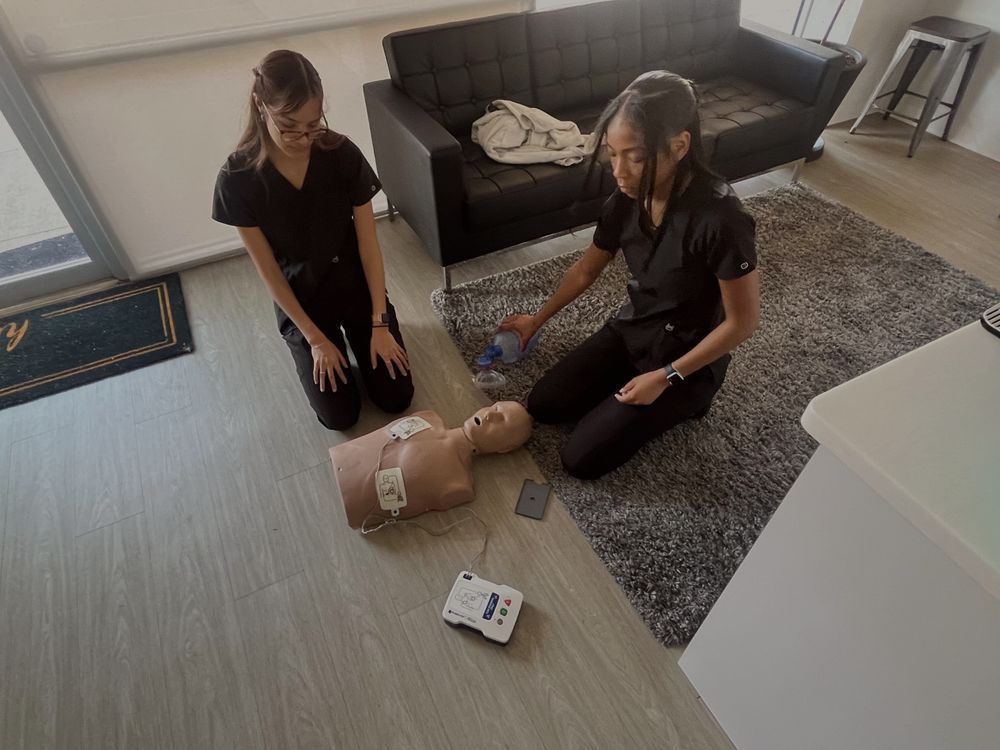
- 4 in-person labs: Supervised, hands-on practice with phlebotomy, vitals, injections, EKGs, and sterilization — using real clinical equipment
This hybrid model means you’re not stuck in a classroom five days a week, but you’re also not trying to learn blood draws from a YouTube video.
3. CCMA certification built in
Medical assistant certification isn’t an add-on at Pulse. The CCMA exam prep is woven into the curriculum from the first week, and the NHA exam fee is included in your tuition. When you graduate, you’re ready to sit for the exam — not scrambling to find a study guide.
4. $2,990 total — graduate debt-free
Pulse’s tuition covers everything: instruction, materials, lab access, and the CCMA exam fee. Weekly payment plans are available. There are no hidden costs, no surprise charges, and no student loans. Students graduate debt-free by design.
5. Built for career changers and working adults
Pulse’s program was designed for people with real lives — jobs, kids, bills, responsibilities. The online-first format means you can train without quitting your current job. The 16-week timeline means you’re not committing to years of school. And the $2,990 price tag means you’re not betting your financial future on a career change.
What you’ll be prepared to do
After completing Pulse’s program, you’ll be trained in:
Clinical skills:
- Taking and recording vital signs accurately
- Phlebotomy — venipuncture, specimen handling, safety protocols
- Administering injections — IM, subcutaneous, intradermal
- Running EKG/ECG procedures
- Infection control — sterilization, PPE, OSHA standards
- Assisting physicians during exams and procedures
Administrative skills:
- Patient scheduling and intake
- Electronic health records documentation
- Insurance verification and billing basics
- HIPAA compliance
- Professional communication with patients and staff
And you’ll hold (or be ready to earn) the CCMA — the credential that puts you ahead of uncertified candidates in the job market.
How Pulse compares
| Pulse | Community College | Online-Only | |
|---|---|---|---|
| Duration | 16 weeks | 12–24 months | 8–16 weeks |
| Cost | $2,990 | $8,000–$25,000+ | $3,000–$8,000 |
| Hands-on training | 4 in-person labs | Varies | None |
| CCMA prep + exam fee | Included | Sometimes | Rarely |
| Scheduling | Online-first, flexible | Fixed class times | Self-paced |
| Debt at graduation | $0 | Often significant | Varies |
Ready to see the difference?
- Explore the program: Program details
- Review tuition and payment plans: Tuition
- Talk to our team: Contact
- Apply: How to apply
You're only a few months from the medical assistant career you deserve.