Medical Assistant Training Near Me: 5 Things to Look for Before You Enroll

There’s no shortage of medical assistant training programs. A quick search turns up community colleges, career schools, hybrid programs, fully online options, and everything in between — all claiming to prepare you for a clinical career. The hard part isn’t finding options. It’s figuring out which ones are actually worth your time and money.
Here are five things that meaningfully separate good programs from mediocre ones — and the red flags that should make you look elsewhere.
1. Where does the hands-on training actually happen?
This is the most important question you can ask — and the one programs are least clear about in their marketing.
Medical assisting is a clinical job. Taking blood pressure, drawing blood, running EKGs, administering injections — you can’t learn these from videos or written exams. At some point you need to be in a real clinical environment, using real equipment, with a real instructor watching and correcting your technique.
Programs vary enormously on this:
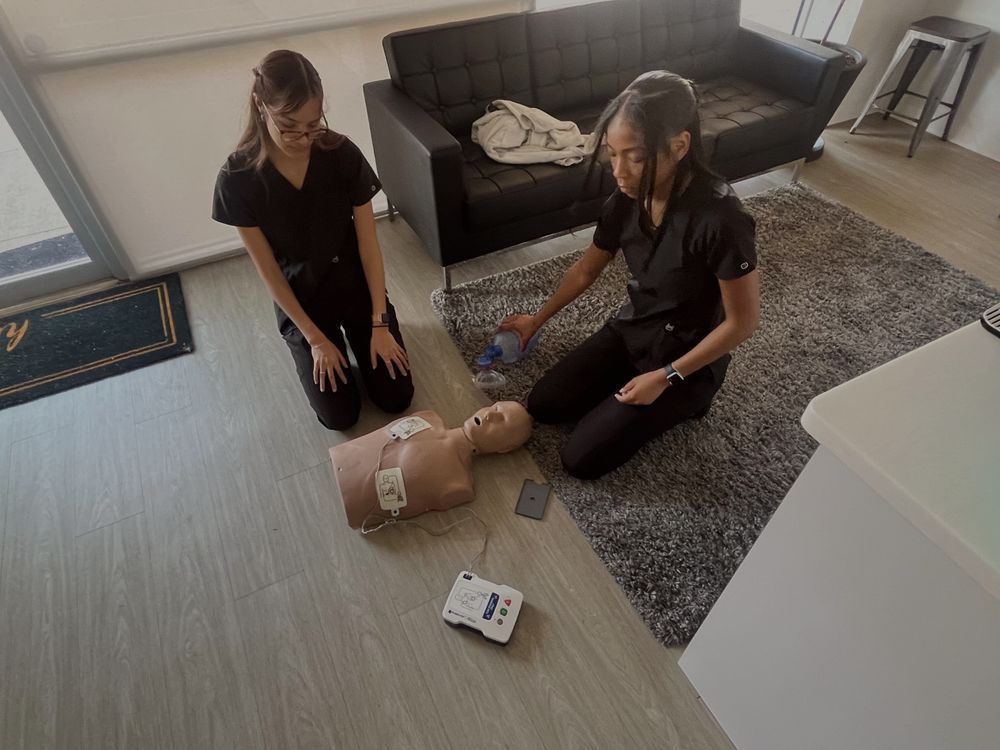
Classroom simulation labs: The most common setup. The school has a simulated exam room with mannequins, training arms, and practice equipment. Better than nothing. But not the same as a real clinical environment — there’s no patient variability, no real equipment variation, no clinical workflow pressure.
School-based teaching clinics: Some programs operate their own small clinics where students see real patients under faculty supervision. A step up from simulation, but still a campus environment rather than a working medical practice.
Real medical offices: A smaller number of programs — Pulse among them — place students inside active, working medical practices for hands-on training. Real patients, real equipment, real clinical pace, real professional expectations. This is the training environment that most directly transfers to actual employment.
When you’re interviewing for your first MA job, the question “have you worked in a real clinical environment?” has a very different answer depending on which type of training you received.
What to ask any program: “Where specifically does hands-on clinical training take place? Is it in a classroom or simulation lab, or inside a working medical practice?”
Red flag: A program that’s vague about where training happens, or that describes “lab facilities” and “simulation equipment” without mentioning actual clinical placements.
2. Is the certification exam included — or an add-on?
Medical assistant certification (CCMA, CMA, RMA) is what separates candidates who get hired quickly from those who sit on the job market for months. Certified MAs consistently earn $6,000–$10,000/year more than uncertified peers.
Some programs include the certification exam in the advertised cost. Others don’t — and the add-on fees can be significant. NHA’s CCMA exam costs $155 on its own; some programs charge additional fees for exam prep courses on top of that.
Before enrolling, confirm:
- Is the certification exam included in the total program cost?
- Which certification does the program prepare you for — CCMA (NHA), CMA (AAMA), or RMA (AMT)?
- What is the program’s historical pass rate on the exam?
Pulse’s program includes the CCMA exam through NHA in the $2,990 total cost. No additional exam fees, no separate prep course charges.
Red flag: A program that advertises a low tuition figure but doesn’t mention exam fees, materials fees, or certification prep costs until you’re further into the enrollment process.
3. What does the total cost actually look like — including debt at graduation?
“Tuition” is not the same as “total cost,” and “total cost” is not the same as “what you’ll owe when you graduate.”
The difference matters. A $6,000 program paid through student loans means you start your first job with debt and monthly interest payments. A $3,000 program paid through a weekly payment plan means you graduate with a zero balance and a full paycheck.
When comparing programs, ask:
- What is the total all-in cost (tuition + materials + fees + exam)?
- Does the program accept federal financial aid? If yes, do they encourage you to take loans?
- What are the out-of-pocket payment plan options?
- What does a typical student owe at graduation?
Pulse’s program costs $2,990 total, with a weekly auto-draft payment plan of $112.50/week for the 16-week program. No financial aid is accepted — a deliberate choice to keep costs transparent and keep students out of debt.
Red flag: Programs that encourage you to apply for financial aid as the first step in enrollment, before you’ve had a chance to understand cash pay options. This often signals that the program’s cost isn’t designed for out-of-pocket payment.
4. How long is the program — and is that honest?
Program length claims deserve scrutiny.
Some programs advertise “fast-track” timelines that include an externship or clinical placement not counted in the advertised weeks. Others list a 12-week program but schedule only 2–3 hours per day, making the effective time commitment much longer. Still others have semester-based schedules that pad a few months of actual content into 9 months of enrollment.
Ask specifically:
- How many total weeks is the program from first class to last?
- Is externship included in the advertised duration, or is it additional?
- How many hours per week of coursework and live sessions are expected?
- What’s a realistic estimate from enrollment to first job, including exam prep and job search?
Pulse’s 16 weeks is 16 focused weeks — online coursework, live Tuesday evening sessions, and four intensive in-person lab days. Externship is included as part of the program. From enrollment to first job typically runs 5–6 months including exam prep and hiring process.
Red flag: Programs that list a short program duration but bury an externship requirement in the fine print that adds months to the actual timeline.
5. Does the program include an externship — and is it in a real setting?
Externship is one of the most important features a medical assistant program can offer, and it’s also one of the most variable.
Externship gives you supervised clinical experience in a real healthcare setting before you graduate. When you apply for your first MA job, you’re no longer applying as a new grad with zero clinical exposure — you have documented, real-world experience to point to.
Not all programs include externship. And not all externships are equal — some programs call any clinical observation experience an “externship,” even if it’s passive shadowing rather than supervised skill practice.
When evaluating externship components, ask:
- Is externship included in the program cost, or is it an add-on or self-arranged?
- Where do externships take place — at a partner practice, or do students have to find their own?
- What is the student’s role during externship — active participant or observer?
- How many hours is the externship?
Pulse includes externship as a structured component of the program, placed at partner clinical sites. Graduates complete supervised, hands-on clinical experience before finishing the program — and often build professional relationships with practice staff that directly support job placement.
Red flag: Programs that describe externship as “available” or “optional,” or that expect students to arrange their own clinical placements.
Questions worth asking any program before you enroll
Beyond the five factors above, a few direct questions will tell you a lot about a program’s confidence in its own outcomes:
“What is your CCMA exam pass rate?” Programs with strong preparation are proud of this number and will share it readily. Vague or evasive answers suggest it’s not a number they want to advertise.
“Can I speak with a recent graduate?” Programs with satisfied graduates will connect you. This is one of the most valuable due diligence steps available — ask a recent graduate about the experience, the clinical preparation, and how the job search went.
“Where specifically do in-person lab days take place?” A direct question with a direct expected answer: either a classroom/simulation lab or a real clinical practice. There’s a meaningful difference.
“What happens if I miss a lab day?” Life circumstances happen. Understand the policy before you’re in that situation.
“What type of positions are your graduates typically hired into?” This tells you whether the program has real connections with employers, and whether their graduates are competitive for clinical roles or primarily ending up in administrative positions.
Pulse can answer all of these questions directly. If a program you’re evaluating can’t, that’s information worth having before you commit.
Putting it together
The right medical assistant training program near you has five things: hands-on training in real clinical settings, certification exam included, transparent total cost with no debt at graduation, an honest program timeline, and a structured externship.
Pulse is built around all five. The program details page has the full breakdown of curriculum, lab structure, and what to expect at enrollment. To find a location near you, check the locations directory.
Sixteen weeks. Real medical offices. CCMA included. Debt-free.
Salary and certification data sourced from the National Healthcareer Association (NHA), Bureau of Labor Statistics (BLS.gov, 2026), and Indeed.
You're only a few months from the medical assistant career you deserve.