Medical Assistant Training Near Me: Why Local Matters — and How Pulse Delivers It
There’s a practical reason people search for medical assistant training near me rather than just “medical assistant training.” Proximity isn’t just about convenience — it has real implications for the quality of your training, the strength of your professional network, and the speed of your job search after graduation.
Training locally connects you to the healthcare community where you’ll actually work. When your hands-on practice happens in real medical offices near you, the providers and staff you work alongside become your first professional contacts. They see your work ethic and your skills before you’ve ever submitted a resume.
Here’s why local training matters, what to evaluate when comparing programs in your area, and how Pulse structures its training to deliver genuine local clinical experience — wherever you are.
Why proximity to your training matters
Your clinical network builds where you train
Medical assisting, like most healthcare careers, is a relationship-driven field. Providers hire people they know or who’ve been personally vouched for. The fastest path to employment isn’t always sending out resumes — it’s the externship supervisor who mentions an opening, or the clinical director who remembers you from a lab day.
When your hands-on sessions happen in real medical offices near where you’ll be working, those professional relationships start forming during training. That’s a meaningful head start.
You learn your local job market from the inside
Every region has a different mix of healthcare settings: independent practices, multi-location specialty groups, urgent care chains, community health centers, hospital-affiliated outpatient clinics. Training locally means you learn which settings are hiring, what they pay, what they value in candidates, and which ones have cultures that match your working style — before you graduate.
You avoid the friction of long commutes during training
A career transition is already demanding. Adding a long daily commute to a distant campus makes the logistics harder than they need to be. Training with a program that combines flexible online learning with local in-person sessions reduces friction during an already busy period.
You can target your externship where you want to work
Externship placement in a local facility is more likely to lead directly to employment than an externship at a facility you’d never consider working at long-term. Local programs are more likely to have existing relationships with local providers — which means more relevant, strategically placed externship experiences.
What to actually look for in local MA programs
Not everything that shows up in a “near me” search deserves equal consideration. Here’s a practical evaluation framework:
Do they train in real medical offices?
This is the most important question. Some programs describe their lab facilities in clinical terms — “our simulation lab,” “our training center” — without clarifying that it’s a classroom with practice equipment, not an actual medical office.
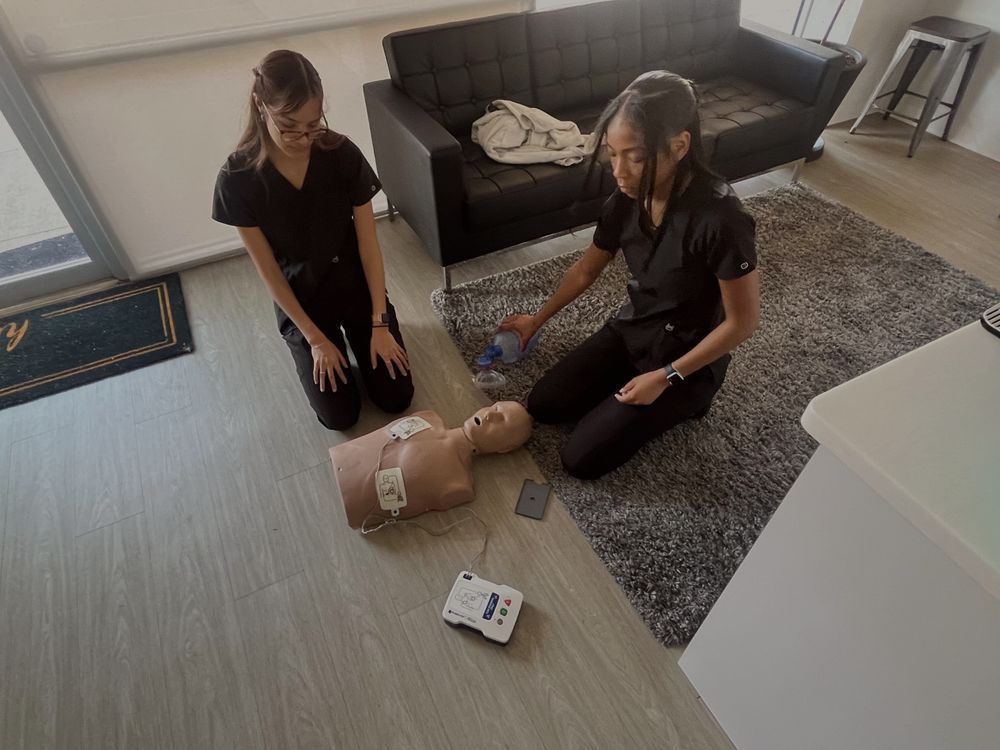
Real medical office training is categorically different. The workflow, the layout, the equipment, the pace, the interpersonal dynamics — you absorb all of this through repeated exposure in functional clinical environments, not by practicing on mannequins in a classroom that’s arranged to look like one.
Ask directly: Where do in-person lab days take place? The answer should be a real medical office, not a campus or training facility.
Is CCMA certification prep built in — and is the exam fee included?
The CCMA credential is the national standard most employers require. Programs that don’t prepare you specifically for it, or that charge separately for exam access, are not giving you the full value of your tuition investment.
Pulse integrates CCMA exam preparation throughout the 16-week curriculum and includes the exam fee in the $2,990 tuition.
Does the schedule work with your life?
A program that requires full-time weekday attendance on a campus is effectively unavailable to most working adults, parents, or people managing other obligations. Look for evening or weekend options with meaningful online flexibility.
Pulse runs live instruction on Tuesday evenings and schedules lab days on weekends — so your weekdays stay available.
Is the timeline realistic and the cost transparent?
A 16-week program prepares you as thoroughly as an 18–24-week program if the curriculum is well-designed and the instruction is high quality. The difference in timeline is a benefit, not a concern. Total cost should be stated upfront, inclusive of exam fees and materials — no surprises after enrollment.
What does their graduate employment actually look like?
This is harder to verify but worth pursuing. Ask about the program’s typical graduate employment timeline, whether they have externship relationships with local providers, and what career support looks like after graduation.
What Pulse training near you looks like
Online-first learning: the bulk of the program
Most of Pulse’s curriculum is delivered remotely:
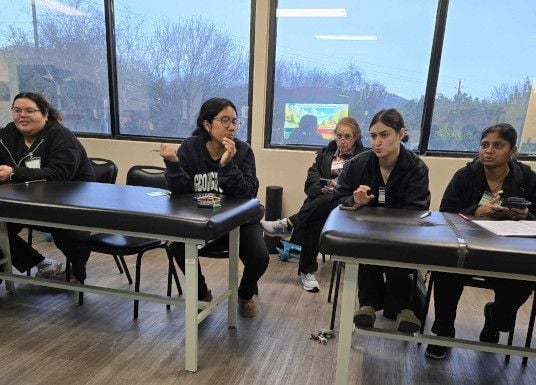
- Live Tuesday evening sessions — instructor-led virtual classes with your cohort, in real time
- Self-paced coursework — readings, assignments, and knowledge checks on your own schedule
- No daily campus commute; no full-time weekday attendance required
This flexibility makes Pulse accessible for working adults, parents, and career changers who can’t restructure their lives around a rigid class schedule.
4 in-person lab days: clinical skills in real offices
Four full-day sessions — held at partner medical offices near you — are where clinical competency develops. These aren’t visits to a campus training room. They’re days spent in functioning medical environments practicing:
- Phlebotomy and venipuncture
- Vital signs and patient assessment
- Injection techniques (IM, SQ, ID)
- 12-lead EKG performance
- Specimen collection and processing
- Wound care and sterile technique
Practicing in an actual clinic — with real equipment, real office protocols, and real clinical staff nearby — is what makes the training transferable to the job.
Externship: supervised clinical hours before graduation
Pulse’s externship component provides real patient contact under supervision. This is where knowledge and skills come together in actual patient care conditions — the kind of experience that makes your resume concrete and your interviews convincing.
Career support
Pulse provides job search guidance, resume assistance, and interview preparation to help you translate training into employment as efficiently as possible after graduation.
Red flags to watch for when evaluating programs near you
As you search, a few warning signs are worth knowing:
Vague language about where training happens. “Hands-on experience” and “clinical training environment” can mean a campus lab with mannequins, not a real medical office. If the program doesn’t clearly state that in-person sessions occur in actual partner medical offices, ask directly — and verify the answer.
Certification listed as optional or extra-cost. CCMA certification is not a nice-to-have — it’s what gets you hired and compensated fairly. Programs that charge separately for exam prep or exam access are either adding hidden cost or signaling that certification is not central to what they do.
No externship component. Externship is how structured training becomes real patient experience. Programs without one are leaving a significant gap between your graduation and your readiness to practice independently.
Unrealistic “fully online” claims. As discussed above, clinical skills require in-person practice. Programs that make this claim without an externship or lab component are overpromising. You’ll find out the gap exists when an employer asks you to demonstrate a blood draw during an interview.
Total cost disclosed only after enrollment pressure. Legitimate programs publish their tuition upfront, inclusive of exam fees and materials. If you have to ask — or if the number changes after you’ve expressed interest — that’s a concern.
What you’ll earn
After training and CCMA certification, here’s the realistic earnings range for Pulse Medical Assistant School and similar markets:
- Entry-level (certified): approximately $36,000–$42,000/year
- National median: approximately $42,000–$46,000/year (BLS, 2026)
- Specialty practices (cardiology, derm, oncology): $48,000–$58,000+/year with experience
The BLS projects 15% employment growth through 2032 — one of the highest rates among all occupations. Medical offices near you are hiring consistently, and certified, trained graduates move through the job search process faster than uncertified candidates.
Take the next step
Pulse’s training near you combines the flexibility of an online-first program with the clinical depth of real medical office training — CCMA certification and exam fee included.
- Find a location: Program details
- Review tuition and payment plans: Tuition
- Talk to our team: Contact
- Apply: How to apply
You're only a few months from the medical assistant career you deserve.