Medical Assistant Training Program: What 16 Weeks at Pulse Actually Looks Like
Most medical assistant training program descriptions give you a list of skills and a tuition number — but they don’t tell you what the experience actually feels like. What does a typical week look like? When do labs happen? How does the pace feel? Is it manageable if you’re working or raising a family?
Here’s a realistic look at what 16 weeks at Pulse involves, from your first session to graduation.
The structure: online-first with hands-on labs
Pulse’s program is built around two modes of learning that work together:
Online sessions (the backbone)
- Live, instructor-led classes — not pre-recorded videos you watch alone
- Interactive format — you engage with instructors and classmates in real time
- Flexible scheduling — designed to fit around work and family responsibilities
- Weekly coursework — assignments, reading, and practice between sessions
In-person labs (the confidence builders)
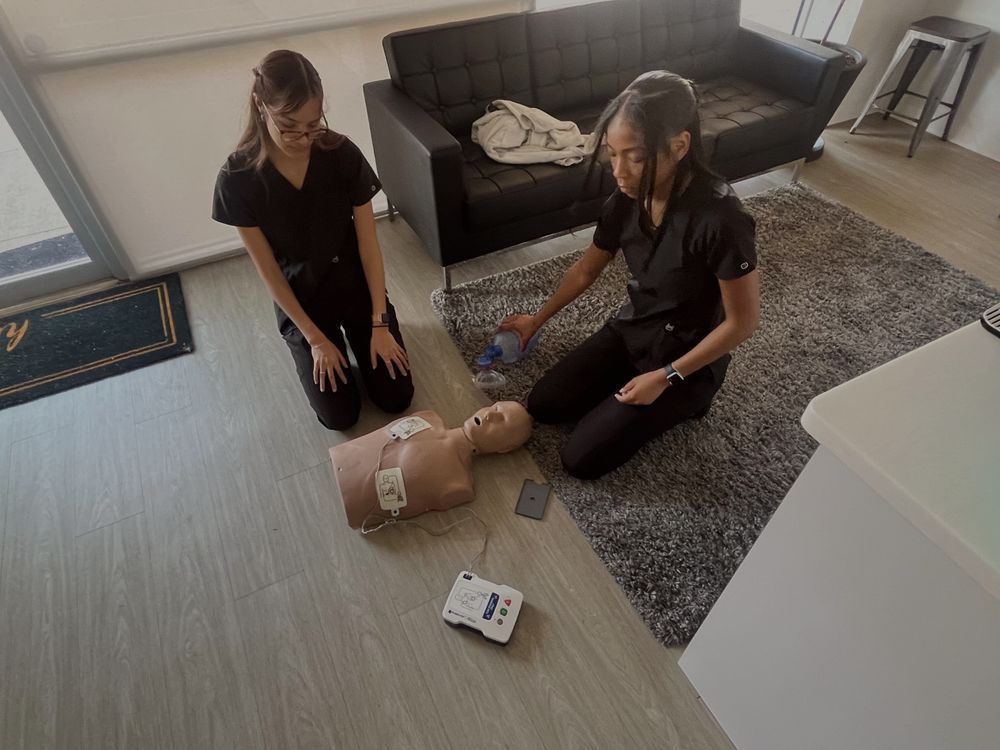
- 4 intensive lab sessions spread across the 16 weeks
- Hands-on clinical practice — phlebotomy, vitals, injections, EKGs, sterilization, and more
- Real equipment, real feedback — you practice with actual clinical instruments under instructor supervision
- Where the skills click — the online knowledge becomes physical competence during these sessions
What you learn week by week
Weeks 1–4: Building the foundation
The first month covers the knowledge base you need before hands-on practice:
- Medical terminology — the language of healthcare
- Anatomy and physiology fundamentals — how the body works and why it matters clinically
- Infection control — sterilization, PPE, OSHA compliance
- Patient communication basics — intake, comfort, professionalism
- Introduction to vital signs — theory before practice
Weeks 5–8: Core clinical skills
This is where the curriculum gets more hands-on:
- Vital signs — blood pressure, pulse, temperature, respiration, oxygen saturation
- Phlebotomy — venipuncture technique, tube order, specimen labeling, safety protocols
- Injections — intramuscular, subcutaneous, and intradermal techniques
- EKG/ECG — lead placement, running a 12-lead, recognizing artifacts
In-person labs during this phase let you practice these skills with instructor feedback.
Weeks 9–12: Advanced skills and administrative training
The program expands into both deeper clinical work and the administrative side:
- Advanced clinical procedures and assisting during exams
- Electronic health records (EHR) navigation and documentation
- Insurance verification and billing basics
- Scheduling, patient flow management, and front-office workflow
- HIPAA compliance and patient privacy
Weeks 13–16: Certification prep and career readiness
The final month brings everything together:
- Comprehensive review of all clinical and administrative skills
- CCMA exam preparation — practice questions, content review, test-taking strategies
- Career readiness — resume building, interview preparation, job search guidance
- Confidence building — by this point, you’ve practiced every core skill multiple times
The CCMA advantage
Pulse doesn’t just teach you the material — it prepares you to pass the Certified Clinical Medical Assistant (CCMA) exam through the National Healthcare Association. Exam prep is integrated throughout the 16 weeks, and the exam fee is included in your $2,990 tuition. No surprise costs at the end.
Who this program works for
- Career changers — no prior healthcare experience required
- Working adults — the online-first format fits around your existing schedule
- Parents and caregivers — you don’t need to be in a classroom 40 hours a week
- Motivated learners — 16 weeks is focused and fast-paced, but manageable
- Budget-conscious students — $2,990 with weekly payment plans means no loans and no debt
The bottom line
A medical assistant training program should be structured, practical, and affordable. Pulse delivers all three in 16 weeks — online flexibility for the knowledge, in-person labs for the skills, and CCMA certification built right in.
Ready to start?
- See the full program: Program details
- Review tuition and payment plans: Tuition
- Talk to our team: Contact
- Apply: How to apply
You're only a few months from the medical assistant career you deserve.