Medical Assistant Training Programs: Why Pulse's 16-Week Model Outperforms Longer Alternatives

The gap between medical assistant training programs is bigger than most people realize. Some take a few weeks and skip half the skills you need. Others drag on for two years and charge $25,000 for content that could be covered in months. The price, the timeline, and what you actually walk away with vary enormously — and most of the variation has nothing to do with quality.
Pulse’s 16-week program sits in a sweet spot: long enough to be thorough, short enough to be efficient, and priced so you don’t graduate buried in debt. Here’s how it compares.
The landscape of medical assistant training programs
Short certificate programs (4–12 weeks)
- Pros: Fast, affordable
- Cons: Often too fast — may skip hands-on training or certification prep; some are online-only
- Risk: You graduate quickly but may not be prepared for clinical work
Mid-length programs (16–20 weeks)
- Pros: Enough time to build real skills, include labs and certification prep
- Cons: Varies widely by school
- Sweet spot: Focused enough to be efficient, long enough to be thorough
Diploma programs (9–12 months)
- Pros: More comprehensive curriculum, often includes externships
- Cons: Nearly a year of training, higher cost ($5,000–$15,000)
- Trade-off: More training time but not necessarily better outcomes
Associate’s degree programs (18–24 months)
- Pros: Includes a degree credential, broader education
- Cons: 2 years, $10,000–$30,000+, includes general education courses that don’t affect your MA salary
- Reality check: Employers generally don’t pay more for a degree at the entry level
Why 16 weeks is the sweet spot
Pulse’s program is 16 weeks because that’s how long it takes to thoroughly train someone in both clinical and administrative medical assisting, prepare them for the CCMA exam, and build genuine confidence — without padding the timeline with unnecessary coursework.
What fits into 16 weeks at Pulse
Weeks 1–4: Foundation — medical terminology, anatomy fundamentals, infection control, patient communication, intro to vitals
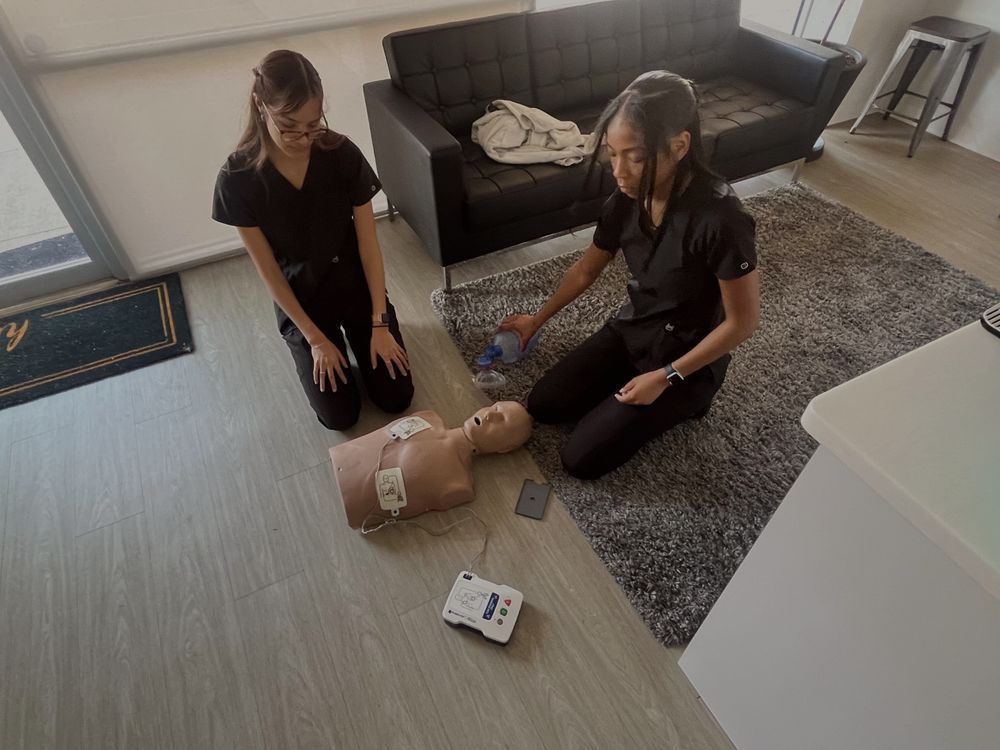
Weeks 5–8: Core clinical skills — phlebotomy, vital signs, injections, EKG/ECG (in-person labs during this phase)
Weeks 9–12: Advanced clinical + administrative — assisting during exams, EHR navigation, billing and insurance, HIPAA, scheduling
Weeks 13–16: Certification prep and career readiness — comprehensive review, CCMA exam preparation, resume and interview coaching
Every module is purpose-built. No filler courses, no general education requirements, no semester-long detours into content that has nothing to do with medical assisting.
The financial case for a shorter program
This is where the math gets compelling:
The earning gap
A Pulse graduate can be working and earning within about 5 months of starting the program. A 2-year program graduate? Not for another 18+ months after that.
At the national median salary of approximately $44,000/year, starting 12 months sooner means earning an additional $44,000 during that time. Add the tuition difference, and the advantage compounds:
| Pulse (16 Weeks) | 2-Year Degree Program | |
|---|---|---|
| Tuition | $2,990 | $15,000–$30,000 |
| Time to employment | ~5 months | ~24 months |
| Earnings in first 3 years | ~$110,000+ | ~$44,000 |
| Debt at graduation | $0 | Often significant |
| CCMA certification | Included | Sometimes, often extra |
The Pulse graduate is working, earning, and debt-free — while the degree student is still in class.
What about quality? Does shorter mean less rigorous?
No — and this is the most important point. Pulse’s program isn’t shorter because it cuts corners. It’s shorter because it’s designed efficiently:
- No general education filler — English composition and college algebra don’t make you a better medical assistant
- Hybrid delivery — online learning handles knowledge content efficiently; in-person labs focus exclusively on clinical skills
- CCMA integration — certification prep is built into the curriculum, not bolted on after
- Structured pacing — every week builds on the last with clear learning objectives
The result: Pulse graduates have the same clinical and administrative skills as graduates of longer programs — plus a certification credential — at a fraction of the cost and time.
Who Pulse’s 16-week program is built for
- Career changers who want to enter healthcare without spending years in school
- Working adults who need flexible scheduling (online-first format)
- Parents and caregivers who can’t commit to full-time campus attendance
- Budget-conscious students who want quality training without debt ($2,990, weekly payment plans)
- Anyone who values efficiency — the right training, the right skills, the right credential, in the right amount of time
See how Pulse compares
- Explore the program: Program details
- Review tuition and payment plans: Tuition
- Talk to our team: Contact
- Apply: How to apply
You're only a few months from the medical assistant career you deserve.