Online Medical Assistant Programs: Why Pulse's Hybrid Model Gives You More Than Online-Only
The appeal of online medical assistant programs is obvious: learn from home, study on your own schedule, keep your current job. If you’re balancing work, family, or other commitments, the flexibility is hard to resist.
But here’s the reality that most online-only programs don’t advertise: medical assisting is a clinical job. You draw blood, give injections, run EKGs, take vitals, and sterilize instruments. None of those skills can be mastered through a screen. That’s why Pulse takes a different approach — online where it works, in-person where it matters.
What online learning handles well
Pulse uses online delivery for the parts of training that genuinely work in that format:
- Medical terminology — vocabulary and nomenclature that benefit from repetition
- Anatomy and physiology — visual learning, diagrams, and interactive modules
- Healthcare regulations — HIPAA, OSHA standards, infection control theory
- Administrative skills — scheduling, billing basics, EHR documentation concepts
- CCMA exam content — knowledge-based material that builds over time
These sessions are live and instructor-led — not pre-recorded videos you watch alone. You interact with your instructor and classmates in real time, ask questions, and stay on track.
What requires hands-on practice
This is where online-only programs fall short. These clinical skills require physical practice with real equipment and instructor feedback:
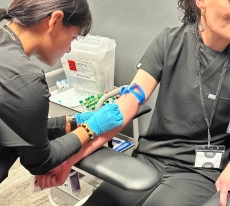
- Phlebotomy — finding veins, inserting needles, managing tube order, labeling specimens
- Vital signs — proper cuff sizing and placement, pulse palpation, accurate readings
- Injections — correct angle, depth, and location for IM, subcutaneous, and intradermal techniques
- EKG/ECG — lead placement on a real person, recognizing artifacts, troubleshooting
- Sterilization and infection control — proper autoclave use, instrument handling, PPE protocols
- Patient interaction — intake procedures, comfort management, and communication under real conditions
How Pulse combines both
Pulse’s hybrid model is designed to give you the best of both worlds:
Online-first learning
- Live, instructor-led sessions that fit your schedule
- Weekly coursework and assignments you complete on your own time
- Structured curriculum that builds knowledge progressively over 16 weeks
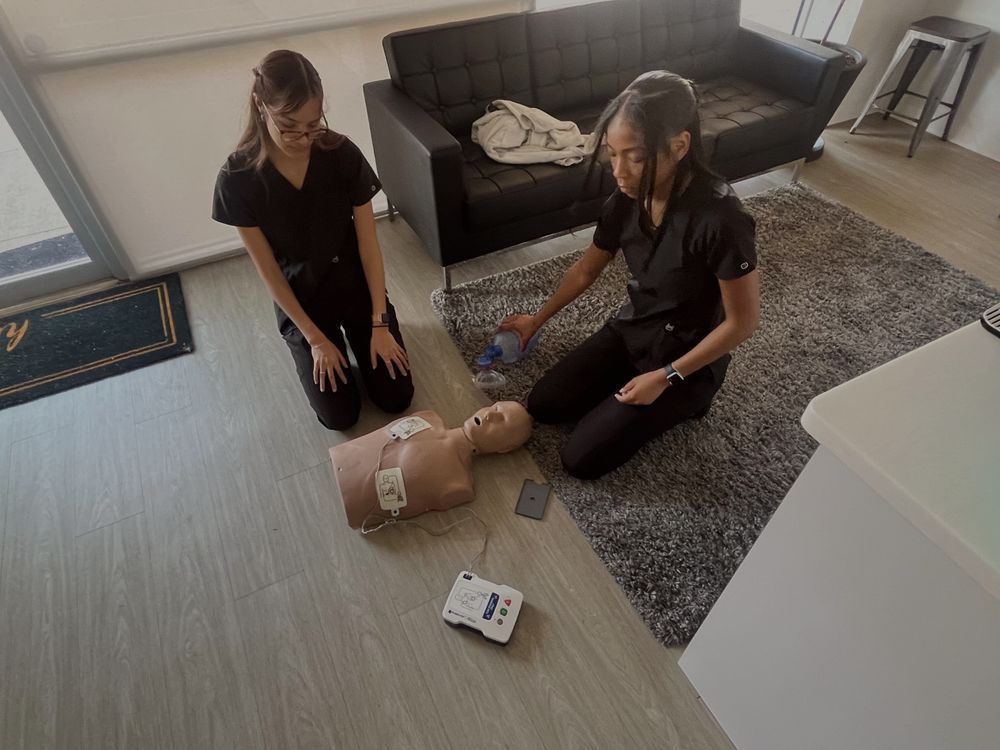
4 intensive in-person labs
- Scheduled at key intervals throughout the program
- Hands-on practice with real clinical equipment
- Instructor supervision and real-time feedback
- This is where theoretical knowledge becomes physical skill and genuine confidence
CCMA certification built in
- Exam prep woven into the curriculum from the start
- The NHA exam fee is included in your $2,990 tuition
- You graduate ready to sit for the certified clinical medical assistant exam
How Pulse compares to online-only programs
| Pulse (Hybrid) | Online-Only Programs | |
|---|---|---|
| Clinical practice | 4 in-person labs with real equipment | None or minimal |
| Instruction format | Live, instructor-led | Often self-paced or pre-recorded |
| CCMA exam prep | Integrated + exam fee included | Sometimes offered, often extra |
| Employer confidence | High — hands-on experience verified | Lower — clinical readiness unverified |
| Total cost | $2,990 all-in | $3,000–$8,000+ (exam fees often separate) |
| Flexibility | Online-first with scheduled labs | Fully remote |
Who Pulse’s hybrid model is built for
- Working adults who need flexibility but also want real clinical training
- Career changers who want to enter healthcare without spending years in school
- Parents and caregivers who can’t commit to a full-time classroom schedule
- Motivated learners who want more than just a certificate — they want competence
- Anyone who values hands-on experience that employers actually trust
Take the next step
- See the full program: Program details
- Review tuition and payment plans: Tuition
- Talk to our team: Contact
- Apply: How to apply
You're only a few months from the medical assistant career you deserve.