School for Medical Assistant: How to Choose the Right One (and What Makes Pulse Different)
Choosing a school for medical assistant training is one of the most important decisions you’ll make on the way to a new career. Pick the right one and you’ll graduate with real skills, a recognized credential, and the confidence to walk into a clinic and perform. Pick the wrong one and you’ll lose time, money, or both.
Here’s what to look for, what to avoid, and where Pulse fits in.
6 things to evaluate in any medical assistant school
1. Does the program include hands-on clinical training?
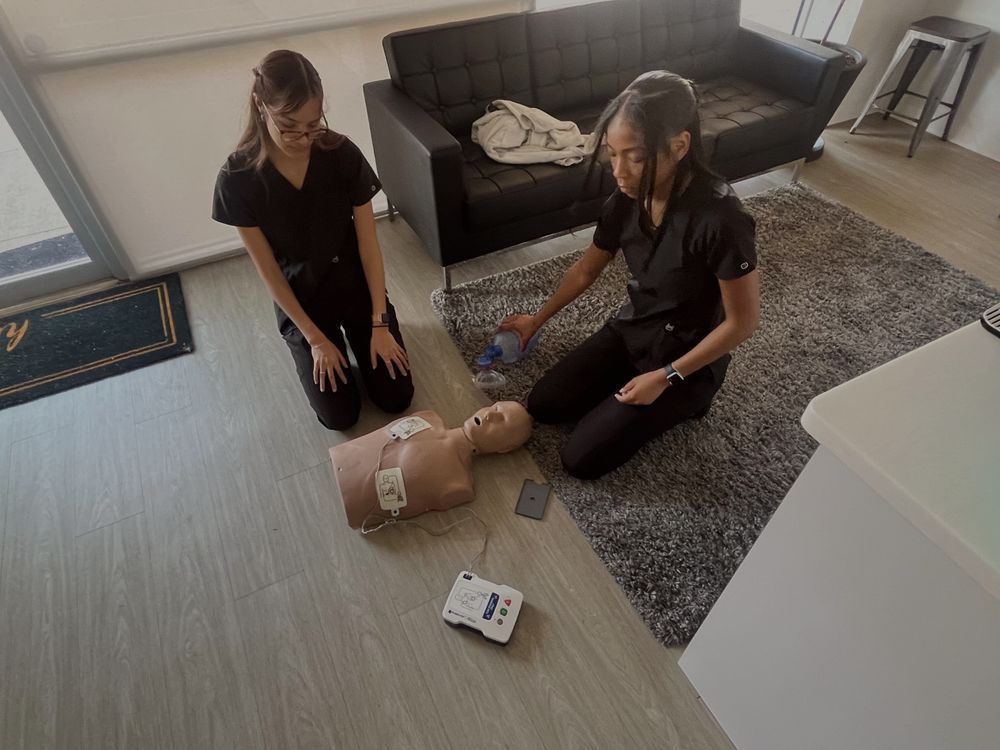
Medical assisting involves drawing blood, taking vitals, administering injections, performing EKGs, and sterilizing instruments. These are physical skills. If a school teaches them entirely through videos and quizzes, you won’t be prepared.
How Pulse handles this: 4 intensive in-person lab sessions with real equipment and instructor supervision, built into the 16-week program.
2. Is certification preparation included?
Holding a certified clinical medical assistant (CCMA) credential gives you a measurable advantage when applying for jobs. Some schools prepare you for certification; others leave it up to you.
How Pulse handles this: CCMA exam prep is integrated throughout the curriculum, and the NHA exam fee is included in your tuition.
3. What’s the total cost — really?
Tuition is one number, but watch for add-ons: materials fees, lab fees, exam fees, uniform charges, technology costs. The total is what matters.
Pulse’s total cost: $2,990 — tuition, materials, and CCMA exam fee included. Weekly payment plans available. No loans, no debt.
4. How long is the program?
You don’t need two years to become a medical assistant. Some of the most effective programs are focused, accelerated formats that cover the essential skills in months.
Pulse’s timeline: 16 weeks.
5. Can you fit it into your life?
If a program requires you to be in a classroom every weekday, that might not work if you’re also working or raising a family.
Pulse’s format: Online-first with live, instructor-led sessions. In-person labs are scheduled at specific intervals — not a daily commute.
6. What happens after you graduate?
A school that hands you a certificate and says “good luck” isn’t doing enough. Career support — resume help, interview prep, job search guidance — should be part of the package.
Red flags when choosing a school
Not every school for medical assistant training delivers what it promises. Be cautious of:
- No hands-on component — clinical skills can’t be learned remotely
- Hidden costs — if the school can’t give you a clear, all-in number, ask why
- No certification pathway — without CCMA or equivalent prep, your training may not carry weight
- Pressure to enroll immediately — good schools let you make an informed decision
- Vague curriculum descriptions — if they can’t tell you specifically what you’ll learn, keep looking
Questions to ask before you commit
- What clinical skills will I practice in person during the program?
- Does the program prepare me for a specific certification exam? Is the exam fee included?
- What is the total cost, including everything?
- Are payment plans available?
- How is the program scheduled — can I keep working while enrolled?
- What career support do you offer after graduation?
Why students choose Pulse
- 16 weeks — focused, efficient, and manageable
- Online-first + 4 in-person labs — flexibility without sacrificing clinical training
- CCMA included — prep and exam fee built into the program
- $2,990 — with weekly payment plans; graduate debt-free
- No prerequisites — beginners welcome
Take the next step
- Explore the program: Program details
- Review tuition: Tuition
- Ask questions: Contact
- Apply: How to apply
You're only a few months from the medical assistant career you deserve.