Trade Schools Near Me for Healthcare: Is Medical Assisting the Right Move?
Searching for trade schools is essentially a search for the fastest, most affordable path from where you are now to a real job with a real paycheck. Healthcare is one of the strongest sectors for that kind of search — consistent demand, entry-level wages that beat most non-healthcare trades, and career paths that don’t require four-year degrees.
But not all healthcare trade programs deliver equally, and not all roles have the same employment outlook. Here’s how medical assisting fits into the healthcare trade landscape, how it compares to other options, and what to look for in a program.
Healthcare trades worth knowing about
Before committing to any program, it’s worth mapping the options. Healthcare vocational training covers a wider range than most people realize:
Medical assistant programs
- Duration: 12–24 weeks (accelerated) to 9–12 months (traditional)
- Format: In-person, online, or hybrid
- Cost: $2,000–$12,000 depending on school
- Key credential: CCMA (NHA), CMA (AAMA), or RMA (AMT)
- Scope: Clinical + administrative work in medical offices
Phlebotomy technician programs
- Duration: 4–8 weeks
- Format: In-person or hybrid
- Cost: $700–$2,500
- Key credential: CPT (NHA or ASCP)
- Scope: Blood draws only — narrow clinical focus, often part-time employment
EKG/Cardiac technician programs
- Duration: 4–12 weeks
- Format: In-person or online
- Cost: $800–$3,000
- Scope: EKG administration — limited scope, often combined with MA or monitor tech roles
Nursing assistant / CNA programs
- Duration: 4–8 weeks
- Format: In-person (required hands-on component)
- Cost: $1,000–$3,000
- Key credential: State CNA certification
- Scope: Basic patient care in nursing homes, hospitals, and home health settings
Medical billing and coding
- Duration: A few months to a year
- Format: Mostly online
- Cost: $1,500–$8,000
- Scope: Entirely administrative — no clinical work
Pharmacy technician programs
- Duration: 6–12 weeks to several months
- Format: In-person or hybrid
- Cost: $1,500–$5,000
- Key credential: CPhT (PTCB or NHA)
- Scope: Pharmacy operations, dispensing, patient counseling support
Why medical assisting stands out
Medical assisting has a few characteristics that make it consistently attractive compared to other healthcare trades:
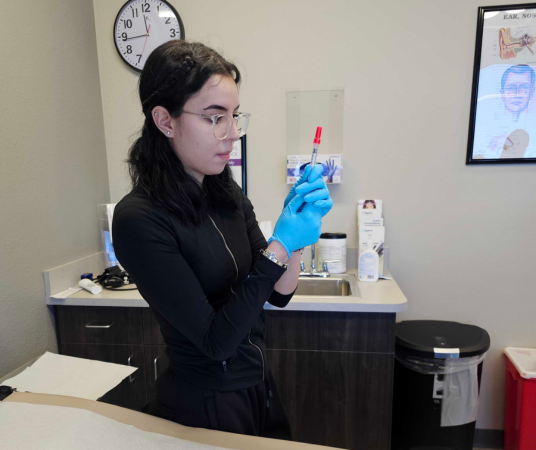
Broadest scope of any entry-level clinical role. Medical assistants do clinical work AND administrative work — taking vitals, drawing blood, administering injections, running EKGs, scheduling appointments, processing referrals, managing prior authorizations. You’re not siloed into one function. That breadth makes you more valuable to employers and more protected from the job displacement that narrow-scope roles face.
Stronger employment growth than most healthcare trades. BLS projects medical assistant employment to grow 14–15% through 2033 — faster than phlebotomy, faster than CNA, faster than most other healthcare support roles. The shortage of primary care physicians is increasing reliance on MAs for patient throughput.
Salary that scales with experience and setting. Medical assistants start at $36,000–$42,000/year certified, and scale to $48,000–$65,000+/year in specialty settings with experience. That ceiling is higher than CNAs and phlebotomists, who tend to plateau earlier.
Faster path than nursing. If you’re comparing MA training to LPN or RN programs, the timeline difference is stark — 16 weeks at Pulse vs. 12–24 months for LPN and 2–4 years for RN. For someone who needs to be employed in the near term, medical assisting delivers a faster result. And MA experience is a recognized pathway into nursing programs for people who want to advance later.
What makes a healthcare trade program worth the investment
Not all programs in any of these categories are equal. A few filters worth applying when evaluating options:
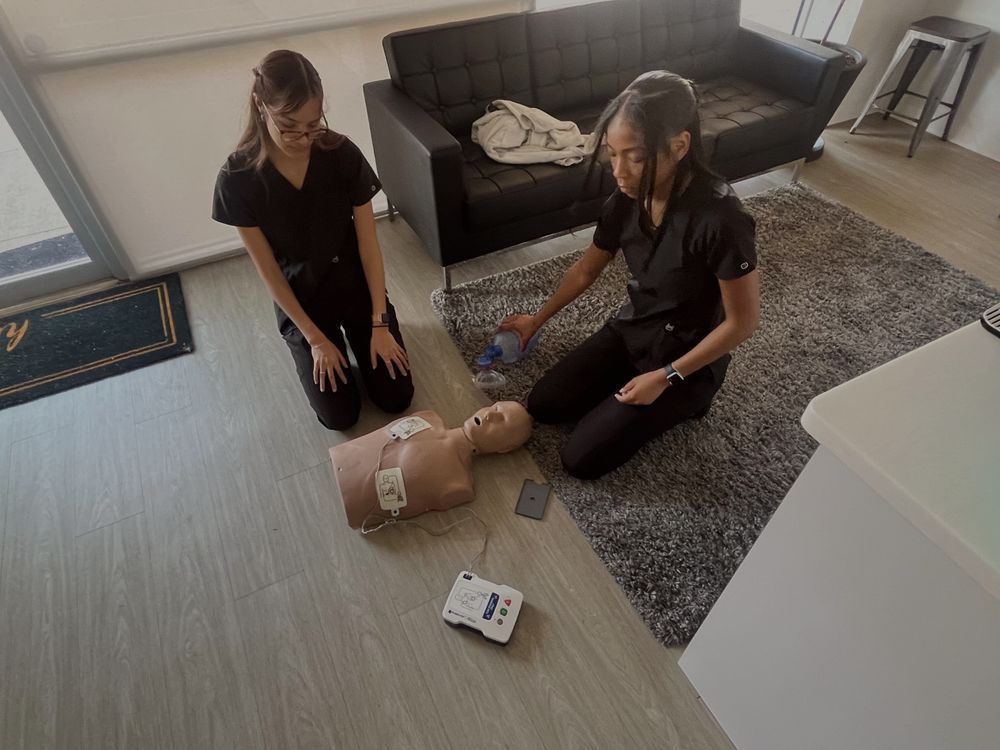
Where does hands-on training take place? The most important variable. Classroom simulations and real medical offices are not equivalent. Programs that train students in active clinical environments produce more job-ready graduates. Pulse places students in real medical practices for in-person lab days.
Is the certification exam included? Some programs charge separately for certification prep courses and exam fees. Pulse includes the CCMA exam in the $2,990 total cost — no surprise fees after graduation.
What does graduation debt look like? A $4,000 program financed through student loans leaves you with debt and interest payments before your first paycheck. Pulse’s weekly payment plan ($112.50/week for 16 weeks) is structured specifically to avoid that. No financial aid accepted — by design, to keep costs transparent and students debt-free.
Does the program include an externship? Externship experience is what employers look for most in new graduates. Pulse includes an externship, giving students supervised real-world clinical experience before they complete the program.
How Pulse fits into the trade school landscape
Pulse isn’t a traditional trade school with a campus and fixed daily schedules. It’s structured as an online-first professional training program — which means the scheduling flexibility of online learning, combined with intensive in-person clinical labs that actually prepare you for the work.
What that looks like practically:
- Most coursework online, accessible on your schedule
- Live Tuesday evening instructor-led sessions
- Four intensive in-person lab days inside real medical practices
- Total cost: $2,990 with weekly payment plans
- 16 weeks start to finish
- CCMA exam and externship included
- Graduate debt-free
The program was designed for adult learners who need to balance training with existing jobs, families, or other commitments — the typical profile of someone who would be searching for trade schools in the first place.
What to actually ask when evaluating any trade school program
Once you’ve narrowed your focus to medical assisting, the next step is evaluating specific programs. The category is right — now the question is whether the individual program will actually prepare you for the job.
Does the program have a real clinical placement, or just classroom labs?
This is the most consequential difference between programs. Pulse partners with local medical practices to deliver in-person lab days in real clinical environments. Many competitors use in-house simulation labs that look clinical but don’t replicate the pace, equipment, or patient variability of an actual practice.
What is the total all-in cost — tuition, materials, exam fees, everything?
Some programs advertise a low tuition figure and attach fees separately. Pulse’s $2,990 includes everything — curriculum, materials, CCMA exam, and externship. No post-enrollment surprises.
How quickly can you actually be working?
Compare programs by their realistic “start to first paycheck” timeline, not just program length. A 9-month program at a community college takes you the same amount of time to complete as a 16-week program plus several months of job searching — and often costs significantly more. Pulse’s 16-week format is designed to get students employed in 5–6 months from enrollment.
What does a typical graduate actually do after finishing?
Ask about employment outcomes. What type of roles do graduates get? In what settings? How quickly after graduation? Programs confident in their outcomes will answer these questions directly.
Medical assisting vs. CNA: the comparison most people are weighing
One of the most common comparisons people in this search make is medical assisting vs. CNA. Both are accessible healthcare entry points without four-year degrees. Here’s how they differ:
| CNA | Medical Assistant (CCMA) | |
|---|---|---|
| Training length | 4–8 weeks | 16 weeks (Pulse) |
| Work setting | Nursing homes, hospitals, home health | Medical offices, clinics, urgent care |
| Clinical scope | Basic patient care (ADLs) | Clinical + administrative |
| Salary range | $30,000–$40,000/year | $36,000–$55,000+/year |
| Growth projection (BLS 2026) | 5–6% | 14–15% |
| Advancement ceiling | LPN/RN pathway | Lead MA, office manager, specialist |
For people who want to work directly in a medical office environment — rather than a nursing home or home health setting — medical assisting is typically the better fit. The higher salary ceiling, broader clinical scope, and stronger employment growth make it the more compelling vocational path for most career-changers targeting healthcare.
Who is medical assisting the right trade for?
Medical assisting tends to be the right fit for people who:
- Want to work in healthcare without years of prerequisite education
- Like variety in daily work (clinical AND administrative)
- Enjoy patient interaction and direct patient care
- Want to be employed in months, not years
- Are cost-conscious and want maximum ROI on training investment
- May want to continue into nursing or other healthcare fields later
If that profile matches where you are, the program details page is the right next step. And if you want to find a Pulse location near you, check the locations directory.
Employment growth data sourced from the Bureau of Labor Statistics (BLS.gov, 2026). Salary data from BLS, Indeed, and Glassdoor.
You're only a few months from the medical assistant career you deserve.