What Does a Medical Assistant Actually Do? A Real Look at the Day-to-Day
Most people have a rough sense that medical assistants work in doctors’ offices. But the specifics of the role — what you actually spend your time doing, what skills you use, what kind of patients you interact with — are less clear from the outside.
If you’ve ever sat in a waiting room and watched the person who rooms patients, takes your vitals, and keeps the whole appointment moving efficiently, you’ve watched a medical assistant work. The role is broader than it looks, and more central to how a practice functions than most patients realize.
Here’s a complete, honest look at what a medical assistant does — every day, across every kind of medical setting — and how Pulse trains you for all of it.
The three pillars of medical assisting
Medical assistants operate across three overlapping areas: clinical work, direct patient interaction, and administrative functions. On a typical day, you’re doing all three.
Pillar 1: Clinical responsibilities
This is the hands-on, exam-room work most people associate with the role.
Patient intake and preparation: Every appointment starts with the MA. You room the patient, set up the exam room, take vital signs, document the chief complaint, confirm current medications, note any changes since the last visit, and prepare the patient for examination. By the time the provider walks in, the clinical picture is already in the chart.
Vital signs you’ll take and document routinely:
- Blood pressure (manual and electronic)
- Pulse — rate, rhythm, and quality
- Respiratory rate
- Oxygen saturation via pulse oximetry
- Body temperature (oral, tympanic, temporal, or axillary depending on the patient and clinical protocol)
- Height, weight, and BMI
Phlebotomy: Blood draws are a daily task in most practices. You’ll perform venipuncture, collect samples, label specimens, process them according to lab protocols, and enter orders in the EHR. Proficiency with phlebotomy — drawing cleanly on the first attempt, managing anxious patients, handling difficult veins — is one of the most valued clinical skills an MA can have.
Injections and medication administration: Vaccines, therapeutic injections, and other medications are administered by MAs under provider orders. You’ll use intramuscular, subcutaneous, and intradermal injection techniques, and document everything in the patient’s chart with precision.
EKG/ECG: 12-lead EKGs are ordered regularly in primary care and especially in cardiology and internal medicine. You’ll prepare the patient, place electrodes accurately across all 12 leads, run the tracing, and ensure quality before the provider reads it. Clean technique matters — poor electrode placement creates artifacts that obscure the actual cardiac rhythm.
Minor procedures and wound care: You’ll assist with in-office procedures: wound irrigation, dressing changes, suture removal, sterile tray setup, and instrument preparation. In some practices, MAs assist with minor surgical procedures under direct provider supervision.
Specimen collection: Beyond blood draws: urine collection (clean catch and catheter), throat swabs, nasopharyngeal swabs for respiratory illness testing, wound cultures, and other samples depending on the practice type.
Infection control: Every clinical interaction involves infection control protocols: proper handwashing, PPE selection and use, OSHA-compliant sharps disposal, instrument sterilization, and biohazard handling. In an era of heightened awareness around transmission, MAs are the front line of a practice’s safety culture.
Pillar 2: Patient interaction
The clinical tasks above are the visible part of the job. The patient-facing side is equally important — and often what distinguishes a competent MA from an excellent one.
Communication and explanation: Before any procedure, patients need to understand what’s happening. A blood draw, an injection, an EKG — each has a correct way to explain it that reduces anxiety, builds trust, and prepares the patient to cooperate. MAs who communicate well make procedures faster, easier, and more comfortable for everyone involved.
Managing difficult interactions: Not every patient is easy. Anxious adults, uncooperative children, patients in pain, patients who are scared or confused about their diagnosis — these are daily realities. How you handle those interactions shapes the patient experience and reflects directly on the practice.
Building ongoing relationships: In established practices, patients see the same MA repeatedly. Those relationships develop over time and become genuinely important to patients’ experiences of their healthcare. Being someone patients trust — someone who knows their history and takes their concerns seriously — is part of the value an experienced MA provides.
Patient education and follow-up: After examinations, you relay aftercare instructions, schedule follow-up appointments, and ensure patients understand what they’ve been told. You may call patients with lab results, follow up on medication side effects, or coordinate referrals — always under provider direction, but often as the primary point of contact.
Pillar 3: Administrative responsibilities
In most practices — especially smaller and medium-sized clinics — MAs handle significant administrative workload alongside clinical duties:
- Scheduling — managing the appointment calendar, handling rescheduling, filling cancellations
- Insurance verification — confirming coverage before appointments, processing prior authorizations
- EHR documentation — entering clinical notes, updating medication lists, documenting procedures and outcomes
- Phone management — answering patient calls, triaging questions, relaying messages to providers
- Prescription management — processing refill requests, routing them to providers for authorization
- HIPAA compliance — maintaining confidentiality in all communications and record-keeping
A realistic morning in a family practice
7:45 AM — Arrive. Pull the day’s schedule. Check exam room supplies. Set up instrument trays for the morning’s procedures.
8:00 AM — First patient: room, vitals, chief complaint documented. Provider enters; you assist with the exam and document the encounter.
8:45 AM — Second patient: routine blood work. Venipuncture, specimen labeling, lab order entry.
9:30 AM — Third patient: a vaccine. Pull the dose, verify the order, administer IM injection, document administration and lot number.
10:00 AM — Three return calls: a prescription refill request, a question about a lab result, a follow-up appointment needed.
10:30 AM — A pediatric patient with suspected strep. Throat swab, rapid test, managing an anxious seven-year-old and a worried parent.
11:30 AM — EKG for an older patient with a cardiology referral. Prep, electrode placement, tracing, chart documentation.
12:00 PM — Lunch, then an afternoon structured the same way.
Where medical assistants work
The role exists across virtually every healthcare setting:
- Primary care / family medicine — the largest segment; broad skills, consistent demand
- Specialty clinics — cardiology, dermatology, orthopedics, OB/GYN, neurology, oncology
- Urgent care centers — fast-paced, varied patient volume, often flexible shifts
- Hospital outpatient departments — structured advancement, stable employment
- Community health centers — mission-driven environments serving underserved populations
- Telehealth-adjacent practices — growing segment requiring strong documentation and intake skills
What the career pays
- Entry-level (certified): approximately $36,000–$42,000/year
- National median: approximately $42,000–$46,000/year (BLS, 2026)
- Specialty / experienced: $48,000–$58,000+/year
- CCMA certification premium: approximately $2,000–$6,000+ more per year
The BLS projects 15% growth through 2032. Medical offices in Pulse Medical Assistant School and across the country are actively hiring — and certified candidates with real hands-on training are who they’re looking for.
Skills that make a medical assistant stand out
Technical competency is the floor — employers expect you to be able to draw blood, run an EKG, and document accurately. What actually differentiates MAs in the job market (and in salary negotiations) is the set of skills that sit above the technical baseline:
Clinical efficiency. The ability to room patients quickly without sacrificing accuracy, keep the schedule moving, and anticipate the provider’s needs before being asked — these habits make you genuinely valuable in a busy practice.
Phlebotomy confidence. A medical assistant who can draw blood cleanly on the first attempt, on difficult veins, without visibly unsettling the patient is a different caliber of hire than one who struggles and has to call for help. This skill develops through repetition — which is why lab days in real clinical environments matter.
EHR accuracy under pressure. Documentation errors are a liability. MAs who enter clinical notes accurately, completely, and promptly — even during busy clinic sessions — are consistently more valuable to providers than those who create documentation clean-up work.
De-escalation. Every practice has patients who arrive anxious, upset, or in pain. An MA who can read the room, slow things down, and calm a difficult interaction before it escalates makes the entire team’s day better.
Provider communication. Knowing how and when to surface a concern to the provider — versus handling it independently — is a judgment skill that develops with experience but starts with training.
How Pulse prepares you for this role in 16 weeks
Pulse covers everything described in this post — clinical skills, patient communication, administrative competency, and certification:
- Live online sessions (Tuesday evenings) for knowledge and clinical reasoning
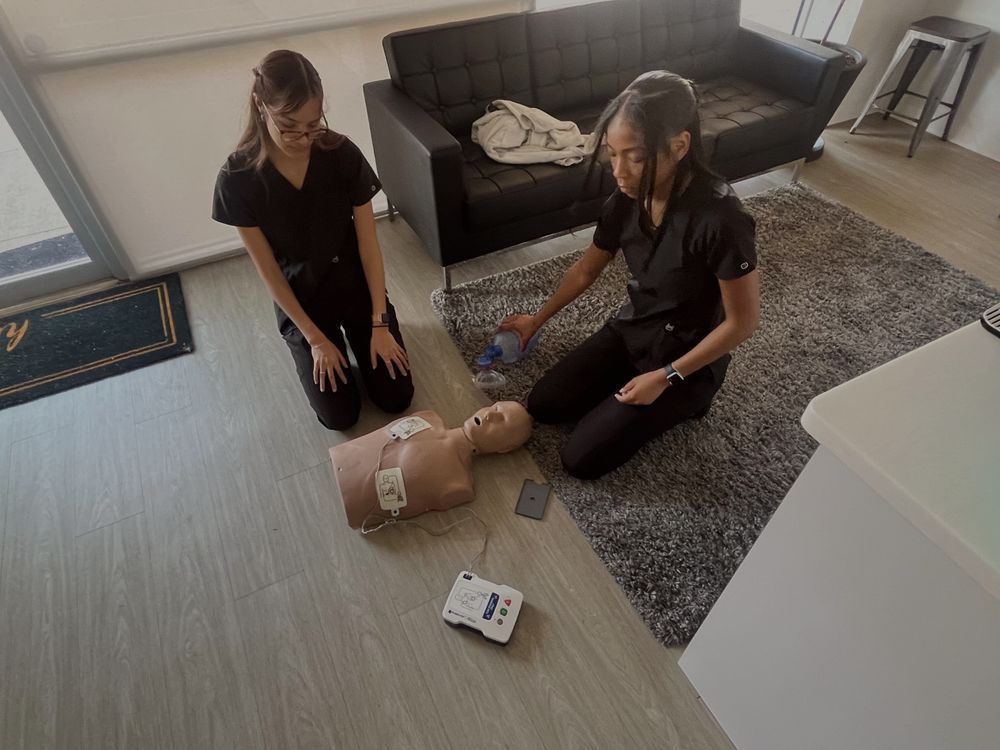
- 4 in-person lab days in real medical offices for hands-on skill-building
- Externship for supervised patient contact before graduation
- CCMA exam prep and exam fee included in the $2,990 tuition
- Weekly payment plans (as low as $112.50/week) — graduate completely debt-free
-
No prerequisites — built for career changers and complete beginners
- See the full curriculum: Program details
- Review tuition and payment plans: Tuition
- Talk to our team: Contact
- Apply: How to apply
You're only a few months from the medical assistant career you deserve.