What You’ll Learn in Your First Month of MA School
What You’ll Learn in Your First Month of MA School
Starting medical assistant (MA) training is an exciting moment—one that marks the beginning of a hands-on, patient-focused career that blends both clinical and administrative skills. The first month of MA school sets the tone for everything that comes after. Even though you won’t yet be drawing blood or taking X-rays, you’ll establish the knowledge, behaviors, and routines that shape your success throughout the entire program. Most students are surprised by how much they learn within just a few weeks.
During the opening month, you’ll gain foundational skills that prepare you for more advanced training later on. You’ll learn how the healthcare environment works, how to communicate clearly with patients and providers, and how to manage everyday administrative tasks. You’ll also begin developing essential professional habits, from time management to medical terminology to early clinical procedures. Here are five major things you’ll learn in your first month of medical assistant school.
Core Medical Terminology and Anatomy Basics
One of the first things you’ll tackle in MA school is medical terminology—the language of healthcare. Because medical assistants work closely with doctors, nurses, and specialists, it’s essential to understand the words and abbreviations used throughout the clinical environment. The first month introduces you to the building blocks of these terms, such as root words, prefixes, and suffixes that help you decode complex medical vocabulary.
You’ll also begin learning basic anatomy and physiology, focusing on the major body systems you’ll encounter every day in a clinical setting. This isn’t just memorization; it’s preparation for understanding symptoms, reading charts, documenting patient concerns, and supporting providers during clinical procedures. By the end of the first month, most MA students feel much more confident navigating healthcare language—something that makes both classroom learning and clinical labs easier down the road.
Professionalism, Ethics, and Patient Communication
The first month is also where you learn what it means to be a true healthcare professional. MA programs emphasize not only the technical skills of the job but also the human side of patient care. In your early weeks, you’ll cover essential topics such as confidentiality, HIPAA compliance, ethical standards, and patient boundaries. These lessons prepare you to protect patient privacy, communicate with respect, and build trust with individuals who may be anxious, ill, or unsure of what to expect.
You’ll also begin practicing patient communication skills. This includes learning how to introduce yourself, take a thorough history, listen actively, and speak in ways that are both professional and easy for patients to understand. These are the skills that make medical assistants the “voice” and “heart” of many clinics. By the end of the first month, students often feel comfortable interacting with classmates in simulated patient scenarios—an important step before moving into real-world clinical labs.
Administrative Tasks and Electronic Health Records (EHR)
Many students enter MA school excited for clinical skills like taking vital signs or performing injections, but the first month typically focuses heavily on administrative competencies. This is because medical assistants often serve as the organizational backbone of a healthcare practice, helping manage workflow, patient scheduling, insurance processes, and digital record-keeping.
You’ll learn the basics of Electronic Health Records (EHR) systems—how to enter patient information, update charts, and navigate digital platforms that providers rely on every day. This early training helps you understand how information flows through a clinic and how critical accurate documentation is for patient safety. You’ll also learn phone etiquette, appointment scheduling, medical filing systems, and how to manage a front desk with professionalism and clarity.
These administrative foundations are essential for your externship and your first job, where you’ll be expected to balance clinical and office responsibilities with confidence.
Foundational Clinical Skills such as Taking Vitals
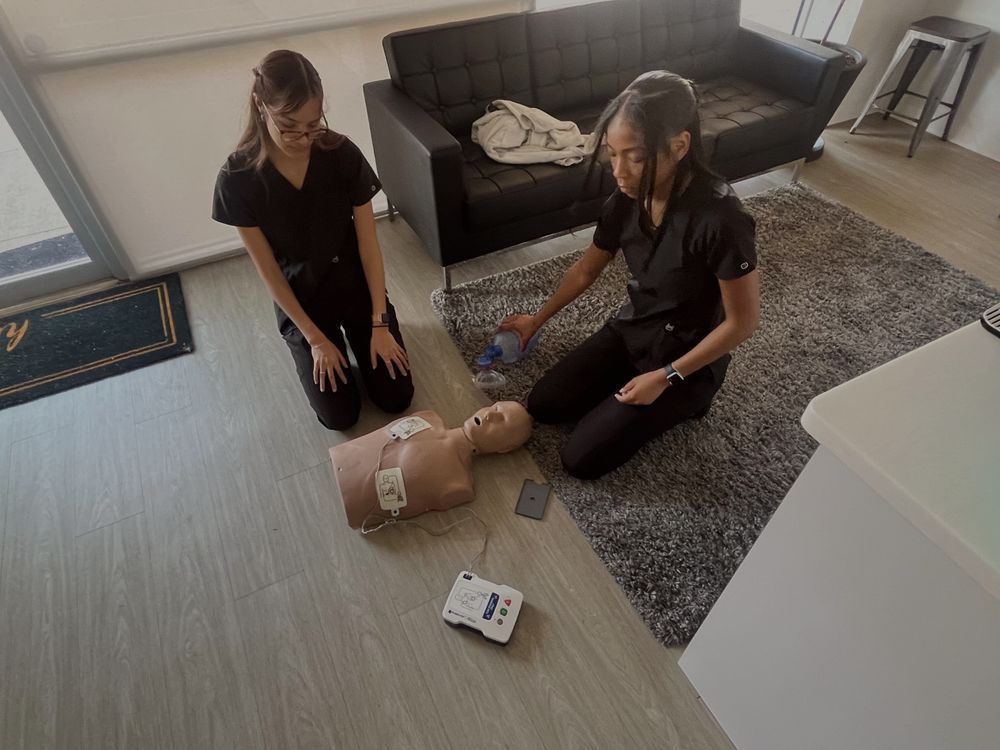
Although the more advanced clinical skills come later, the first month of MA training typically introduces foundational procedures that prepare you for hands-on work. One of the earliest—and most important—skills you’ll learn is how to take accurate vital signs. This includes measuring blood pressure, pulse, temperature, respiration rate, and sometimes oxygen saturation.
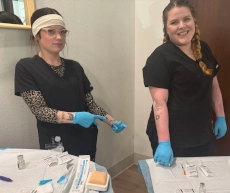
You’ll also learn infection control practices and personal protective equipment (PPE) protocols, which help keep patients and staff safe. These early lessons are essential for building confidence before you move into more advanced labs like venipuncture or EKG administration. Students often describe taking their first vitals as the moment they truly feel like future healthcare professionals.
In addition to vitals, you might also begin learning basic patient intake procedures: how to guide patients to exam rooms, update their medical histories, and prepare them for their appointments. These activities create the structure that helps clinics run smoothly and help you build rapport with patients at the very start of their visit.
Time Management, Study Skills, and Professional Habits
The first month of MA school isn’t just about medical knowledge—it’s also about learning how to balance the demands of a fast-paced program. MA training is intentionally accelerated to prepare students for real clinical environments. That means you’ll spend your early weeks learning how to organize your time, study effectively, and manage multiple types of coursework at once.
Your instructors will teach you strategies for taking notes, preparing for quizzes, keeping up with readings, and completing assignments with accuracy and efficiency. MA students often juggle work, family responsibilities, and training simultaneously, so the first month is where you establish routines that help you stay focused and successful.
You’ll also build professional habits that employers value, including punctuality, communication skills, teamwork, and reliability. These soft skills—combined with your clinical and administrative training—create the foundation for a long-term healthcare career.
Your First Month Sets the Stage for Everything Ahead
Your first month of medical assistant school is a blend of learning core medical concepts, practicing communication, understanding healthcare ethics, mastering early administrative tasks, and building foundational clinical skills. These lessons prepare you for the hands-on labs and externship experiences that come later in the program, and they help you step into a healthcare career with confidence.
By the time you complete your first 30 days, you’ll already feel like part of the healthcare world. You’ll speak the language, understand your role, perform basic procedures, and develop the professional habits that set you up for success—not just in school, but throughout your medical assistant career.
Ready to Begin Your Own MA Journey?
Ready to Begin Your Own MA Journey? If you’re excited to start training for a hands-on healthcare career, Pulse Medical Assistant School is an online-first, 16-week medical assistant program designed for busy adults who want both flexibility and real-world training. With intensive, in-person labs, Pulse gives aspiring medical assistants the confidence and experience to help real patients receive real care. It’s the perfect place to begin your journey—and your first month will set the foundation for a rewarding, meaningful career in healthcare.
You're only a few months from the medical assistant career you deserve.