What’s Included in Most Medical Assistant Training Programs_
What’s Included in Most Medical Assistant Training Programs?
Breaking into the healthcare field is more accessible today than ever, thanks to modern medical assistant (MA) training programs designed to prepare students quickly and effectively for real-world work. These programs combine essential clinical and administrative instruction so graduates can step confidently into patient-facing roles across hospitals, clinics, and specialty practices. But with so many programs out there, it’s common to wonder exactly what’s included—and what skills you can expect to gain by the time you graduate.
Most MA programs take a comprehensive approach, mixing theory, hands-on practice, and job readiness training. The goal isn’t just to teach tasks—it’s to build competence, confidence, and professional judgment. Below, you’ll find the five core elements that almost every medical assistant training program includes, whether it’s offered on-campus, online, or in a hybrid format.
Foundational Medical Knowledge
At the heart of every MA program is a strong academic foundation. Before students can take vital signs, assist with procedures, or speak confidently with patients, they need to understand the basics of how the human body works and how healthcare teams operate. This is why most programs begin with core courses such as:
Anatomy and physiology: Students learn the structure and function of major body systems—cardiovascular, respiratory, digestive, musculoskeletal, and more. This gives future MAs the context they need to understand symptoms, treatments, and patient concerns.
Medical terminology: Healthcare has its own language, and mastering this vocabulary ensures students can communicate clearly with providers, chart accurately, and avoid misunderstandings.
Pathophysiology: Many programs introduce common diseases, conditions, and disorders. This helps MAs understand what patients may be experiencing and what tasks may be required during their care.
Pharmacology basics: While MAs don’t prescribe medications, they often support medication management. Understanding drug classifications and effects is essential in many patient-facing tasks.
These foundational courses ensure that medical assistants not only memorize tasks but also grasp the “why” behind them. They build confidence, clinical judgment, and the ability to support both patients and providers effectively.
Administrative and Front-Office Training
Medical assistants are unique in healthcare because they work at the intersection of clinical care and administrative operations. That’s why MA training programs always include a strong administrative component that covers:
Patient scheduling and check-in procedures
HIPAA compliance and patient privacy
Electronic health records (EHR) management
Insurance basics and coding fundamentals
Billing support and documentation accuracy
Students learn how to create a smooth, respectful experience from the moment a patient walks into the clinic. They also gain skills in data entry, communication, and organization—skills that help practices run efficiently and reduce errors.
A major part of this training focuses on the electronic health record systems nearly all healthcare practices rely on. Even entry-level MAs are expected to chart patient information, enter lab orders, update medical histories, and track visits accurately. By practicing in simulated or real EHR systems, students enter the workforce prepared for modern healthcare workflows.
Administrative skills are also crucial for career growth. Many MAs later transition into care coordination, office management, billing, or specialty administrative roles. Strong training in these fundamentals sets students up for long-term opportunities.
Hands-On Clinical Skills Training
Clinical instruction is often the most memorable—and most exciting—part of any MA training program. It prepares students for the tasks they’ll use every day when working directly with patients. These hands-on skills are typically taught in labs, simulation spaces, or clinical classrooms and may include:
Taking and recording vital signs, such as blood pressure, temperature, pulse, respiration, and oxygen saturation.
Performing EKGs (electrocardiograms) to support cardiac assessments.
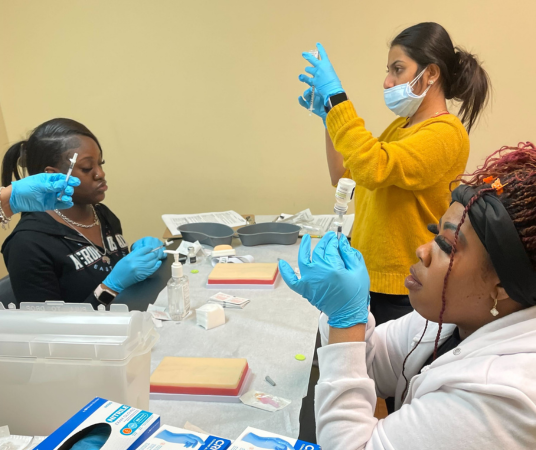
Administering injections, including intramuscular, subcutaneous, and intradermal techniques.
Drawing blood (phlebotomy) safely and confidently using venipuncture and capillary puncture methods.
Preparing patients for exams, including gathering health histories, explaining procedures, and positioning for comfort.
Preparing patients for exams, including gathering health histories, explaining procedures, and positioning for comfort. Performing point-of-care testing, such as glucose checks, urinalysis, and rapid strep tests.
Assisting with minor procedures like wound checks, suture removal, or sterile dressing changes.
These hands-on sessions are often repeated multiple times to help students build muscle memory. Instructors guide students through proper technique, aseptic practices, safety precautions, and real-world scenarios. Since MAs frequently serve as the provider’s “right hand,” clinical training emphasizes teamwork and communication just as much as technical skill.
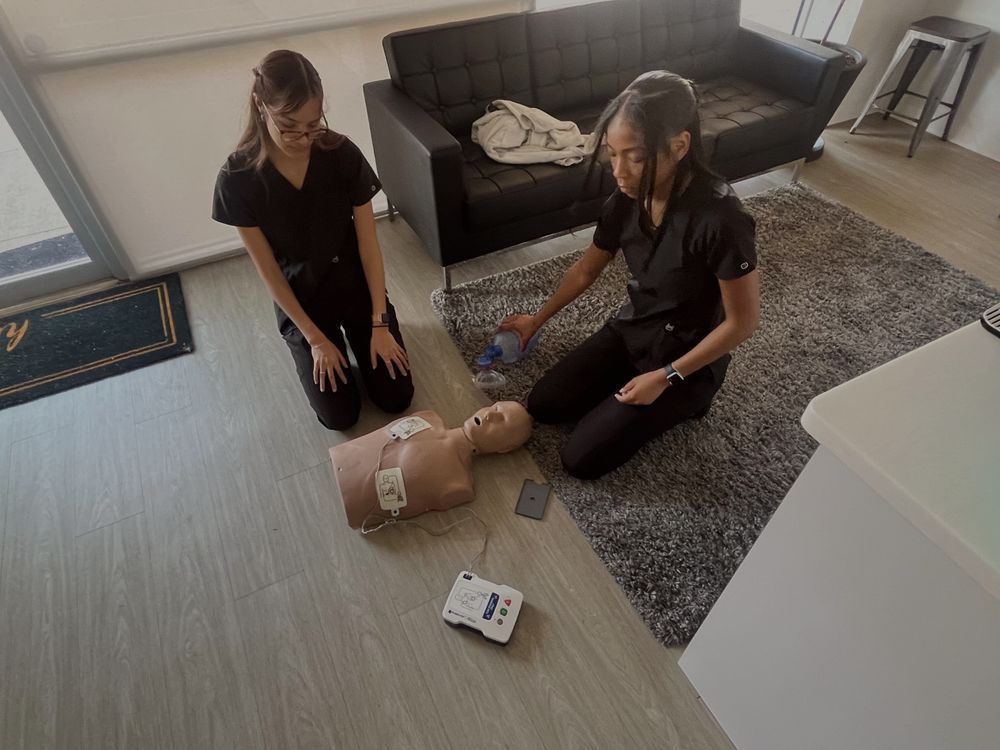
Many programs also use simulation mannequins, practice arms, or peer-to-peer training to ensure students get experience in a safe and supervised environment. By graduation, students should feel comfortable working directly with patients and ready to jump into clinical tasks on day one.
Externships and Real-World Experience
Most reputable medical assistant programs include an externship—a supervised, hands-on experience in a real healthcare setting. This is where everything students learn in class truly comes together. Externships are one of the most valuable components of MA training, offering:
Direct patient interactions in clinics, urgent cares, specialty practices, or hospitals.
Experience with real providers, including nurses, doctors, and other MAs.
Exposure to different workflows, from high-volume outpatient settings to smaller private practices.
Skill application under supervision, giving students the chance to grow their confidence.
Networking opportunities that can lead directly to job offers.
Externships are also where students discover what settings they enjoy most. Some may love the fast pace of urgent care, while others prefer the relationships they build with patients in primary care. Some students even choose specialized paths—pediatrics, dermatology, OB-GYN, or orthopedics—after externship exposure.
The externship component is also highly valued by employers. It demonstrates that a student can handle real patient interactions, follow protocols, communicate professionally, and stay calm under pressure. Many healthcare employers hire directly from externship cohorts because they’ve already seen the student’s dedication and potential.
Career Readiness and Professional Skills
Beyond clinical and administrative training, the best MA programs also include professional development support. Healthcare is a people-focused industry, and success requires interpersonal skills, communication, and professionalism. That’s why programs usually include coursework or workshops on:
Resume building and interview preparation
Workplace professionalism and ethics
Team communication and conflict resolution
Time management and multitasking strategies
Patient communication and compassionate care
Medical assistants are often the first voice or face a patient encounters. Strong professional skills help them build trust, explain procedures clearly, manage stressful situations, and support providers effectively.
Students may also receive guidance on certification exams, such as the CCMA (Certified Clinical Medical Assistant) or CMA (AAMA) credential. Programs typically offer review modules, test prep materials, or instructor support to help students feel confident about taking national exams after graduation.
Ultimately, the goal is to prepare graduates not just for a job—but for a long, satisfying healthcare career. The best programs support students beyond graduation, offering job placement assistance, networking events, or employer partnerships that help them transition smoothly into their first role.
Find a Career in healthcare
Find a Career in healthcare Medical assistant training programs are designed to build job-ready skills quickly and effectively, offering a blend of academic instruction, hands-on clinical practice, administrative training, real-world externships, and professional development. Whether you’re new to healthcare or making a career change, MA programs provide a structured and supportive path into one of the fastest-growing careers in the country.
If you’re considering a future in healthcare, choosing the right MA training program is an important first step. Look for programs that offer comprehensive curriculum, hands-on practice, flexible formats, and strong career support.
If you’re ready to begin your medical assistant journey, Pulse Medical Assistant School delivers the training and support you need to step confidently into patient care. Pulse is an online-first, 16-week medical assistant program with intensive, in-person labs designed to help aspiring medical assistants gain real skills, real experience, and the confidence to help real patients receive real care. It’s the perfect option for career changers, recent graduates, and anyone ready to break into healthcare fast—and with the hands-on preparation employers trust.
You're only a few months from the medical assistant career you deserve.