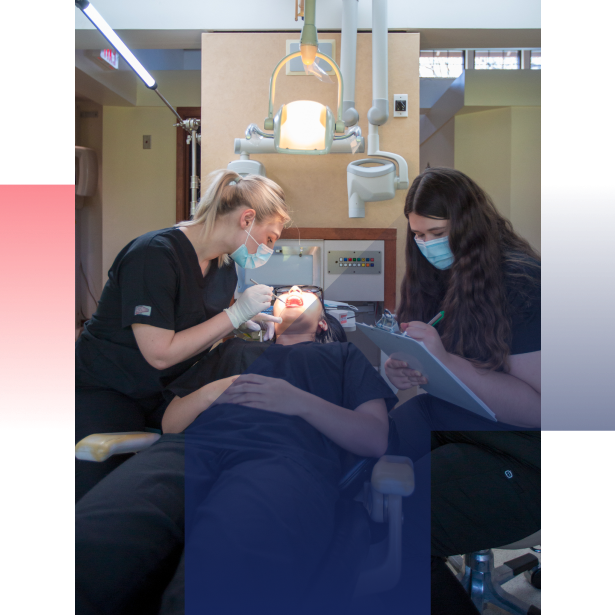
We know you have a busy life, but we believe that some things just need to be learned by doing. That's why our online-first, 16-week program includes 4 intensive, in-person labs to give you the confidence to perform when the patients are real, not digital.
Ready to start your journey? Fill out the form to learn more about our 16-week hybrid program designed around your busy schedule. Our admissions team is here to guide you every step of the way.
We don't have any classes scheduled right now. Check back soon for updates on upcoming enrollment opportunities for our 16-week hybrid program.
Want to know when we're enrolling again? Fill out the application form above, and our admissions team will contact you when the next cohort opens in Louisville.
Starting a new career shouldn’t feel overwhelming. Our Louisville medical program is designed to guide you step by step, helping you build practical skills, professional confidence, and a clear path into the medical field—so you’re not just trained, you’re ready.
Designed around your busy schedule, Pulse expert instructors guide you through live, online learning sessions.
4 in-person labs prepare you to step into a medical office and show your full potential.
Pass your (included) CCMA exam to be officially certified by the National Healthcare Association and start a rewarding career.
Our low-cost program and flexible payment options ensures you graduate without debt.
Our low-cost program and flexible payment options ensures you graduate without debt. Flexible options to get you started as soon as you're ready.
Due at program start
Per week for 16 weeks
Focus on the roles and responsibilities of a medical assistant in various healthcare settings.
Learn OSHA standards, proper hand hygiene, and personal protective equipment (PPE) protocols to maintain a safe clinical environment.
Review clinical documentation procedures, including accurate patient intake, charting, and recordkeeping practices.
Understand the basics of cardiopulmonary resuscitation (CPR) and basic life support (BLS) procedures for emergency situations.
Learn proper selection, application, and removal of personal protective equipment (PPE) to prevent contamination.
Gain foundational phlebotomy knowledge in fields like blood collection, safety protocols, and specimen handling.
Learn the structure and function of body systems with a focus on the nervous system and its role in patient care.
Understand key developmental milestones and how to assess growth patterns in pediatric patients.
Explore best practices for managing appointments, follow-ups, and workflow efficiency in a clinical setting.
Learn how to perform basic vision screening tests and support patient eye health assessments.
Understand how to accurately measure and record vital signs for infants and children.
Gain skills in safely performing ear irrigation procedures to remove blockages under clinical supervision.
Study common medications, dosage calculations, and safe administration practices in clinical settings.
Learn the basics of analyzing blood samples, including interpreting common lab results and understanding their clinical relevance.
Explore the structure, function, and common disorders of the endocrine and urinary systems.
Learn how to collect, test, and interpret urine samples to support diagnostic procedures.
Understand how to perform and interpret rapid tests for influenza and streptococcal infections.
Gain foundational knowledge of electrocardiograms, including lead placement and basic rhythm interpretation.
Study microorganisms relevant to human health and their role in infection, diagnosis, and treatment.
Learn the basics of healthcare reimbursement, including insurance claims, coding systems, and documentation accuracy.
Understand emergency response techniques and procedures for managing respiratory and cardiac events in clinical settings.
Learn how to clean, dress, and manage wounds while preventing infection and promoting healing.
Understand the proper setup, administration, and patient education for nebulizer treatments.
Review key concepts and practice test strategies to prepare confidently for the Certified Clinical Medical Assistant exam.
We know that completing Pulse is just the start of your journey, so we’re here to support you for your next steps to help your successful transition into the medical field:
Confidently step into a medical assistant interview thanks to our preparation, which covers a wide range of job roles. We’ll provide common interview questions and other tools to ensure you’re a standout candidate.
You’ll learn and do a lot throughout the Pulse program, so we’ll help make sure it’s reflected on your resume. Our experienced team offers personalized resume reviews, with feedback and suggestions to ensure you catch the attention of potential employers!
Leverage our network of partners and job opportunities to get your foot in the door at an office near you and start living your career dream faster.
Career-ready programs designed for your success.
Take The First StepA medical assistant school is a training program that prepares students to work in clinical and administrative roles in healthcare settings. These schools teach essential skills like taking vital signs, drawing blood, assisting with exams, and managing medical records. Graduates are eligible to sit for certification exams and pursue entry-level positions in hospitals, clinics, and doctors' offices.
To become a medical assistant, you can enroll in a medical assistant school that offers hands-on training in both clinical and administrative skills. Many programs, like the one at Pulse, can be completed in only a few months. After graduating, you’ll be ready to pursue certification and start working in a variety of healthcare settings.
Medical assistant school typically lasts about four months at Pulse. During that time, students learn key skills such as infection control, medical anatomy, patient history documentation, measuring vital signs, and conducting vision and hearing tests. The program is designed to prepare you quickly and thoroughly for entry-level roles in healthcare.
Pulse Medical Assistant School offers several payment options:
Pay in Full $2,990
$1,490 deposit & 16 consecutive weekly auto-drafted payments of $112.50. The total of payments will be $3,290, which includes a $300 payment plan fee.
$490 deposit & 16 consecutive weekly auto-drafted payments of $175.00. The total of payments will be $3,290, which includes a $300 payment plan fee.
Pulse Medical Assistant School also offers personalized payment plans to meet your individual needs.
Yes, Pulse Medical Assistant School offers a refund policy. Students who cancel within 72 hours of signing the enrollment contract are eligible for a full refund. Those who cancel within the first three scheduled class days may also receive a full refund, minus up to $100 in administrative fees and any separately listed expenses.
Pulse Medical Assistant School does not guarantee job placement. However, we support students with job placement by actively maintaining an employer network and regularly sharing employment opportunities. Career assistance is available both during the program and after graduation, ensuring ongoing support. Students also receive guidance in job readiness, including interview preparation and strategies for effective job searching.
A medical assistant supports doctors and nurses by handling both clinical and administrative tasks in healthcare settings. They may take vital signs, assist with exams, update patient records, and schedule appointments. Their role helps keep medical offices running smoothly and ensures patients receive quality care.
A medical assistant needs a mix of clinical, administrative, and interpersonal skills to succeed. Key skills include taking vital signs, performing basic lab tests, administering injections, documenting patient histories, and managing medical records. They also need strong communication, attention to detail, organization, and knowledge of medical terminology and infection control procedures.
In the United States, the median annual salary for medical assistants is approximately $44,200. Entry-level positions typically start around $35,000, while the top 10% of earners can make over $57,000 per year. Salary can vary depending on experience, certification, location, and the type of healthcare facility.
No, you don’t need prior healthcare experience to enroll at Pulse Medical Assistant School. Our program is designed to start from the fundamentals and build your clinical and administrative skills from the ground up. We provide everything you need — including hands-on training — so you can confidently enter the healthcare field.
Since Pulse is an online-first program, you will need to have reliable internet access as well as a computer that can run video streaming platforms (like Zoom) for online classes, and an internet browser that can access our web-based LMS and other online resources.
Our mission is to enable students to get affordable training and start their careers with little or no debt! We are committed to providing quality education and support to help our students launch their careers.
2210 Goldsmith Ln, Ste 221B