How Pulse Sets Aspiring Medical Assistants Up for Success

How Pulse Sets Aspiring Medical Assistants Up for Success
Breaking into the medical field can feel overwhelming, especially for students who want a fast, practical, and affordable path into healthcare. Many people know they want to make a difference in patients’ lives—but they don’t want to wait years to begin working or spend unnecessary time on coursework that doesn’t align with their goals. That’s why choosing the right medical assistant (MA) program is essential. The right school doesn’t just teach skills—it sets students up for long-term confidence, competence, and career growth.
Pulse Medical Assistant School has become a standout option for aspiring MAs who want a program designed around real needs, real timelines, and real outcomes. From flexible learning to hands-on lab experience to powerful career support, Pulse is built to prepare learners for success on day one of their careers. Below, we break down five of the biggest ways Pulse sets medical assistants up to thrive in a high-demand field.
A Fast, Focused 16-Week Curriculum Designed for Today’s Healthcare Environment
One of the biggest advantages of Pulse is its fast-but-thorough program structure. Many students want to start working as soon as possible—but they also want a program that actually prepares them to walk into a job with confidence. Pulse’s 16-week curriculum balances speed with depth, giving learners everything they need without unnecessary filler.
Students progress through essential medical assistant skills such as patient communication, vital signs, exam prep, specimen collection, electronic health records, and basic clinical procedures. Unlike programs that stretch content over many months, Pulse focuses on what employers expect MA graduates to know right now. The curriculum is reviewed and refreshed regularly, ensuring students train on up-to-date practices, tools, and safety standards.
The fast-track format also benefits adult learners, parents, career changers, and working professionals. It allows students to step into healthcare quickly, begin earning sooner, and still feel well-prepared for certification exams and real patient interactions. In short, the structure respects students’ time while protecting their learning outcomes.
Online-First Learning That Fits Busy Schedules—Without Sacrificing Quality
Flexibility can be the difference between enrolling in a program and putting off education for another year. Pulse is built around an online-first model that lets students access coursework on their own schedule. This makes the program a strong fit for:
Parents balancing family and school
Working adults needing evening or weekend study time
Working adults needing evening or weekend study time
Students transitioning careers
Anyone who learns best at their own pace
But flexible doesn’t mean low-quality. Pulse’s online modules are designed with clear instructions, interactive content, videos, quizzes, and explanations that simplify complex medical concepts. Students don’t just memorize—they understand the why behind each skill. The digital platform is intuitive and easy to navigate, making the learning process seamless even for students who haven’t done online school before.
Online coursework also helps students build habits required in modern healthcare environments, where digital systems, telehealth, and electronic charting are everywhere. Learners practice accessing lessons online, reviewing digital documentation, and moving through information the same way medical teams do daily.
Instead of fighting against the realities of a busy life, Pulse makes training achievable without lowering the bar.
Intensive, In-Person Skills Labs That Build Real Clinical Confidence
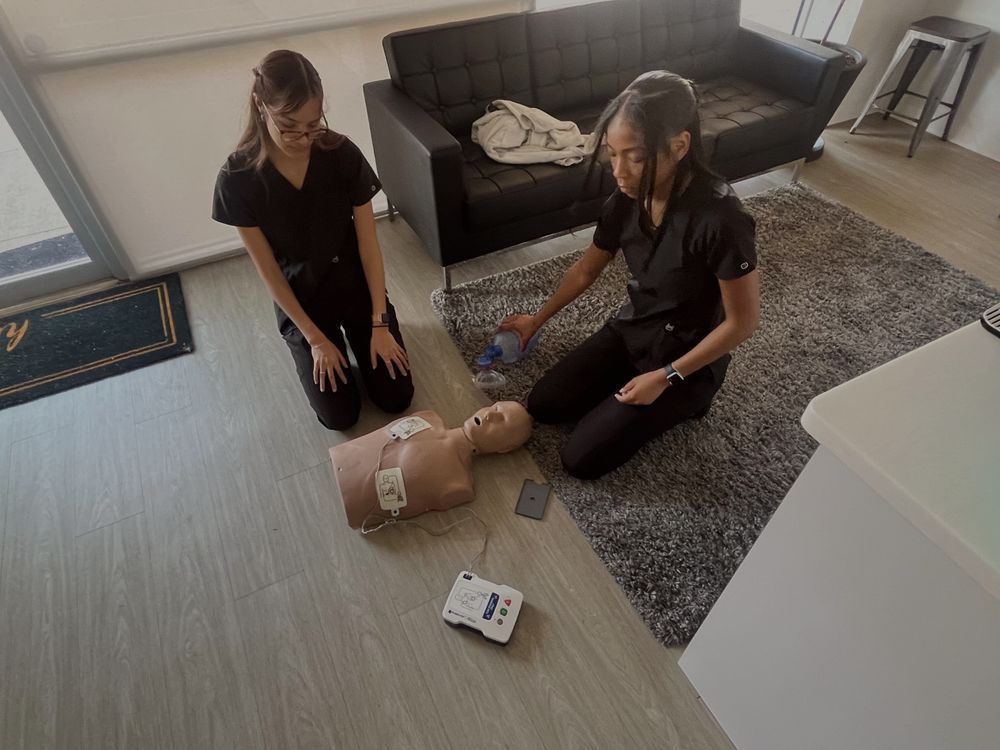
While online learning builds foundational knowledge, real hands-on training builds confidence—and confidence is what employers are looking for. Pulse strengthens students’ clinical competence through in-person skills labs led by experienced instructors who know what MAs will face in real medical settings.
These labs give learners the chance to practice essential skills such as:
Taking vital signs accurately
Preparing exam rooms
Preparing exam rooms
Assisting with patient assessments
Administering injections (as allowed by state regulations)
Conducting diagnostic tests
Handling specimens
Applying proper infection-control procedures
In labs, students transition from theory to action. They learn correct technique, receive direct feedback, and build muscle memory. Many students say these labs are the moment everything “clicks”—the point where they begin to see themselves as true medical professionals.
Pulse also designs labs to mimic real clinical environments, creating a stress-free but realistic space to practice. By the time students complete the program, stepping into a doctor’s office, specialty clinic, or urgent care center feels like a natural next step—not an intimidating leap.
These labs are one of the key reasons Pulse graduates enter the workforce feeling prepared, capable, and ready to help patients on day one.
Experienced Instructors Who Teach With Real-World Insight
A medical assistant program is only as strong as its instructors—and Pulse hires professionals who bring years of experience working directly with patients and medical teams. These instructors don’t just teach skills; they mentor students through challenges, questions, and the transition into healthcare.
Because instructors have firsthand knowledge of how clinics operate, what hiring managers expect, and what new MAs often struggle with, they can tailor their teaching to what truly matters. They know the difference between textbook theory and real-world practice and make sure students are ready for both.
This expertise shows up in many ways:
Encouraging students when coursework feels overwhelming
Simplifying complicated medical concepts
Sharing stories from their careers to explain why certain skills matter
Coaching students on professional communication
Helping students build confidence in interacting with patients
Providing honest insight into what daily life as an MA looks like
Students often describe Pulse instructors as supportive, patient, and genuinely invested in their success. That mentorship makes the learning experience more personal and makes students feel like they have a partner in their journey—not just a teacher.
When learners know someone believes in them, they’re more motivated, more engaged, and more likely to succeed.
Career-Centered Support That Helps Students Transition into the Workplace
A medical assistant education is only part of the journey. The next step—finding a job—can be stressful without the right guidance. Pulse recognizes that launching a new career takes both skills and strategy, so the program offers career-focused support designed to make the transition smoother.
Students receive help preparing for success beyond the classroom, including:
Resume development tailored to healthcare roles
Interview coaching and mock interviews
Professional communication guidance
Certification readiness support
Job search strategies and local employment insights
Employer connections through Pulse’s network
These resources help students present themselves confidently and professionally when entering the job market. Many graduates secure roles in medical offices, family practices, pediatric clinics, urgent care centers, specialty clinics, and other healthcare environments.
Pulse also helps students understand what hiring managers truly value—reliability, compassion, communication, and teamwork—so they enter interviews with clarity and purpose. The program doesn’t just train medical assistants; it trains job-ready professionals who know how to position themselves for long-term growth.
Pulse Helps You Step Into Healthcare With Confidence
Starting a career in healthcare is a big decision, but it doesn’t have to be a long or complicated one. Pulse Medical Assistant School is built for learners who want a smart, supportive, and fast path into a meaningful profession. With an online-first structure, hands-on skills labs, real-world instructors, a career-ready curriculum, and intentional student support, Pulse gives future medical assistants everything they need to succeed.
Whether students are changing careers, starting fresh, or pursuing a lifelong interest in healthcare, Pulse provides a direct route toward confidence, certification, and a fulfilling medical assistant career.
Pulse Medical Assistant School is an online-first, 16-week medical assistant program with intensive, in-person labs that give aspiring medical assistants the confidence to help real patients receive real care. If you’re ready to step into a high-demand healthcare career with hands-on support and a modern learning experience, Pulse is ready to help you begin.
You're only a few months from the medical assistant career you deserve.