How to Choose the Right Medical Assistant Program for Your Goals

How to Choose the Right Medical Assistant Program for Your Goals
Choosing the right medical assistant program is a big step toward building a stable, rewarding career in healthcare. With so many training options now available—from in-person programs to online-first schools with hands-on labs—it’s important to find a program that matches your personal goals, learning style, schedule, and long-term career vision. The right choice can shape your confidence as a future medical assistant and help you qualify for meaningful roles in clinics, hospitals, specialty practices, and more.
A strong program should do more than prepare you for certification exams. It should teach you real-world clinical and administrative skills, expose you to patient scenarios, and offer mentorship and support as you build your new career. Below are six key ways to choose the medical assistant program that fits your goals and sets you up for success.
Decide Whether You Prefer In-Person, Hybrid, or Online-First Learning
Before comparing schools, start by determining how you learn best. Some students thrive in traditional classrooms, where they can interact with instructors face-to-face. Others prefer the structure and flexibility of online-first programs, which let them complete coursework from home while still receiving hands-on clinical training through scheduled labs.
Online-first hybrid programs have become especially popular because they offer the best of both worlds. You can complete theory lessons online at your own pace, then build your real-world medical skills through required in-person labs. This structure works well for students balancing work or family commitments and those who want to avoid long commutes.
As you evaluate your options, ask yourself:
Do you need flexible scheduling?
Do you prefer to learn through videos, readings, and online modules?
Or do you perform best when physically present in a classroom?
Choosing a program that supports your learning style will make it easier to stay motivated and confident throughout your training.
Look for Hands-On Clinical Training That Builds Real Confidence
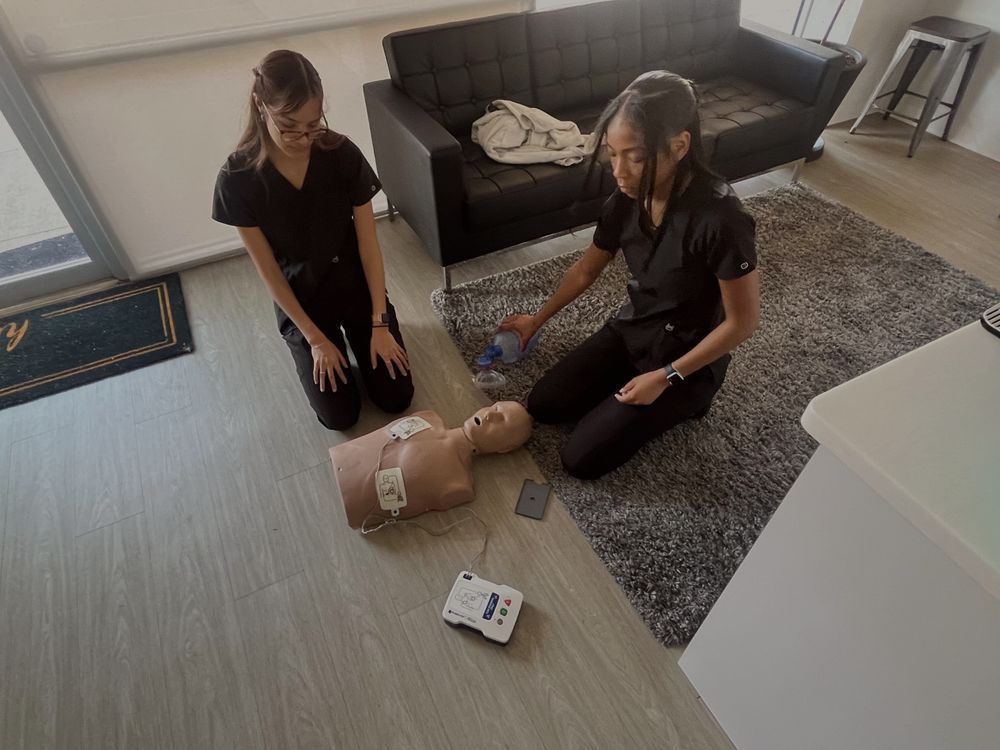
No matter how convenient a program is, hands-on experience is essential for every future medical assistant. Employers expect graduates to confidently handle patient interactions, take vital signs, manage equipment, and support physicians during procedures. That level of confidence comes from meaningful clinical practice—not just reading about skills in a textbook.
When reviewing programs, look for:
Required in-person lab sessions
Training in common clinical procedures (vital signs, EKGs, injections, phlebotomy, specimen collection, etc.)
Training in common clinical procedures (vital signs, EKGs, injections, phlebotomy, specimen collection, etc.) Small lab groups that allow each student to practice
Skilled instructors who can demonstrate best practices
Safe learning environments where you can make mistakes and learn from them
Hands-on labs help you build muscle memory and prepare for real clinical settings. Without them, you may leave training feeling unprepared or unable to perform essential tasks on the job.
Review the Curriculum to Make Sure It Matches Your Career Goals
Medical assistant programs can vary widely in what they teach, so it’s important to review the curriculum carefully. A well-rounded medical assistant program includes both administrative and clinical training, giving you the versatility to work in many different healthcare settings.
Look for programs that cover:
Medical terminology and anatomy
Electronic health records (EHR)
Scheduling and patient communication
Clinical procedures
Infection control and safety
Laboratory skills
Medical law and ethics
If you’re interested in a specific specialty—like dermatology, cardiology, OB/GYN, or orthopedics—ask whether the program includes skills or training relevant to that area.
A strong curriculum should prepare you not just for your first job, but for long-term growth and specialization in the healthcare field.
Consider Program Length and How Quickly You Want to Start Working
Program length is a major factor when choosing the right training. Medical assistant programs can range from several months to two years depending on the school, the credential offered, and whether the program includes general education courses.
Many students choose accelerated programs because they want to begin earning income and gaining experience as quickly as possible. A shorter timeline does not mean skipping essential skills—it simply removes unnecessary coursework and focuses on what future MAs actually need.
When evaluating programs, consider:
How soon you want to enter the workforce
How soon you want to enter the workforce
Whether you’re comfortable completing intensive, accelerated coursework
How program length fits with your job, life, and financial goals
How program length fits with your job, life, and financial goals If your goal is to start a career quickly, a streamlined, skills-focused program may be the best option.
Verify Certification Preparation and Career Support Services
A strong medical assistant program should prepare you to sit for a national certification exam such as the CCMA or RMA. While certification may not be required in every state, many employers prefer or even require certified medical assistants because it shows competence and credibility.
As you review programs, ask:
Does the school prepare students for national exams?
Are exam fees included or supported?
Does the school provide practice tests or study resources?
In addition to certification support, look for programs that also offer career services—help with résumé building, job placement, interviewing, and networking. These services can make a significant difference in how quickly you find your first role after graduation.
Programs that combine certification prep with career support tend to produce confident, job-ready graduates.
Compare Tuition, Fees, and Overall Value—Not Just Price
Cost is an important consideration, but it’s equally important to compare value. A cheaper program isn’t always better if it cuts corners on clinical practice, student support, or exam preparation. Likewise, an expensive program doesn’t guarantee stronger training unless you clearly understand what you’re paying for.
When comparing tuition and fees, consider:
What’s included (books, labs, scrubs, exam prep, certification fees)
Whether the school offers payment plans
The number of in-person labs or clinical opportunities
The number of in-person labs or clinical opportunities Instructor experience and class quality
Support services like tutoring or job placement assistance
The best program is the one that gives you the skills, confidence, and real-world training employers look for—without unnecessary costs or delays.
The best program is the one that gives you the skills, confidence, and real-world training employers look for—without unnecessary costs or delays.
Choose a Program That Builds Your Skills and Supports Your Future
Your medical assistant training should feel like an investment—not just in your career, but in your future stability and confidence. By choosing a program that fits your learning style, provides hands-on experience, supports certification, and aligns with your career goals, you set yourself up for long-term success in healthcare.
A program that focuses on both clinical skill and personal support can make your transition into the medical field smoother, faster, and more fulfilling. Whether you’re starting a new career, returning to school, or building a path toward nursing or other healthcare roles, choosing the right training program is the foundation for everything that comes next.
Ready to Start Your Medical Assistant Journey?
Ready to Start Your Medical Assistant Journey? If you’re searching for a flexible, career-focused program that builds real skills and real confidence, Pulse Medical Assistant School is a strong choice. Pulse is an online-first, 16-week medical assistant training program with intensive, in-person labs designed to give aspiring medical assistants the practical experience they need to help real patients receive real care. With modern curriculum, supportive instructors, and hands-on lab training, Pulse helps students prepare for meaningful medical assisting careers with clarity and confidence.
You're only a few months from the medical assistant career you deserve.